Curated Content
10 Spanish Tech Blogs Developers Can Read (A2-B2 Ladder)
Spanish tech media as reading practice for developers: a ladder from Computer Hoy to denser sites, a comparison table and a 15-minute reading session.
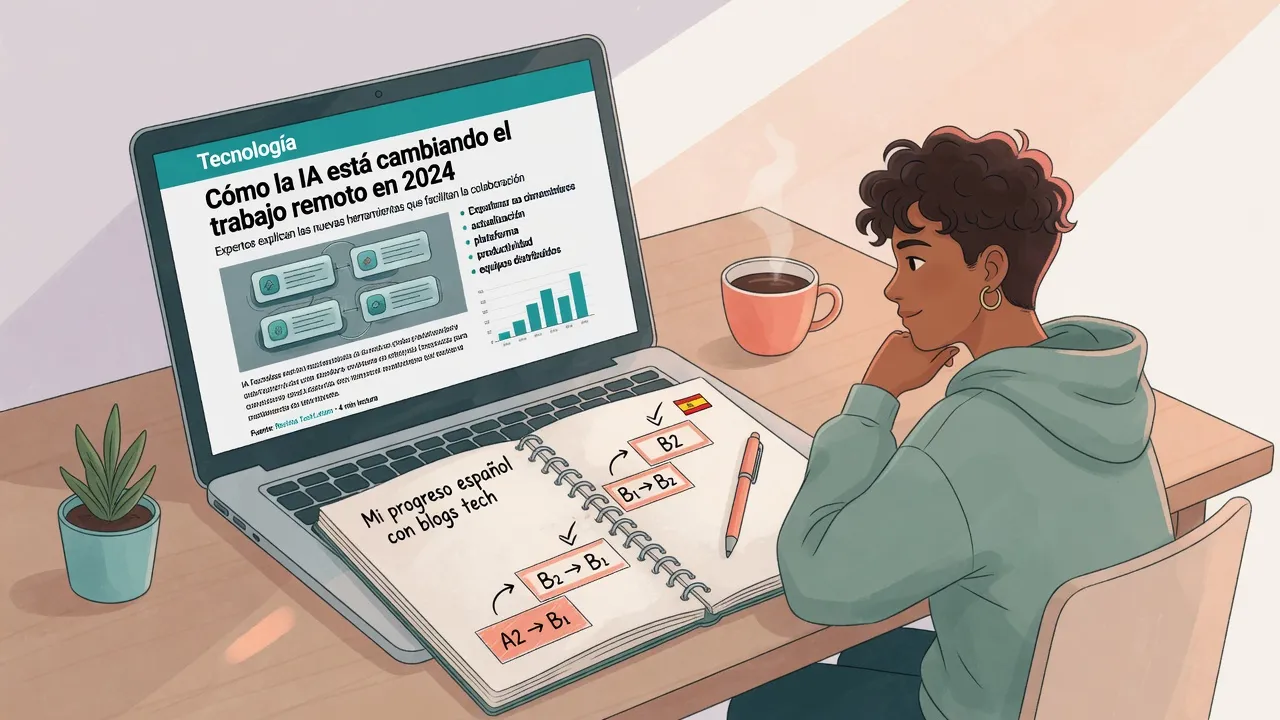
You can ship code all week in English, then freeze on a Xataka longread. That is not proof you are "bad at languages." Tech Spanish is a different register: familiar loanwords mixed with verbs, connectors, and hedging that do not live in your API docs. Look up every unknown word and the session dies. Keep reading for meaning with a lookup cap, and the same piece becomes usable practice.
Here is the plain answer.
To practice Spanish as a developer, use real Spanish tech media on a ladder: start with lighter consumer sites (Computer Hoy, Genbeta), then LatAm and mid analysis (FayerWayer, Hipertextual, Xataka), then denser prestige or opinion (ThinkBig, Enrique Dans, WIRED ES, optional MIT Technology Review ES or Silicon). Cap lookups so dictionary tax does not kill the session - about 15 minutes of meaning-first reading beats a weekend of word tourism. Tools can help with graded warm-ups and click translations; none of this needs a browser extension that imports any Xataka tab.
What you get from this guide:
- A Spanish-first list of live tech sites (Spain + LatAm) - not a multi-language polyglot catalog
- A comparison table with level feel, best use, and a start tip per blog
- A CEFR-ish ladder from A2-B1 consumer prose to B2+ prestige
- A 15-minute protocol that respects dictionary tax
- Where MovaReader fits, plus a handoff to English IT sources when you need work English
On hard days, warm up on free graded Spanish first (all articles, e.g. sample 1127 or sample 1209), then open one short consumer piece. Live blogs stay on the publisher sites.
Why tech Spanish is easier than it looks (and harder than cognates promise)
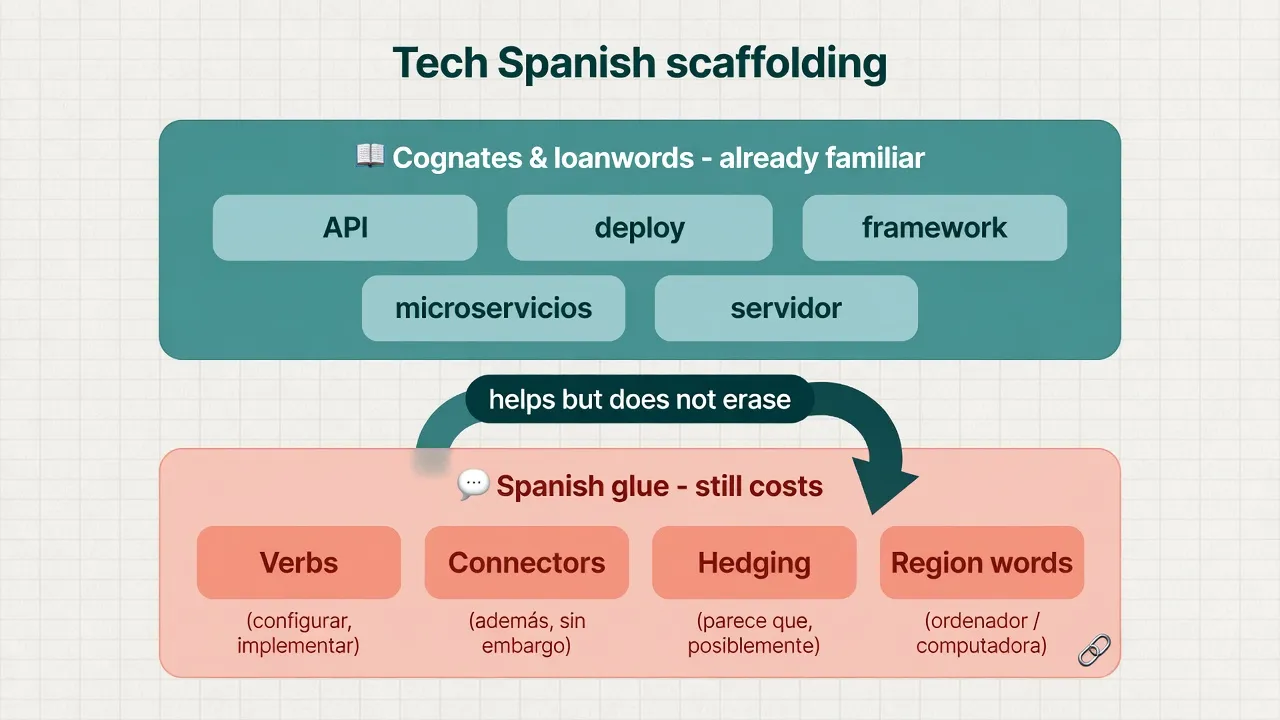
Tech writing gives you real scaffolding. Words like API, deploy, microservicios, servidor, and framework often look close enough that the first screen feels friendlier than a novel. That is useful. It is also incomplete.
What still costs attention:
- Spanish verbs that carry the plot of the sentence (instalar, actualizar, configurar, desplegar)
- Connectors and hedging that hold analysis together (sin embargo, en cambio, por otro lado)
- Region words - Spain ordenador and móvil next to LatAm computadora and celular
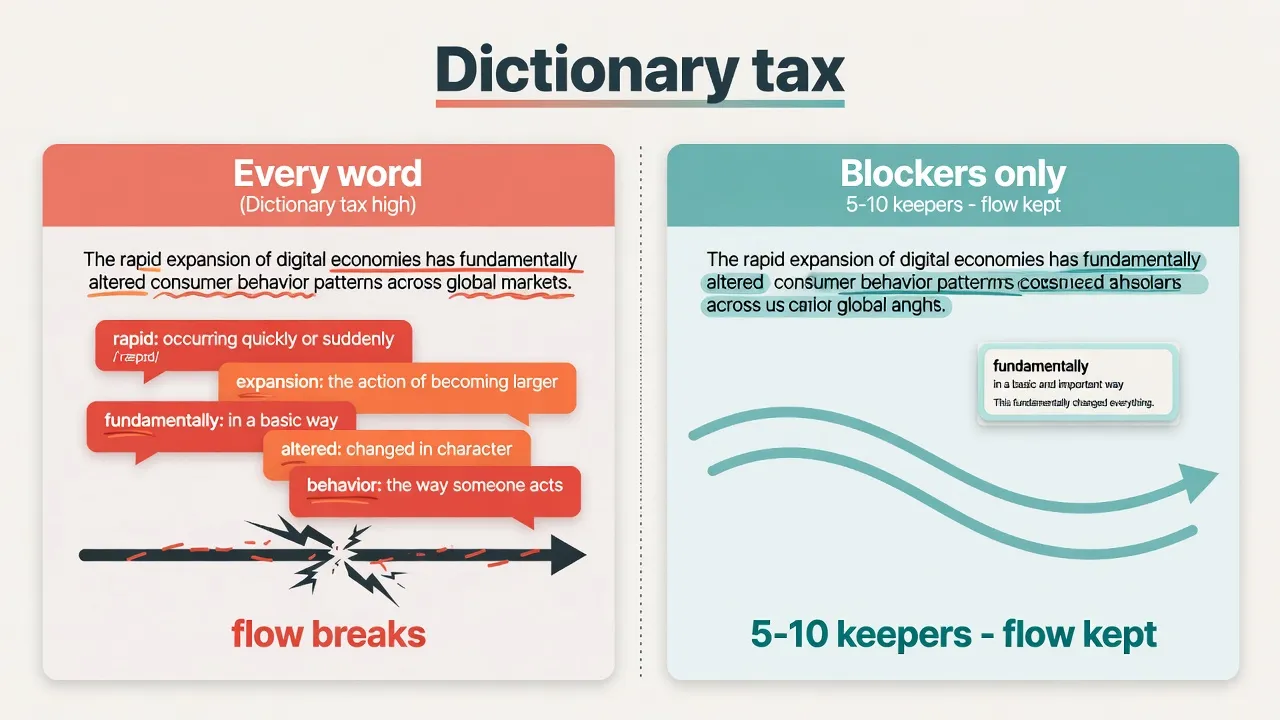
Cognates reduce panic. They do not delete dictionary tax. Every lookup breaks flow; tech pieces tempt you to look up everything because the topic feels "important." Prefer blockers (words that stop meaning) over rare nouns you will never say. Cap the session so you leave with a few high-value items, not a ruined evening.
For rough orientation ranges, the language map can help you place yourself before you stretch into denser prestige prose.
Two layers of the same board: loanwords that help, and Spanish glue that still costs.
10 Spanish tech blogs (A2-B2 ladder)
Ordered easier consumer → denser prestige. Best-for means best for Spanish reading practice, not "best blog for systems design skill only." Live sites verified in 2026 research for this rewrite.
| # | Blog | Region | Level feel | Best for | Start tip |
|---|---|---|---|---|---|
| 1 | Computer Hoy | Spain | A2-B1 | Gadgets, how-tos, simpler prose | One short how-to or gadget blurb; stop at 5-10 lookups |
| 2 | Genbeta | Spain | B1 | Software, tools, developer-adjacent | Structured like docs; mine verbs (instalar, actualizar) |
| 3 | FayerWayer | LatAm | B1-B2 | LatAm vocab + internet culture | Note computadora/celular; contrast one Xataka piece same week |
| 4 | WWWhat's new | Spain/indie | B1-B2 | News + explainers; indie voice | Daily short read |
| 5 | Hipertextual | Spain + LatAm | B1-B2 | Tech + digital culture | Mid-length features |
| 6 | Xataka | Spain | B1-B2 | Flagship analysis, gadgets, AI | Longread after a warm-up week on Computer Hoy/Genbeta |
| 7 | ThinkBig | Spain corporate | B2 | Formal / workplace register (cloud, 5G, AI) | One prestige piece for professional Spanish |
| 8 | Enrique Dans | Spain opinion | B2 | Argument structure, connectors | Read for thesis + hedging, not gadgets |
| 9 | WIRED en Español | LatAm/global ES | B2 | Prestige longform, culture + security | Stretch piece ~1x/week |
| 10 | MIT Technology Review ES or Silicon.es | Global ES / Spain B2B | B2-C1 / B2 | Deep tech-science or enterprise IT | Optional prestige; note paywall/sub if any |
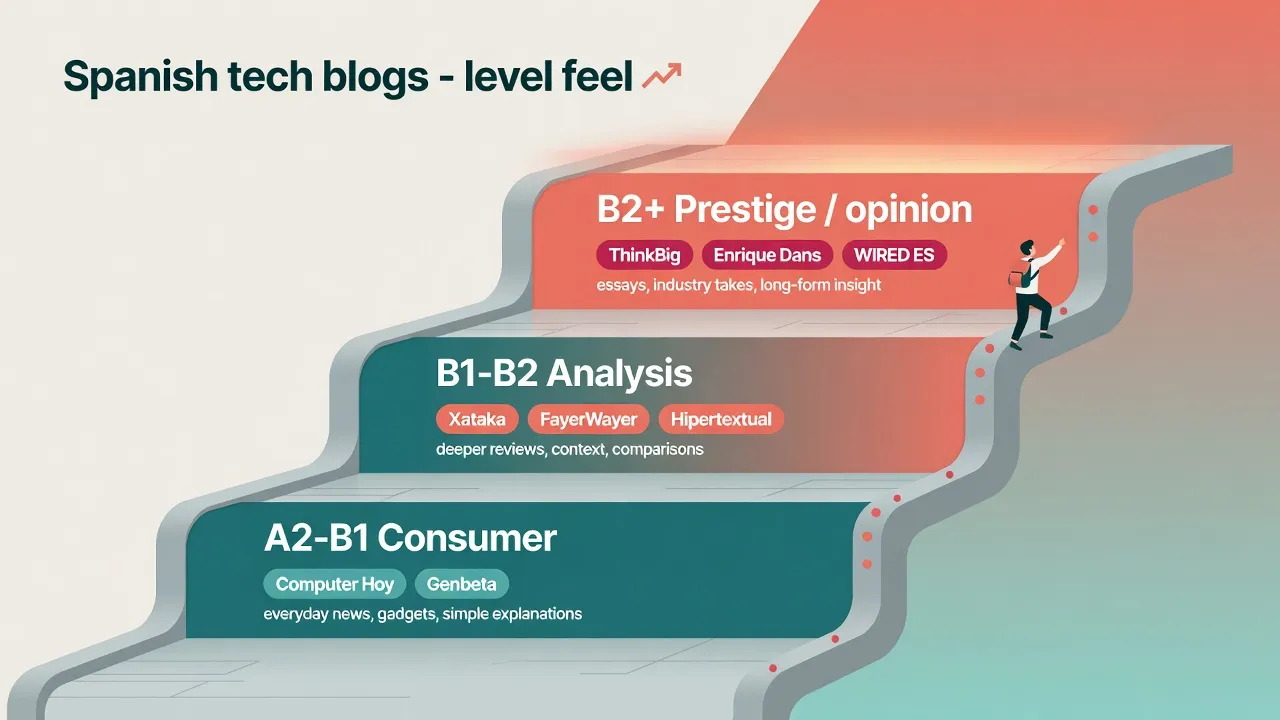
Start here if you are A2-B1: Computer Hoy plus light Genbeta. Skip daily Enrique Dans or MIT Technology Review ES until B1-B2 feels comfortable on mid-length pieces.
The same ladder as a picture: consumer → analysis → prestige stretch.
1. Computer Hoy (A2-B1)
Spain consumer tech in the 20minutos ecosystem. Prose is usually shorter and more concrete than flagship analysis sites. Best first stop for gadgets and how-tos. Open one short how-to or gadget blurb; cap lookups at about 5-10. Notice short concrete nouns and basic patterns like instalar, actualizar, conectar.
2. Genbeta (B1)
Spain, Webedia family. Software, productivity, and developer-adjacent tools often read a bit like structured docs or listicles. Mine verbs (instalar, actualizar, configurar) and product-feature Spanish rather than hunting every brand name.
3. FayerWayer (B1-B2)
LatAm slot (Chile roots) for internet culture plus region vocabulary. Use it to train computadora / celular beside Spain ordenador / móvil. Same language; different surface words. A useful habit: one FayerWayer piece and one Xataka piece in the same week so region contrast is obvious.
4. WWWhat's new (B1-B2)
Spain / independent voice. Good for a light daily short: news plus practical explainers without prestige density every day. Keep the habit small so you actually return tomorrow.
5. Hipertextual (B1-B2)
Spain + LatAm digital culture. Mid-length features mix tech, science, and broader culture vocabulary. A natural step after Genbeta comfort, before you live only on longreads.
6. Xataka (B1-B2)
Spain flagship for many Spanish tech readers: analysis, gadgets, AI, longer pieces. Treat longreads as a stretch after a warm-up week on Computer Hoy and Genbeta, not as day-one punishment. Expect denser connectors once the topic moves past pure gadget blurbs.
7. ThinkBig / BlogThinkBig (B2)
Corporate Spain register (Telefónica universe). Cloud, 5G, AI, innovation language that leans formal and workplace-adjacent. One prestige piece for professional Spanish is enough at first; it is not a daily main track at A2.
8. Enrique Dans (B2)
Opinion and argument more than gadget lists. Read for thesis, hedging, and connectors (sin embargo, en cambio), not for shopping Spanish. Sentences can run long. Useful when you want workplace-adjacent opinion structure.
9. WIRED en Español (B2)
LatAm / global Spanish prestige longform: culture, security, and magazine density. Stretch about once a week after the mid ladder feels readable. Global ES tone can differ slightly from pure Spain consumer sites - that is part of the practice.
10. MIT Technology Review ES or Silicon.es (B2+ stretch)
Optional deep end. MIT Technology Review ES for denser tech-science Spanish (B2-C1 feel); Silicon.es for Spain enterprise / B2B IT Spanish around B2. Note paywalls or subscription friction when they appear. Skip both as daily main track early on.
If you study French or German elsewhere, the same 15-minute habits transfer. MovaReader focuses on English and Spanish; this page stays a Spanish tech media ladder.
Need English IT sources for work English (TechCrunch, HN, company eng blogs, Pragmatic Engineer, and similar)? That is a different list: English for IT: tech blogs for developers. This article does not re-list those ten English sites.
CEFR-ish ladder for tech Spanish
Feel labels only - not "pass DELE from blogs." Use this band map to pick 2-3 sites, not all ten at once.
| Band | Media feel | Goal |
|---|---|---|
| A2-B1 | Computer Hoy, light Genbeta | Survive short tech news; use cognate anchors |
| B1-B2 | Xataka, FayerWayer, Hipertextual, WWWhat's new | Region + analysis vocabulary |
| B2+ | ThinkBig, Dans, WIRED ES, MIT TR ES | Formal/opinion density; workplace Spanish |
If A2-B1 still freezes on consumer sites, build volume with graded reading first (free graded Spanish readers, build B1 vocabulary by reading), then return to Computer Hoy.
How to read tech Spanish without dictionary tourism
What dictionary tax is
Every lookup costs attention. Tech articles invite endless lookups because the topic feels career-relevant. Prefer blockers - words that stop the meaning of the paragraph - over rare nouns you will never say aloud. Cap roughly 5-10 high-value items per session: verbs, collocations, connectors. Cognates reduce tax; they do not delete it.
Every-word lookups vs blockers-only (flow preserved):
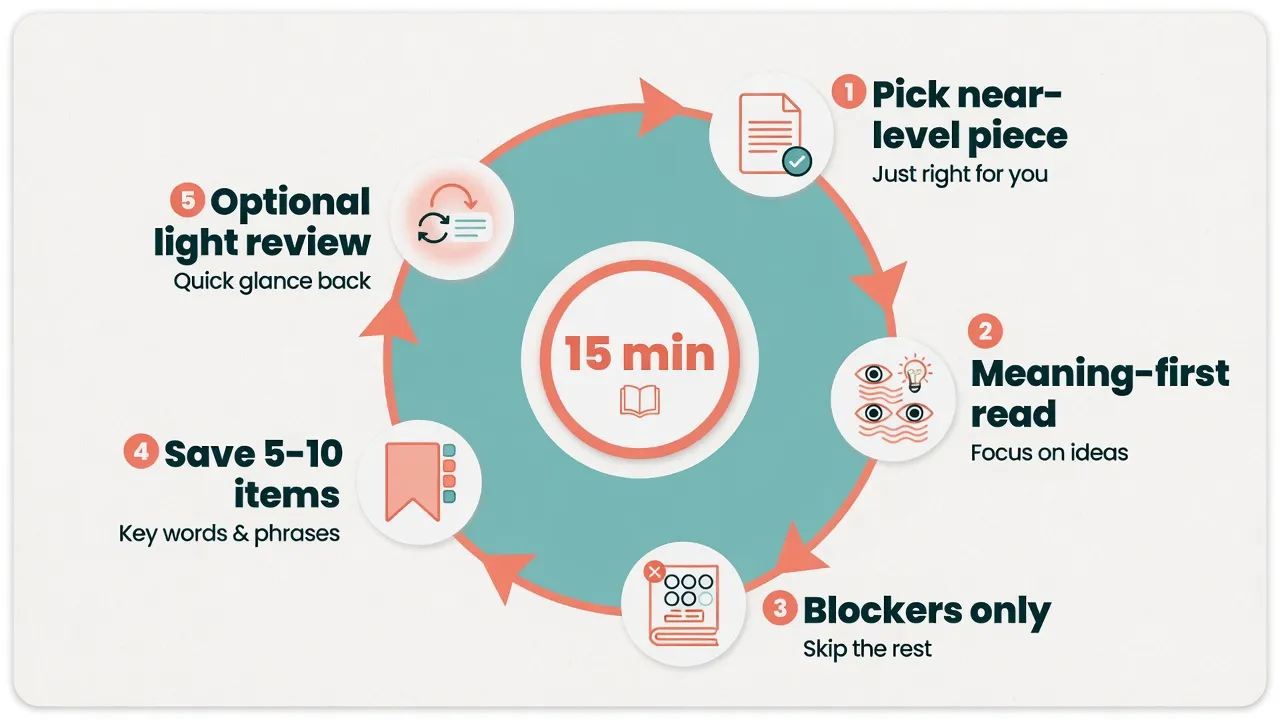
15-minute protocol
pick near-level tech Spanish piece (or graded ES article first)
→ read for meaning ~10 min
→ look up blockers only (respect freemium ~20 word translations/day if in-product)
→ save 5-10 high-value items
→ optional listen-in-product if using graded text
→ light trainer review if Pro / demos - not "auto from any URL"
- Pick a near-level Spanish tech piece - or free graded Spanish warm-up first.
- Read for meaning about 10 minutes.
- Look up blockers only (in-product freemium is about 20 word translations a day).
- Save 5-10 high-value items (verbs, collocations, connectors) in phrases.
- Optional: listen-in-product on graded text; light review via everyday Spanish phrases practice, free Spanish vocabulary trainer, or trainers.
- Live blogs stay on the publisher site. No "auto extract from any URL."
The same loop as a diagram:
Graded warm-up before prestige
On hard days, open free graded Spanish in the library first, then one short Genbeta or Computer Hoy piece. That is extensive-friendly practice with a safety rail - see also intensive vs extensive reading in Spanish if you want the method frame. MovaReader does not host Xataka archives or import publisher tabs into a free commercial catalog.
For a fuller Spanish-by-reading system beyond tech media, see how to learn Spanish by reading.
What MovaReader does
MovaReader helps you practice Spanish by reading: free graded articles near your level, click-to-translate for blockers, save high-value phrases, then light trainers.
For the ten Spanish tech blogs above, treat the product as a reading-loop helper, not a free shelf of commercial tech media:
- Warm up on free graded Spanish texts (all articles; samples 1127, 1209).
- Read live Spanish tech media in the browser (Computer Hoy, Genbeta, Xataka, FayerWayer, and the rest).
- Move selected sentences or phrases into practice - manually, or via legal EPUB / files you own (how to use).
- Tap blockers only - not every cognate or code loanword you already know.
- Save phrases, then use demos and trainers when review is the bottleneck.
- Respect freemium: about 20 word translations a day until you need Reader.
Hard truth: there is no browser extension that one-click imports any tech blog URL into your account. We do not host commercial Spanish tech media catalogs as free product content. We do not invent AI difficulty scores, known-vocab percentage maps, or morphology decode as product features.
| Plan | What you get | Fit for tech-Spanish practice |
|---|---|---|
| Freemium | Free graded EN/ES library + listening as shipped + about 20 word translations/day | Warm-up + light sessions |
| Reader €1 | Unlimited reading translations | Real volume when 20/day is the wall |
| Pro €5/mo | Full trainers | When review of saved items is the bottleneck |
Details: pricing. Soft account when progress should stick: register.
Tools reduce friction. They do not turn B2 opinion prose into A2 overnight.
FAQ
Am I ready at A2 for Spanish tech blogs?
Yes for short Computer Hoy and light Genbeta pieces if you cap lookups. Skip dense Enrique Dans and MIT Technology Review ES as daily main track. If you freeze on the first screen, warm up on free graded Spanish in the library first, then return to one short consumer piece.
Spain Spanish vs LatAm - which blogs?
Mix both. Spain spine: Xataka, Genbeta, Computer Hoy. Add FayerWayer (and WIRED en Español) for LatAm vocab like computadora and celular next to Spain ordenador and móvil. Same language; train your ear for region words instead of picking a "correct" dialect forever.
Should I look up every word?
No. That is dictionary tax - every lookup breaks flow. Look up blockers only (words that stop meaning). Keep about 5-10 high-value items per session: verbs, collocations, connectors. Cognates help; Spanish verbs and glue still matter.
Is free MovaReader enough for this method?
Yes to test the habit: free graded EN/ES library, listening as shipped, and about 20 word translations a day. Live Spanish tech blogs stay on the publisher sites. When volume rises and 20/day blocks real reading, Reader (€1) unlocks unlimited reading translations. Pro (€5/mo) is for full trainers when review is the bottleneck. See pricing.
Can I import any tech blog URL into MovaReader?
No. There is no browser extension that one-click imports any Xataka (or other) tab into your account. What is real: a free graded library, upload of legal EPUB / files you own, click-translate on blockers, and phrase trainers. Read Xataka, Genbeta, and the rest on their sites; bring only rights-cleared own material into the app (how to use).
Where do I get English IT blogs for work English?
This page stays Spanish tech media for learning Spanish. For English IT sources (TechCrunch, HN, company eng blogs, Pragmatic Engineer, and similar), open the sibling: English for IT: tech blogs for developers.
Next steps
- Pick 2-3 blogs on your band of the ladder, not all ten at once.
- Protect a few 15-minute sessions; cap lookups at blockers only.
- Warm up on free graded Spanish when prestige pieces feel dense: all articles.
- Save 5-10 high-value items → phrases / demos / trainers.
- Need English IT media? Open the sibling post.
- Pay Reader or Pro only when freemium actually blocks a habit you already have (pricing). Soft account: register.
Tools reduce friction. Pick 2-3 Spanish tech blogs, protect fifteen minutes, save blockers - not whole tabs.
Keep reading with translations inside the text
With a free account, an unknown word translates with one tap, and the words you are learning wait for you in the trainer.
Free account: 7 days of Pro, then 20 word translations a day or a paid plan.