Language Learning Psychology
Language Learning Burnout: Sick of Textbooks and Tutors?
You cancel the tutor, skip Exercise 47B, then feel guilty. That is often method burnout, not a talent problem. Here is a gentle reading reset and a two-week plan to get back on track.
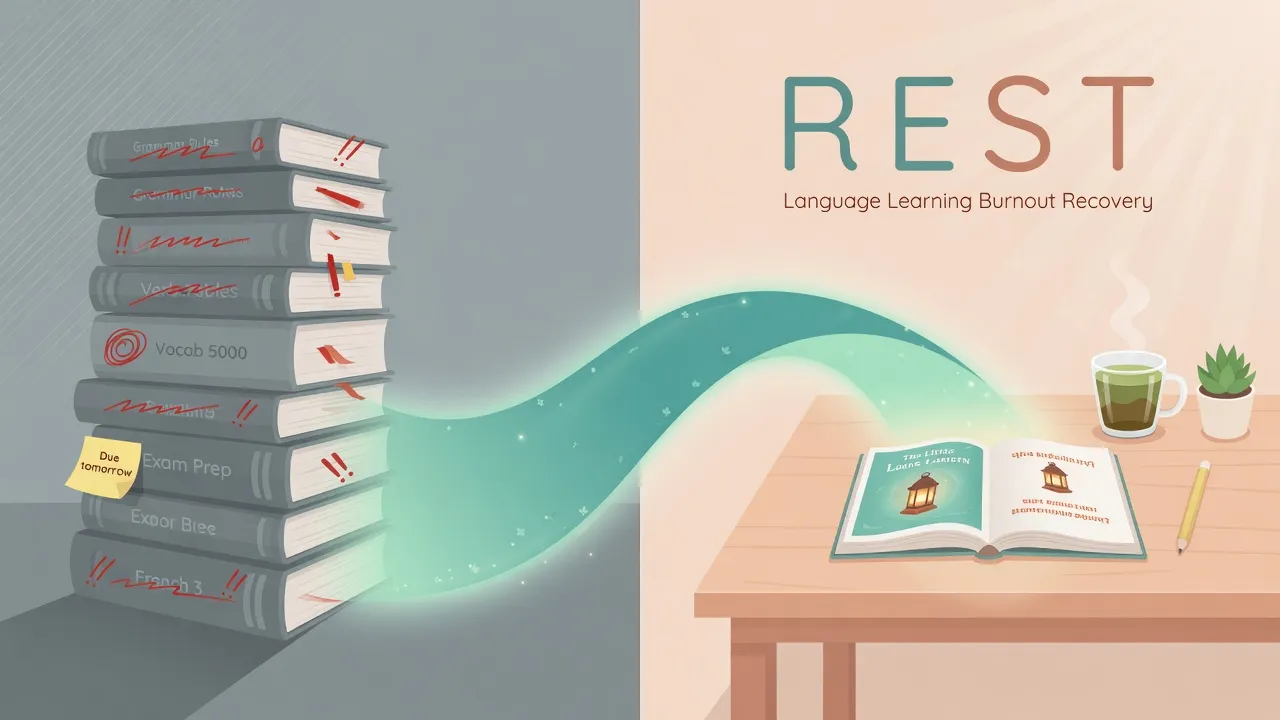
You open the textbook to Exercise 47B. Fill in the subjunctive. Again. Your stomach drops before your pen moves. You cancel tomorrow's tutor session with a soft lie about work. Then the guilt shows up: If I were serious, I would push through.
That spiral is more common than people admit. It is often language learning burnout, not proof that you lack talent.
The simple version
If textbooks and tutor drills make you nauseous, the method is probably joyless, too hard, or too repetitive. Pause the stack for a short reset. Read something interesting and finishable at a level you mostly understand (about 80-90%). Look up only words that block the plot. Structure and tutors can return later when curiosity asks, not when shame demands it. Tools can lower friction.
Another post, Learning burnout: what to do when textbooks make you sick, covers the wider restart framing. This article stays on textbooks, tutor pressure, and a concrete two-week recovery.
Signs you are not lazy (you are burned out)
Burnout rarely arrives as one dramatic quit. It accumulates: skipped days, hollow sessions, a quiet "what is the point?" voice.
| Signal | What it feels like |
|---|---|
| Exhaustion | Dread before opening the book or app |
| Guilt spiral | Missed day → shame → more avoidance |
| Cynicism | "Is this language even worth it?" |
| Reduced efficacy | Months of drills, little usable skill |
| Session dread | Canceling tutor, skipping homework |
If several of those feel familiar, you are not broken. The vehicle is.
Here is the loop many people get stuck in:
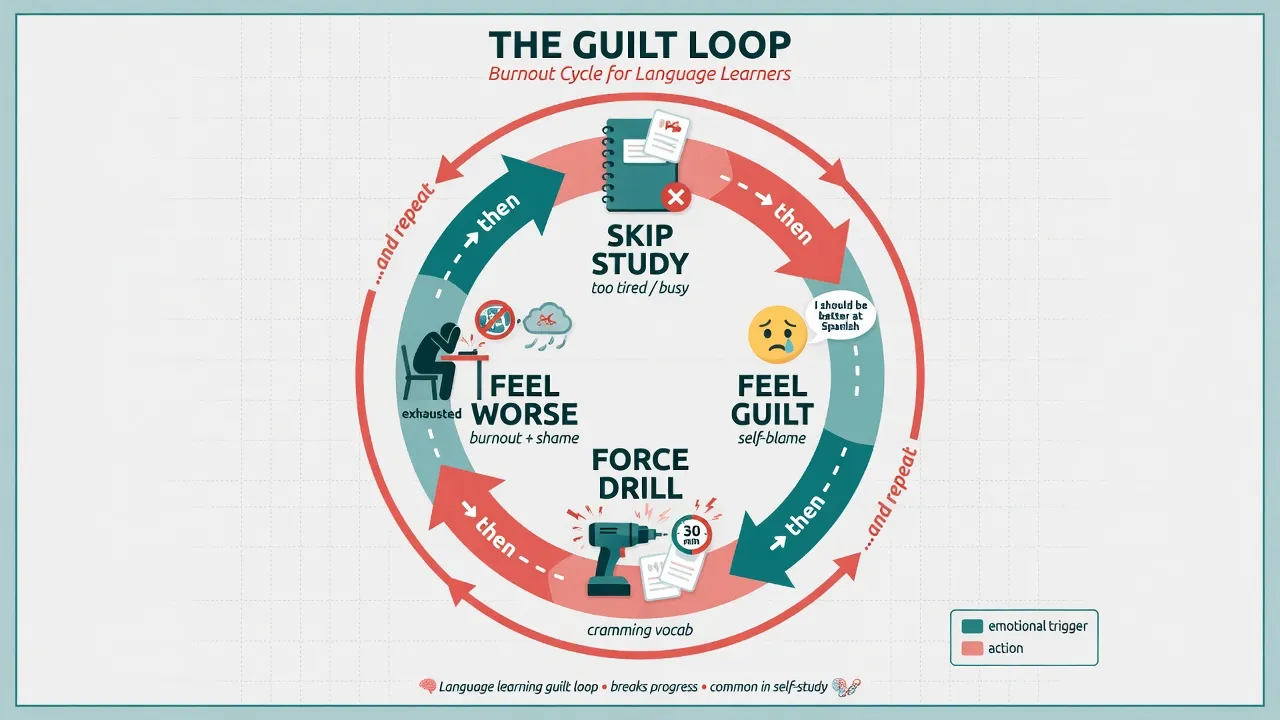
Skip → guilt → force another joyless drill → feel worse → skip again. Forcing volume inside that loop rarely heals it. Changing the diet often does.
Why joyless drills drain you
Textbooks are useful maps. They are not always good fuel.
A chapter of blank-fill drills can feel productive because it ends with a green check. Your brain gets a compliance hit, not a story hit. Language sticks better when attention is alive: you care what happens next, you notice patterns in context, you return tomorrow because the page is unfinished, not because a streak app scolds you.
That is soft science, not a miracle claim. Enjoyment and focused attention help memory. Stress and boredom make sessions shorter and shallower. You do not need a pile of journal name-drops to trust that: you already feel it when Exercise 47B lands like wet cardboard and a short story lands like a door opening.
Drills also tend to measure the wrong kind of progress. Completing units is not the same as understanding people or pages. After months of "studying," you can still freeze in a simple conversation or lose the plot of an easy text. That gap feeds cynicism fast.
None of this means grammar is evil. It means grammar without hunger is expensive. When every session is obligation and no session is curiosity, burnout is a rational response.
The tutor trap (without firing everyone forever)
Tutors can be wonderful. A good one adapts, listens, and keeps you honest about speaking.
The standard paid hour, though, often adds performance pressure. The clock is money. You feel you must demonstrate progress. You prepare answers instead of exploring. Introverts and perfectionists especially start to dread the stage, not the language.
Then comes the spiral: cancel → guilt → reschedule → perform → dread → cancel.
The fix is rarely "never take a class again." It is often:
- Pause the performance calendar for a short reset.
- Use reading (or other low-stakes input) so language feels like yours again.
- Bring a tutor back later for conversation, pronunciation, or questions that grew out of something you read - if you want that at all.
Tutor burnout is real. Tutor hatred as a permanent identity is not required.
Reading as a recovery vehicle (not a prestige novel on day one)
Reading works for recovery when it is finishable and mostly clear.
A hard literary novel on day one of burnout is a second wall. Unknown words every line. Lost plot. Dictionary thrashing. You quit reading, then feel worse because "even the fun method failed."
Better recovery diet:
- Short graded readers, simplified stories, or easy interesting texts
- Roughly 80-90% known words (you follow the story without decoding every line)
- Blockers only: look up what stops meaning, not every curious adjective
- Sessions short enough that you leave wanting one more page
If you want a concrete Spanish sample path, try a graded piece from the free library, such as this short Spanish article, or browse all free articles. Match level with help from the language map if you feel lost about where you stand.
For a fuller ladder into books, see How to read your first book in English. For app streak burnout of a different flavor, the dopamine trap of language apps is a useful related read.
Drill fuel vs story fuel
Same language goal. Different daily energy:
| Joyless drill diet | Finishable reading diet |
|---|---|
| Progress = completed exercises | Progress = finished pages you cared about |
| High pressure, low plot | Curiosity pulls you forward |
| Lookup every blank | Blockers only |
| Session ends when the worksheet ends | Session ends when you are tired or satisfied |
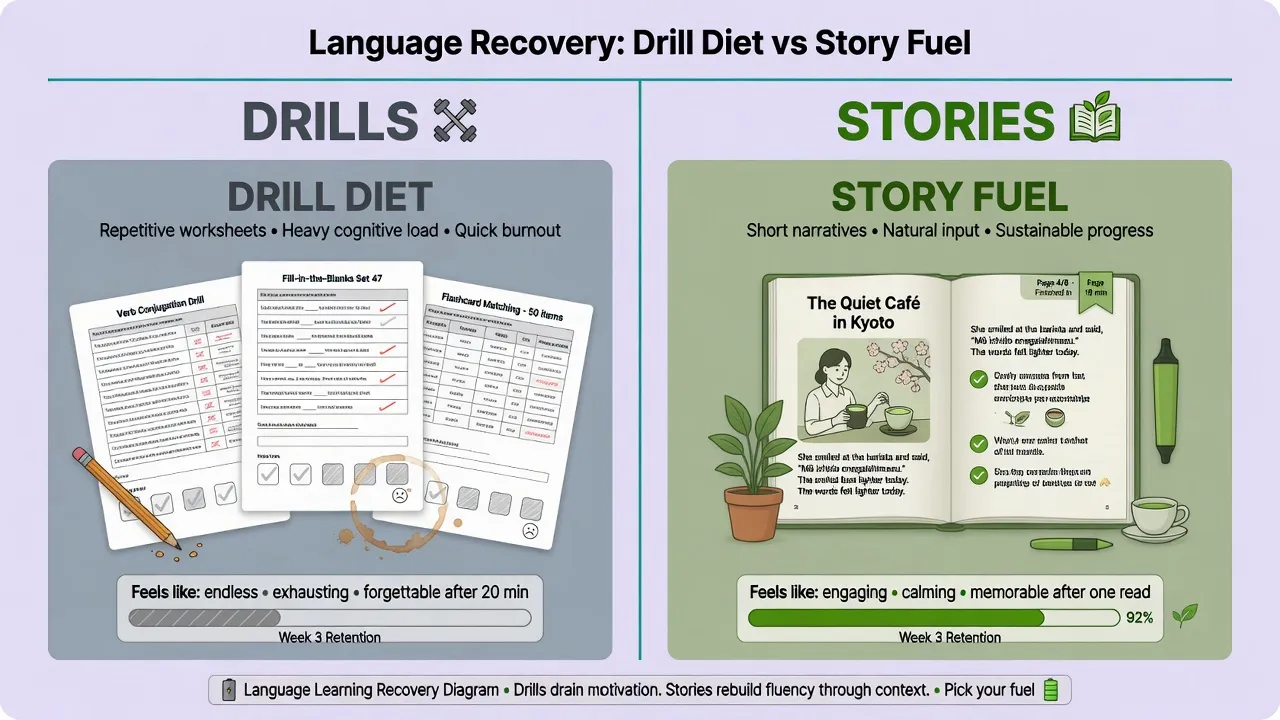
You are not choosing "stories forever, rules never." You are choosing which fuel restarts the engine.
A tiny two-week recovery plan
This is a reset, not a forever ban on grammar.
| Days | Action | Time |
|---|---|---|
| 1-3 | Mentally box the stack. Pick one interesting short graded (or easy) text you can finish. | 10-15 min |
| 4-7 | Same text or next at the same level. Blockers only. Stop while you still like it. | 15 min |
| 8-10 | Optional: 5 minutes light phrase review from what you met in the story. | 15-20 min total |
| 11-14 | Decide: keep the reading diet, or add one light structure session born from curiosity. | 15-20 min |
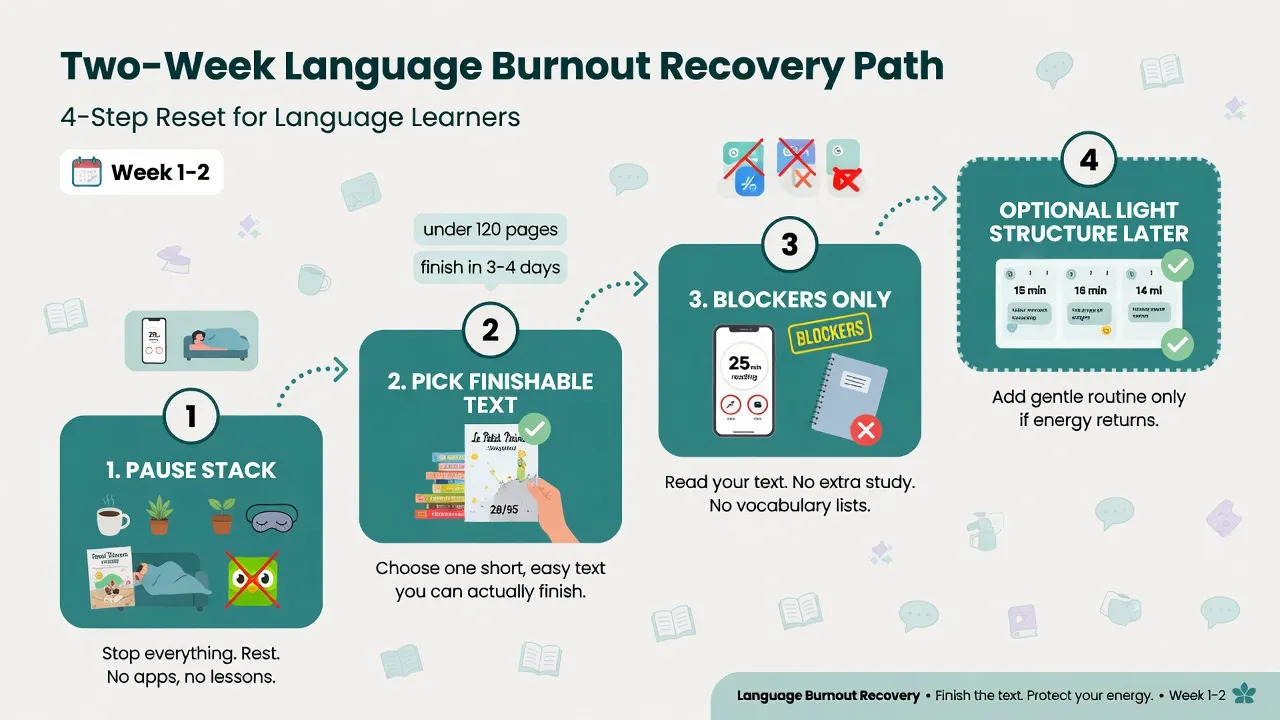
If the diagram shows a famous children's story, read that as a symbol of finishable graded-style text, not a demand that you start with any specific classic. The truth of recovery is the ladder: short enough, clear enough, interesting enough that you close the loop of "I finished something."
Rules that protect the reset
- Do not punish a missed day with a double session.
- Do not "earn" reading by finishing three grammar units first.
- Do leave the page mid-curiosity so tomorrow has a hook.
- Do keep sessions small when energy is low. Ten honest minutes beat a heroic hour you never start.
If apps still feel like a second job, cut streaks for two weeks. Motivation that only works when a cartoon owl panics is fragile. Real motivation is closer to "I want the next page."
When structure (and tutors) come back
After the short detox, many people rediscover hunger for form:
- "I keep seeing this construction and I want the rule now."
- "I want to say what the character said out loud."
- "I want a human hour to practice questions from the book."
That is the healthy re-entry. Grammar as a tool for a story you care about. Tutor time as conversation and feedback, not a weekly exam.
If after two weeks you still feel only dread, lengthen the pause or lower the text level again. Stubbornly harder material is not virtue. Matching level is.
A light structure session later might mean:
- one short grammar video on a pattern you noticed
- five minutes of phrases saved from reading
- a tutor hour focused on talking about what you read
Still no need to rebuild the full old stack on day 15.
Where a reading app fits
Dictionary tab-tax kills recovery. You open a new tab, lose the plot, and the "fun method" becomes another chore.
MovaReader is built around reading with less friction:
- Free graded library to practice on finishable texts
- Tap a word in context for a translation (free plan: about 20 word translations per day)
- Listening is often unlimited so ear and eye can work together
- Reader around €1/month if the daily translation cap blocks real sessions
- Pro around €5/month if you want the full trainer suite later
- Upload your own legal EPUB when you are ready (own the file; respect rights)
What MovaReader offers is smaller: less lookup friction on texts you can actually finish, plus optional review tools if you want them.
See pricing, how to use, and try phrase typing demo if you want a light active layer after passive reading feels safe again.
If you are still early overall, Where to start learning English pairs well with this reset.
FAQ
Is burnout the same as laziness?
No. Often the method is joyless, too hard, or too repetitive. Rest and a gentler vehicle are rational, not weak.
Should I fire my tutor?
Not automatically. Pause performance pressure. Later, use tutors for conversation or questions born from reading, if you want them.
Do I throw away all textbooks forever?
No. A short detox resets motivation. Grammar returns when curiosity asks, not when guilt demands.
Can I start recovery with a hard novel?
Usually no. Hard prestige books deepen burnout. Start finishable graded or easy texts at about 80-90% comprehension.
Will reading alone make me fluent?
Reading builds input, vocabulary patterns, and confidence. Speaking still needs practice later. There is no fluency guarantee from reading alone, or from any single app.
How does the free plan fit recovery reading?
Use the free graded library and about 20 word translations a day. Listening is often unlimited. Upgrade to Reader (€1) if the cap blocks real sessions, or Pro (€5) if you want full trainers. Upload legal files you own when you outgrow the free texts.
What if I hate reading?
Then recovery may be podcasts, simple videos, or very short dialogues - still low-stakes input you mostly understand. The principle is the same: finishable, interesting, low shame. Reading is one strong vehicle, not the only human activity.
Your next step
You do not need a personality transplant. You need a two-week experiment that does not punish you.
- Cancel one guilt-driven session this week without replacing it with three drills.
- Open one finishable graded or easy text (start from the free library).
- Read 10-15 minutes. Blockers only. Stop while you still care.
- Repeat for two weeks. Then invite structure back only if curiosity knocks.
Your brain is not broken. Your method got heavy. Lighten the load, finish something small, and let interest do the work shame never could.
Keep reading with translations inside the text
With a free account, an unknown word translates with one tap, and the words you are learning wait for you in the trainer.
Free account: 7 days of Pro, then 20 word translations a day or a paid plan.