Gramática en contexto
Estilo indirecto en español: mapa de tiempos + método
Sabes la tabla del estilo indirecto... y en una charla real se te desmontan los tiempos. Brújula, familias de verbos y un método de lectura.
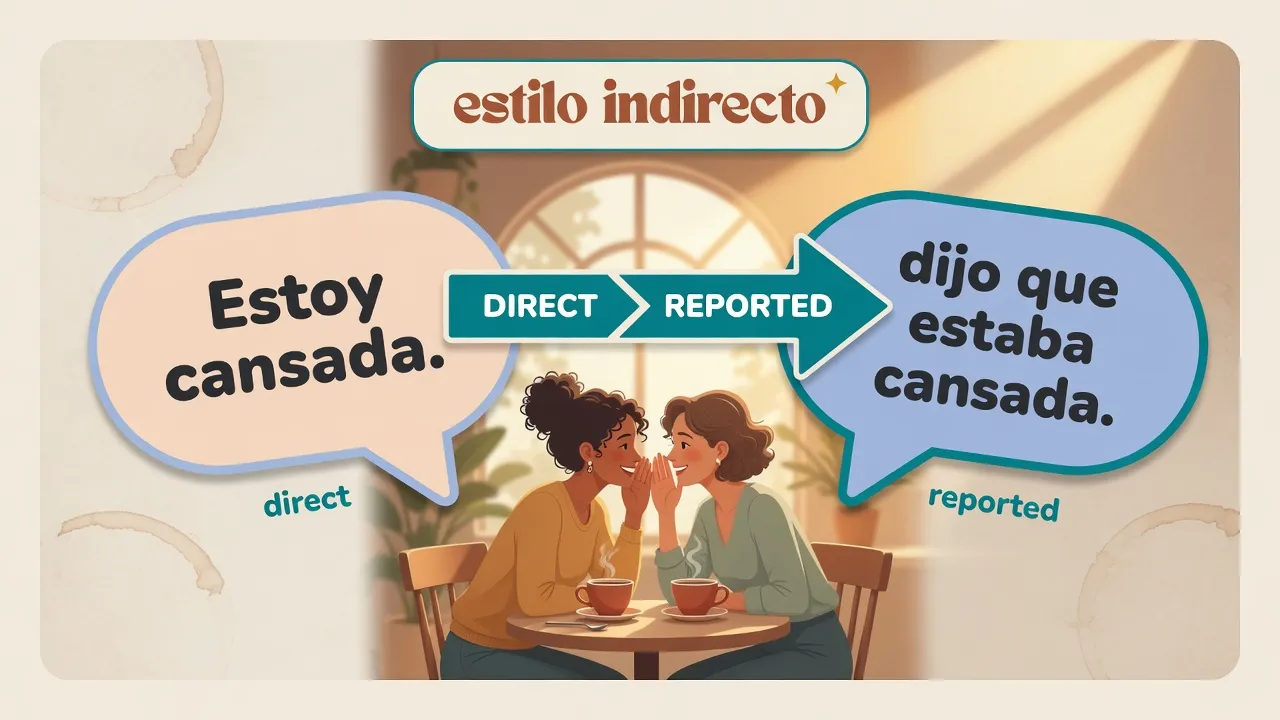
¿Te ha pasado esto? Sabes la regla del estilo indirecto, haces el ejercicio del libro... y en una conversación real (o al resumir un chat de WhatsApp) se te desmontan los tiempos.
No es falta de inteligencia. Es falta de exposición útil. El estilo indirecto se automatiza cuando lo ves cientos de veces en contexto: entrevistas, crónicas, novelas policíacas, mensajes largos, actas, periodismo.
Un solo golpe, sin tabla todavía:
María dijo: "Estoy cansada."
María dijo que estaba cansada.
Misma historia. Otra forma. Ese salto (citar palabras frente a reportar el contenido) es el núcleo de todo lo que sigue.
Respuesta breve. El estilo indirecto (reported speech en español) sirve para contar lo que alguien dijo con que o si (o un interrogativo), más ajustes de persona, tiempo y lugar cuando hacen falta. Si el verbo de reporte va en pasado (dijo, explicó), el español a menudo retrocede un tiempo (presente → imperfecto, futuro → condicional, imperativo → imperfecto de subjuntivo con pedir/decir que). Si el verbo de reporte va en presente, o el hecho sigue siendo verdad, muchas veces no retrocedes. La tabla del aula es una brújula, no un músculo; el músculo llega al ver el patrón en chismes, noticias y diálogos de detective, y al reconstruir directo ↔ indirecto.
Esta guía es gramática española (estilo indirecto). No es la guía de reported speech en inglés (la guía para el inglés está enlazada más abajo).
Más abajo: mapa de tiempos, cinco familias de verbos de reporte, trampas frecuentes, un método de lectura en 4 pasos y un mini taller.
Qué es el estilo indirecto
Estilo directo: citas las palabras tal cual.
María dijo: "Estoy cansada."
Estilo indirecto: reportas el contenido, normalmente con que y ajustes de persona/tiempo.
María dijo que estaba cansada.
En la vida real usamos el indirecto para chismes, reuniones, periodismo, resúmenes y el clásico "me contó que...".
Por qué cuesta tanto si "ya viste la tabla"
Porque la tabla es un resumen, no un músculo.
En el aula ves:
- "Estoy cansado" → Dijo que estaba cansado.
- "Iré mañana" → Dijo que iría al día siguiente.
En una conversación, además tienes que:
- elegir el verbo de reporte (dijo / contó / admitió / negó)
- cambiar pronombres
- ajustar deícticos (hoy, aquí, mañana)
- decidir si el hecho sigue siendo verdad
Eso solo se alivia con muchas frases reales, no con veinte huecos para rellenar.
Mapa de tiempos (cuando el verbo de reporte va en pasado)
Si el verbo introductor está en pasado (dijo, comentó, explicó, confesó), es frecuente este "paso atrás". Piensa en brújula, no en ley religiosa.
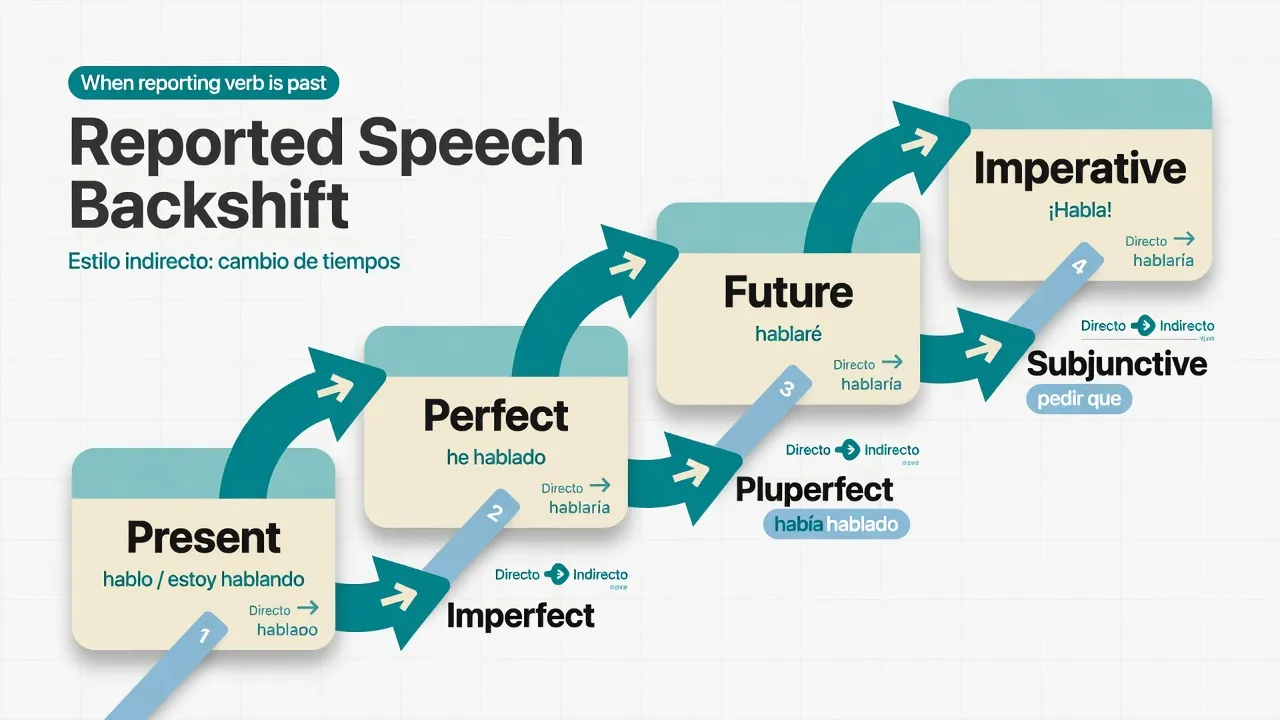
| Tiempo original (directo) | En indirecto (frecuente) | Ejemplo |
|---|---|---|
| Presente | Imperfecto | "Tengo hambre" → Dijo que tenía hambre. |
| Pretérito perfecto | Pluscuamperfecto | "He comido" → Dijo que había comido. |
| Pretérito indefinido | Pluscuamperfecto (o se mantiene en algunos estilos) | "Llegué tarde" → Dijo que había llegado tarde. |
| Futuro (iré) | Condicional (iría) | "Vendré" → Dijo que vendría. |
| Condicional | Condicional (a menudo se mantiene) | "Me gustaría ir" → Dijo que le gustaría ir. |
| Imperativo | Imperfecto de subjuntivo (con pedir/decir que) | "Ven aquí" → Le pidió que viniera. |
El español real admite variación, sobre todo en el habla. En exámenes y en escritura cuidadosa te acercas más al mapa. Si el imperfecto y el pluscuamperfecto aún te pesan, la guía de tiempos del pasado en español ayuda a asentar ese músculo.
Cuando el verbo de reporte está en presente
Si dices dice, comenta, explica en presente, muchas veces no retrocedes el tiempo:
Dice que está cansada.
Comenta que vendrá mañana.
María dice que no va.
Útil en periodismo y en chismes del día.
Los verbos de reporte que cubren casi todo
No necesitas cien verbos. Necesitas dominar familias.
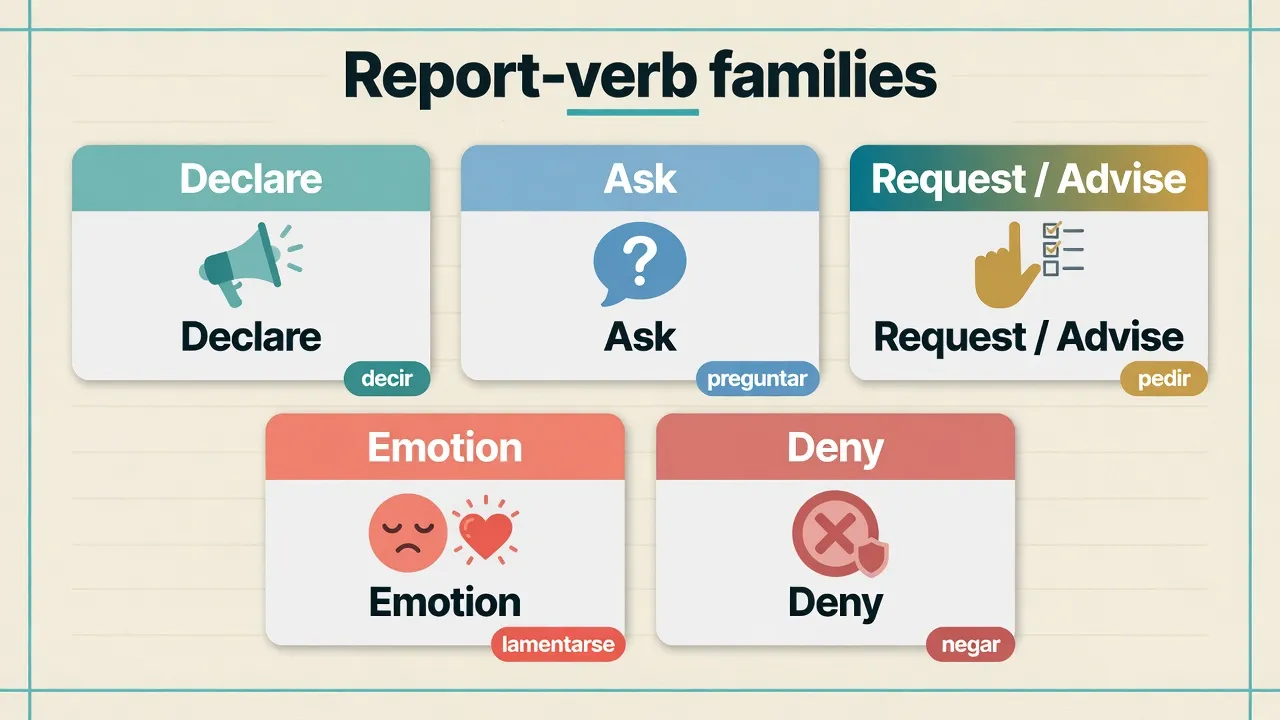
1) Declarar / contar
decir, comentar, explicar, afirmar, señalar, confesar, admitir
María afirmó que conocía al sospechoso desde hacía años.
2) Preguntar
preguntar, querer saber, indagar
- Sí/no: preguntó si...
- Con interrogativo: preguntó dónde/cuándo/por qué...
El periodista preguntó si la cantante pensaba retirarse.
Le preguntó dónde vivía.
3) Pedir / ordenar / aconsejar
pedir, ordenar, rogar, sugerir, aconsejar, recomendar
Suelen llevar subjuntivo:
El médico le aconsejó que dejara de fumar.
Le pidió que llamara más tarde.
Si quieres profundizar en el subjuntivo de consejo y deseo, hay una guía sobre subjuntivo sin drama en diálogos emocionales.
4) Emoción y queja
lamentarse de, alegrarse de, quejarse de, sorprenderse de
Se quejó de que nadie le hubiera avisado.
5) Negar y dudar
negar, dudar, no creer
El acusado negó que hubiera participado en el robo.
Después de negar que es frecuente el subjuntivo. Léelo en crónicas judiciales y se vuelve menos abstracto.
Trampas frecuentes
La mayoría de los fallos no son "me olvidé de toda la tabla". Son pronombres, deícticos, retroceso de más o calco del inglés.
1) Olvidar los pronombres
Directo: "Yo lo hice por mi cuenta."
Indirecto: Confesó que él lo había hecho por su cuenta.
2) No ajustar tiempo y lugar
Las palabras de tiempo y lugar apuntan desde el "ahora" del hablante. Cuando reportas más tarde, la brújula suele moverse.
| Directo | Indirecto frecuente |
|---|---|
| hoy | ese día / aquel día |
| ayer | el día anterior |
| mañana | al día siguiente |
| aquí | allí |
| esta noche | esa / aquella noche |
| el próximo lunes | el lunes siguiente |
No siempre es obligatorio si el contexto ya es claro, pero en exámenes y en escritura cuidadosa sí importa.
3) Cambiar el tiempo cuando no hace falta
Si la información sigue siendo verdad en el momento de reportar, el español puede mantener el presente:
Dijo que la Tierra gira alrededor del Sol.
Me dijo que se llama Ana. (sigue llamándose Ana)
También oirás la versión con retroceso. Ambas aparecen; lo útil es reconocer la lógica.
4) Traducir mentalmente desde el inglés palabra por palabra
El inglés también tiene reported speech, pero los hábitos no son idénticos (sobre todo con subjuntivo tras pedir/aconsejar/negar). Si estudias inglés y español a la vez, no mezcles mapas: la guía de reported speech en inglés es otra intención.
Método práctico de 4 pasos
Cuatro pasos con cualquier texto en español lleno de voz reportada.
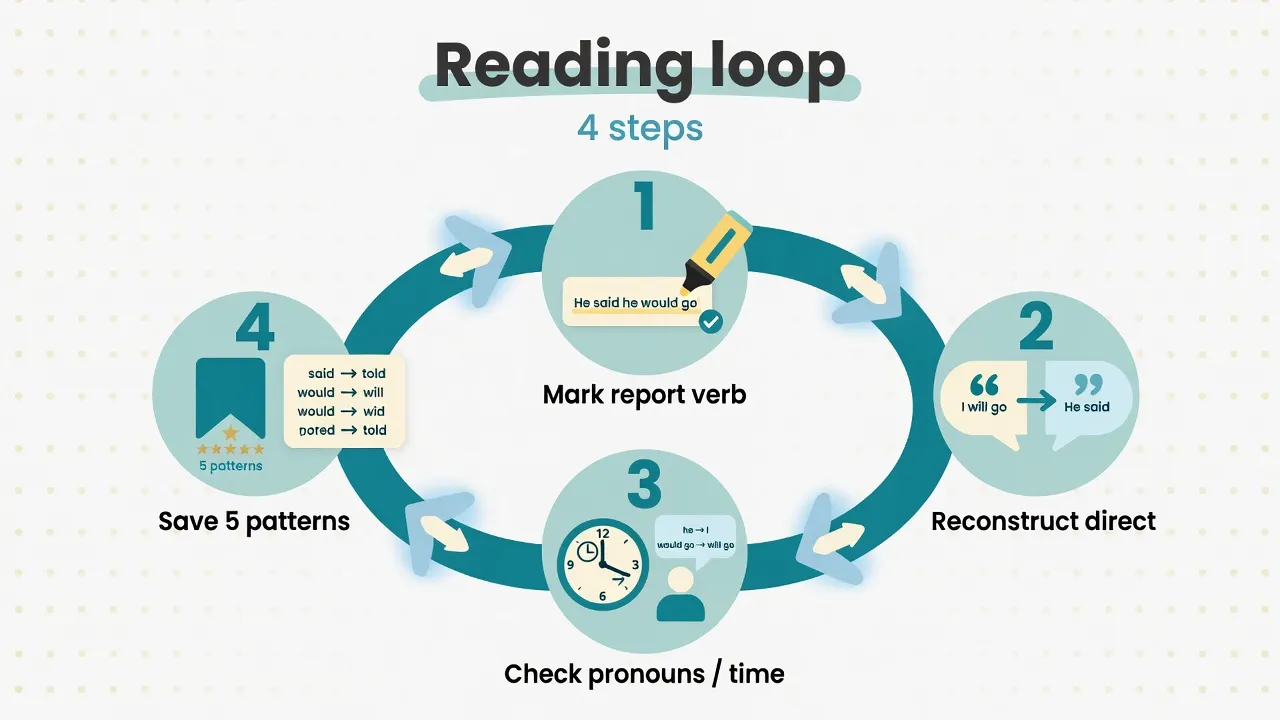
Paso 1: elige textos con mucha voz reportada
Buenos yacimientos:
- entrevistas y perfiles periodísticos
- crónicas judiciales / true crime serio
- novelas con interrogatorios y testimonios
- columnas de actualidad política
- revistas del corazón (como input, no como único modelo de español formal)
También puedes empezar por artículos graduados gratuitos si quieres menos fricción.
Paso 2: marca el verbo de reporte
Cada vez que veas dijo que / explicó que / negó que / preguntó si, párate un segundo.
Paso 3: reconstruye el directo
Lees:
El detective le preguntó si había estado en la casa aquella noche.
Pregúntate:
¿Original posible? "¿Estuviste en la casa anoche?"
Ese ejercicio entrena la transformación en las dos direcciones.
Paso 4: guarda 5 patrones, no 40 filas
Ejemplos de notas útiles:
- dijo que + imperfecto
- preguntó si + pluscuamperfecto
- le pidió que + imperfecto de subjuntivo
- negó que + hubiera + participio
- dice que + presente (reporte en presente, a menudo sin retroceso)
Si el imperfecto y el pluscuamperfecto se te resisten, vuelve a la guía de pretérito e imperfecto y luego guarda de nuevo estos moldes.
Mini taller con ejemplos
Cuatro ejercicios core (más uno opcional con negar). Léelos en voz alta: el oído ayuda más que copiar la tabla otra vez.
Directo: "No puedo ir mañana."
Indirecto: Dijo que no podía ir al día siguiente.
Directo: "¿Has visto las llaves?"
Indirecto: Me preguntó si había visto las llaves.
Directo: "Llama a tu madre."
Indirecto: Me dijo / pidió que llamara a mi madre.
Directo: "Nunca he estado en Lima."
Indirecto: Afirmó que nunca había estado en Lima.
Opcional. Directo: "No participé en el robo."
Indirecto: Negó que hubiera participado en el robo.
Cómo encaja MovaReader
Para practicar estilo indirecto necesitas volumen de texto en español y un poco de análisis. MovaReader es una app de lectura con menos fricción al traducir: te encuentras el estilo indirecto dentro de textos graduados y de archivos que tú posees. Tú marcas dijo que / preguntó si / negó que.
Sirve para:
- Leer textos graduados en español con clic para traducir
- Subir un EPUB o archivo tuyo (material legal que posees; no hospedamos novelas comerciales con licencia gratis por defecto)
- Escuchar (útil después de entender la página)
- Guardar frases y practicarlas en demos/entrenadores
Planes reales:
- freemium: unas 20 traducciones de palabras al día, listening ilimitado
- Reader (€1): traducciones de palabras ilimitadas
- Pro (€5/mes): entrenadores completos
Enlaces útiles:
Ruta sugerida hoy:
- Abre un texto corto de la biblioteca gratuita (o las muestras A1/A2).
- Marca 3-5 casos de dijo que / preguntó si / pidió que / negó que.
- Reescribe uno en estilo directo (o al revés).
- Guarda el patrón (no 40 filas de la tabla).
- Si te resulta útil, practica la frase en el demo de palabras o el demo de frases (Pro para entrenadores completos).
Empieza gratis. El plan de pago solo importa cuando el límite diario de traducciones te frena de verdad.
FAQ
¿Estilo indirecto y reported speech son lo mismo?
En la práctica del aprendizaje de lenguas, sí: reportar lo que alguien dijo (el contenido, no siempre la cita palabra por palabra). En español suele llamarse estilo indirecto. El término inglés "reported speech" / "indirect speech" apunta a la misma habilidad; solo recuerda que los hábitos españoles (incluido el subjuntivo tras pedir y negar) no son una copia exacta del inglés.
¿Siempre hay que cambiar el tiempo?
No. Depende del tiempo del verbo de reporte y de si el contenido sigue vigente. Con reporte en pasado (dijo, explicó) suele haber retroceso. Con reporte en presente (dice, comenta) a menudo se mantiene el tiempo original. Los hechos que siguen siendo verdad pueden quedarse en presente (Me dijo que se llama Ana). El habla real varía; la tabla es brújula, no multa.
¿Qué es más difícil: dijo que o le pidió que?
Para muchos estudiantes, las órdenes y consejos duelen más. Dijo que + indicativo con retroceso es un mapa. Le pidió / aconsejó que suele pedir subjuntivo (llamara, dejara). Negó que también suele ir con subjuntivo. Si dijo que te sale bien pero las peticiones se pegan, es normal: entrena esa familia a propósito.
¿Sirve leer revistas del corazón para esto?
Sí, como input. Están llenas de confesó que / aseguró que / fuentes afirman que. Úsalas para ver la voz reportada en la calle, no como única fuente de español formal. Combínalas con entrevistas, crónicas serias y artículos graduados cuando quieras un registro más limpio.
¿Puedo dominar esto solo con ejercicios de gramática?
Puedes aprobar un examen corto. Para resumir con soltura hace falta ver el patrón en textos y usarlo al contar lo que dijo alguien de verdad. Los ejercicios etiquetan el mapa; la exposición construye el músculo. Ninguno de los dos garantiza fluidez por sí solo.
¿MovaReader corrige automáticamente mi estilo indirecto al escribir?
No es una función central. El valor principal aquí es leer español con apoyo al clic, escuchar cuando ayuda y practicar frases que tú eliges guardar en demos/entrenadores. No es un profesor de IA que desmonta cada cláusula reportada por ti.
Cierre
El estilo indirecto no se "termina" en una unidad del libro. Se vuelve natural cuando resumes lo que dijo un personaje, un entrevistado o un compañero sin traducir palabra por palabra desde tu idioma.
Empieza hoy con un texto corto, marca cinco reportes y reescribe uno. Si quieres menos fricción al leer en español, abre un artículo gratuito y deja los planes de pago para cuando el límite diario de traducciones te importe de verdad.
Si también estudias reported speech en inglés, usa la guía de reported speech en inglés por separado: otro idioma, otro mapa, misma idea de brújula.
¿Aprendes español?
La versión en español de MovaReader enseña inglés y ucraniano. Para leer en español con traducción de cada palabra, abre el lector en inglés o en ucraniano:
Spanish booksThis article in EnglishКниги іспанськоюЦя стаття українською