Blind Reading Syndrome: Stop Skimming Without Losing the Plot
You read three pages and cannot recall a single detail. That is skimming-as-blind-reading: eyes move, plot fog. Notice it, interrupt it, keep the story.
You turn the page. Then another. Fifteen minutes pass, and someone went somewhere and said something - but the details dissolved into fog.
That is blind reading in the skimming sense. In a second language, decoding burns working memory so the story never sticks. It is not stupidity. It is not always "too few words." You fix it by changing how you read and by matching the level - paragraph checkpoints, a thin plot skeleton, audio for pacing - not by looking up every adjective or asking a tool to understand the book for you.
Below: why your brain skims on autopilot, five warning signs, six fixes, a minute-by-minute 15-minute repair, and what not to do.
Why does your brain skim foreign text on autopilot?
In your first language, reading leans on prediction. You anticipate phrasing from patterns you have seen thousands of times. That frees attention for plot and tone.
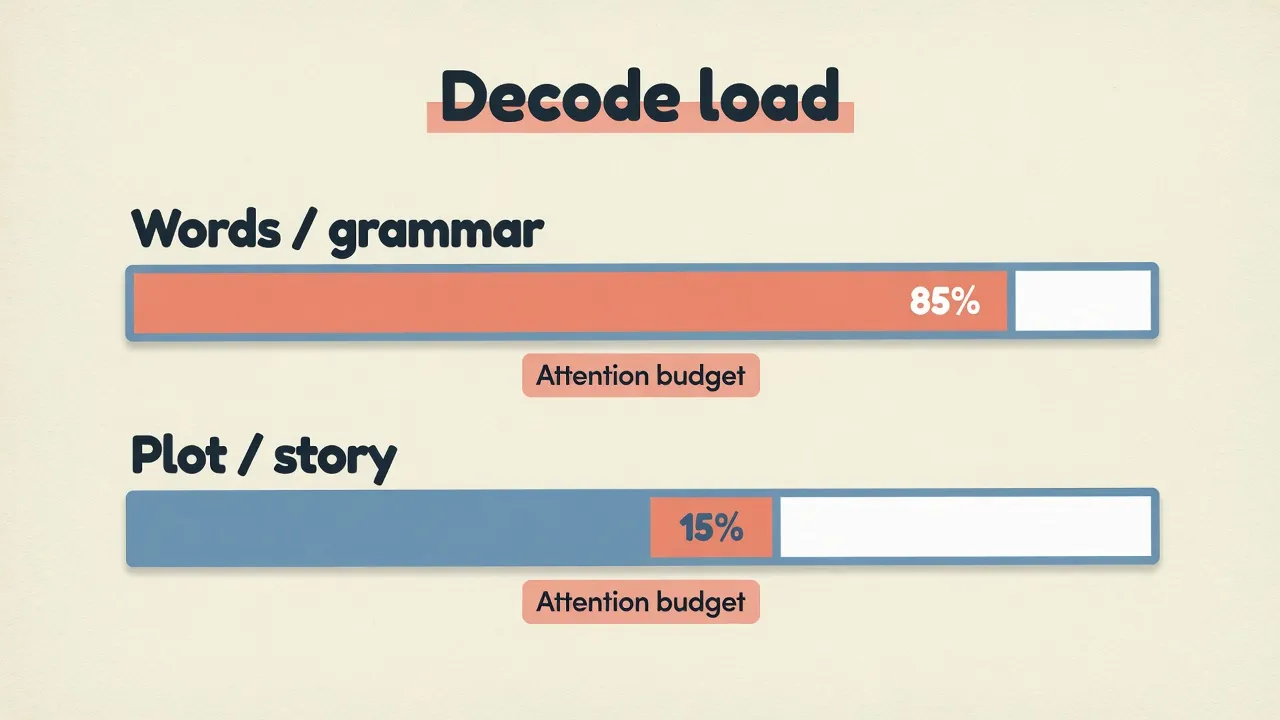
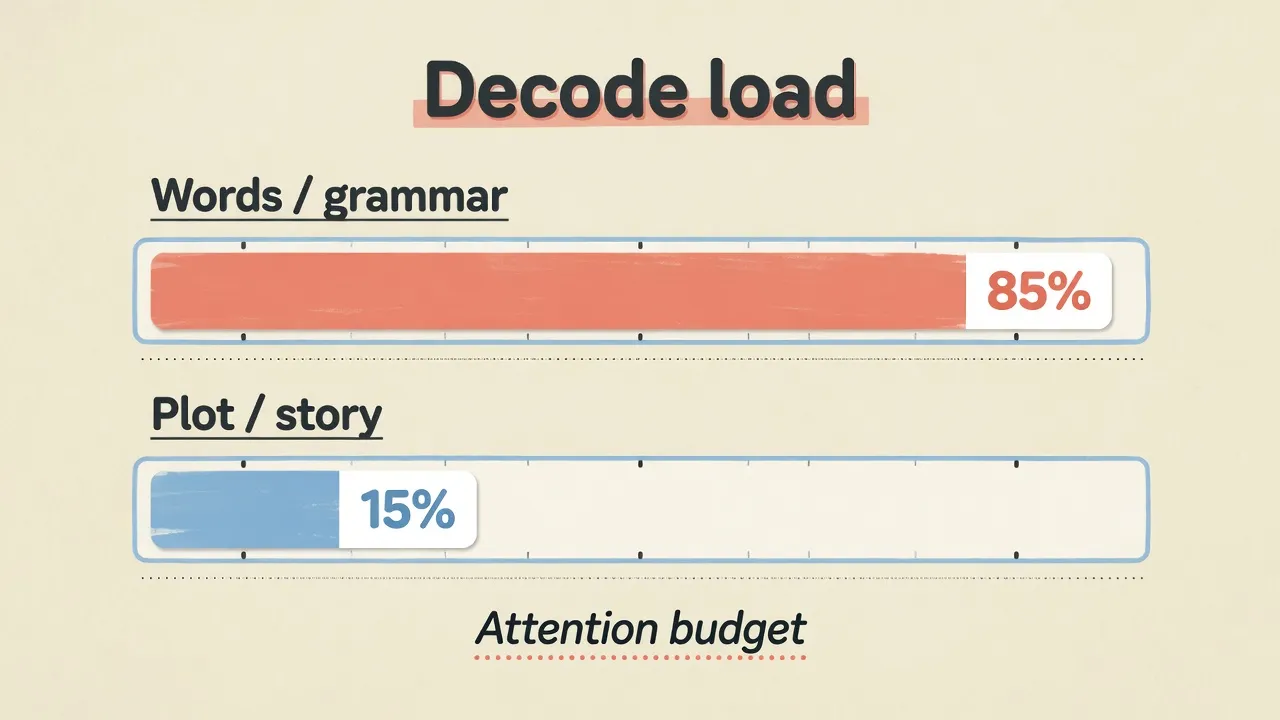
In a second language, prediction is weaker. More of your attention goes to fuzzy words, who the subject is, which clause owns the verb, and whether a line is dialogue, flashback, or description. Psycholinguistics often calls the result decode load. When load is high, meaning gets skipped without a conscious decision. Eyes still scan. Pages still turn. The plot does not stick - that is plot fog.
So blind-skimming is usually a mix of:
- text a bit too hard for comfortable reading
- no meaning checkpoints
- speed that outruns comprehension
- perfectionism that freezes you on decorative words
Here is the simple picture: your attention budget fills up on words and grammar, and the plot bar stays almost empty.
If that sounds familiar, you are not broken. You need a repair kit that forces meaning to land before you race ahead.
Five warning signs you are blind-skimming
- Page-flip amnesia - you finish a chapter and cannot state one sentence about it
- Re-read loop - you restart the same paragraph and zone out again
- Word-by-word trap - words look familiar, the sentence as a whole does not
- Emotional flatline - a joke or shock scene produces no reaction
- "I'll get it later" - you keep going, hoping the next page will explain the last three, and the fog compounds
If two or more sound familiar, treat the next sections as a repair kit, not as extra homework.
Strategy 1: The paragraph checkpoint
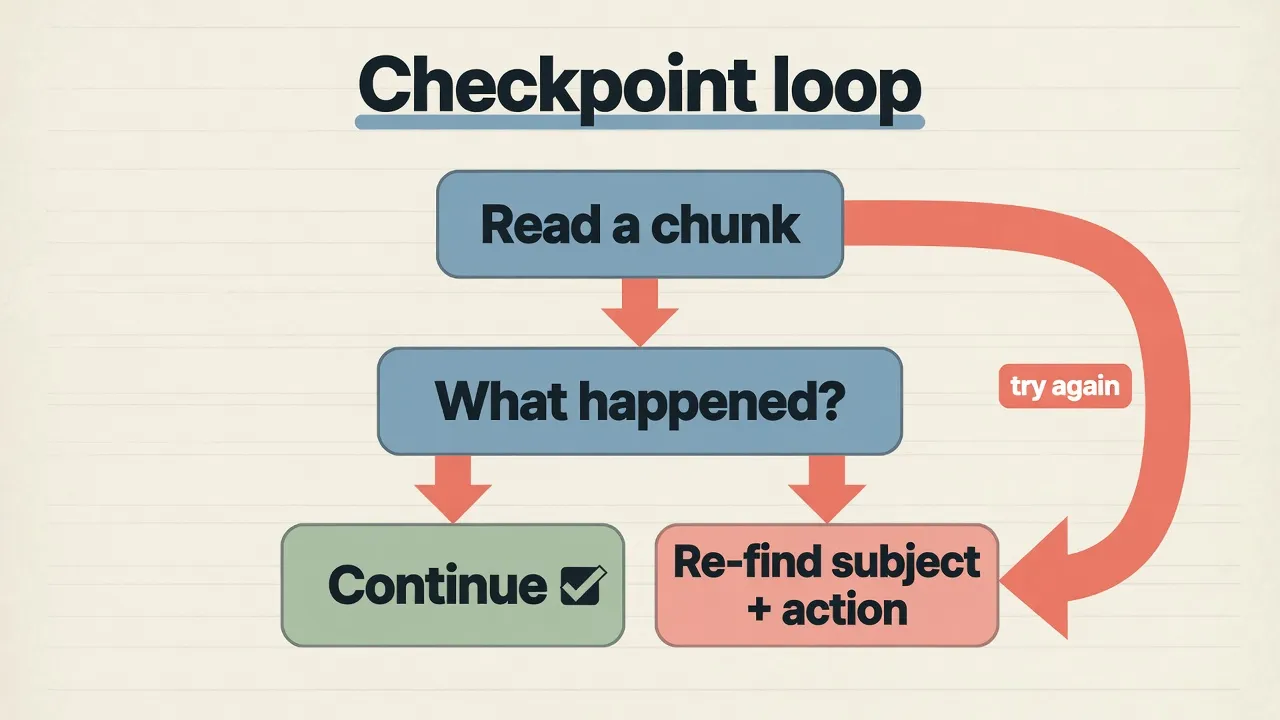
At the end of each paragraph (or every short scene), pause and answer one question only:
What just happened?
Not "What does every word mean?" and not "Can I translate this?" Only: who did what, and what changed?
- If you can answer in one rough sentence, continue.
- If you draw a blank, re-read once with a narrower mission: find subject + action. Ignore adjectives and scenery until that skeleton is clear.
Tiny Hemingway example:
"He was an old man who fished alone in a skiff in the Gulf Stream and he had gone eighty-four days now without taking a fish."
Core for a B1 reader: old man, fishing alone, 84 days, no fish. That is enough to stay in the story. Style appreciation can wait.
This works because it turns passive scanning into active monitoring. You stop hoping you understood; you check.
Strategy 2: First sentence, last sentence (when structure allows)
Before you fully read a paragraph of nonfiction, news, or essay prose, glance at the first and last sentence.
In many well-edited texts, the first line sets the claim and the last line closes or transitions. That frame helps your brain place the middle details.
This helps less in dense literary stream-of-consciousness, where paragraphs may not behave like school essays. Use it as a tool, not a religion.
Strategy 3: Audiobook or TTS as a pacing anchor
Simultaneous listen + read is one of the most reliable ways to stop skimming too fast.
Why it helps:
- Pacing - audio slows you to a speech-like rate
- Prosody - pauses and stress mark clause boundaries your eyes may miss
- Dual channel - visual plus auditory encoding often improves retention for the same stretch of text
You do not need a commercial audiobook for every page. If your reader has text-to-speech for the text you are studying, use it on hard paragraphs after one silent pass - or side by side when the text is only slightly above comfort.
Honest product note: on MovaReader, listening is unlimited on freemium. Use it when audio clarifies rhythm. Do not use it as a substitute for choosing easier text.
Strategy 4: Keep a thin plot skeleton
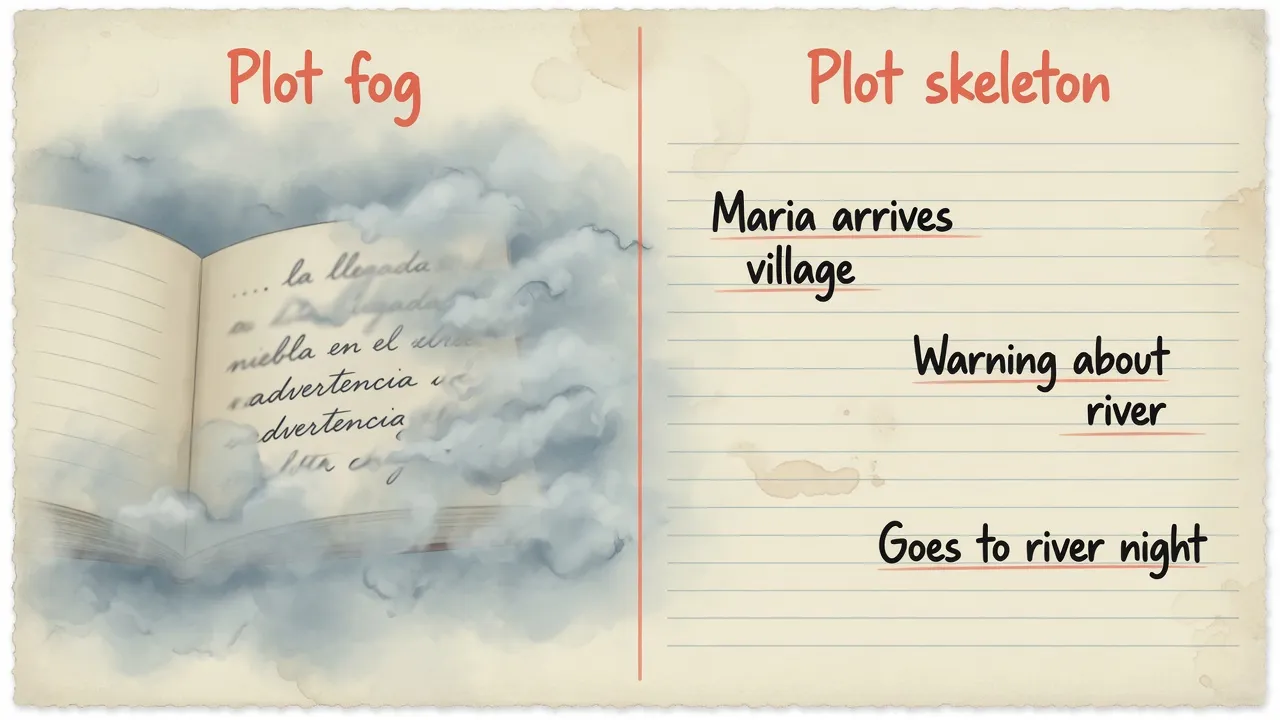
After every few pages, write one line, not a journal:
- p.12 - Maria arrives in the village; meets an old woman
- p.15 - warning about the river
- p.18 - she goes to the river at night anyway
Two jobs at once:
- You cannot summarize what you never understood, so the note forces a meaning check.
- Foreign-language plot details fade faster under cognitive load; a thin skeleton externalizes memory for tomorrow's session.
Digital notes, paper margin, phone memo - format does not matter. Length does: keep it thin so you still spend time reading.
Strategy 5: Lower the comprehension bar on purpose
A huge driver of blind-skimming is perfectionism.
Many learners believe a page "counts" only if every sentence is clear. When a dense stretch appears, they either re-read five times (kill momentum) or zone out (blind mode).
For extensive reading, roughly 70-90% comprehension is often enough to follow plot, enjoy the book, and pick up language. If you have the gist - who, what, where, why - the paragraph did its job. Save deep analysis for a few lines that matter, not for every modifier.
The practical rule of thumb from comprehensible-input thinking still holds here: input should be mostly understandable with a bit of stretch. That is a level-fit habit, not a promise that any book will make you fluent.
Strategy 6: Drop the book when you are drowning
If you understand less than about 60%, strategies will not save the session. You are not "lazy." You are over-leveled.
Do this instead:
- Switch to a shorter or easier text for a week.
- Return to the hard book later, or treat it as intensive study (few pages, many lookups) rather than pleasure reading.
- Prefer material you can finish, not prestige titles that empty your willpower.
Try a free graded sample before you blame yourself:
If those feel fine and your novel still feels like fog, the novel is the problem - not your discipline.
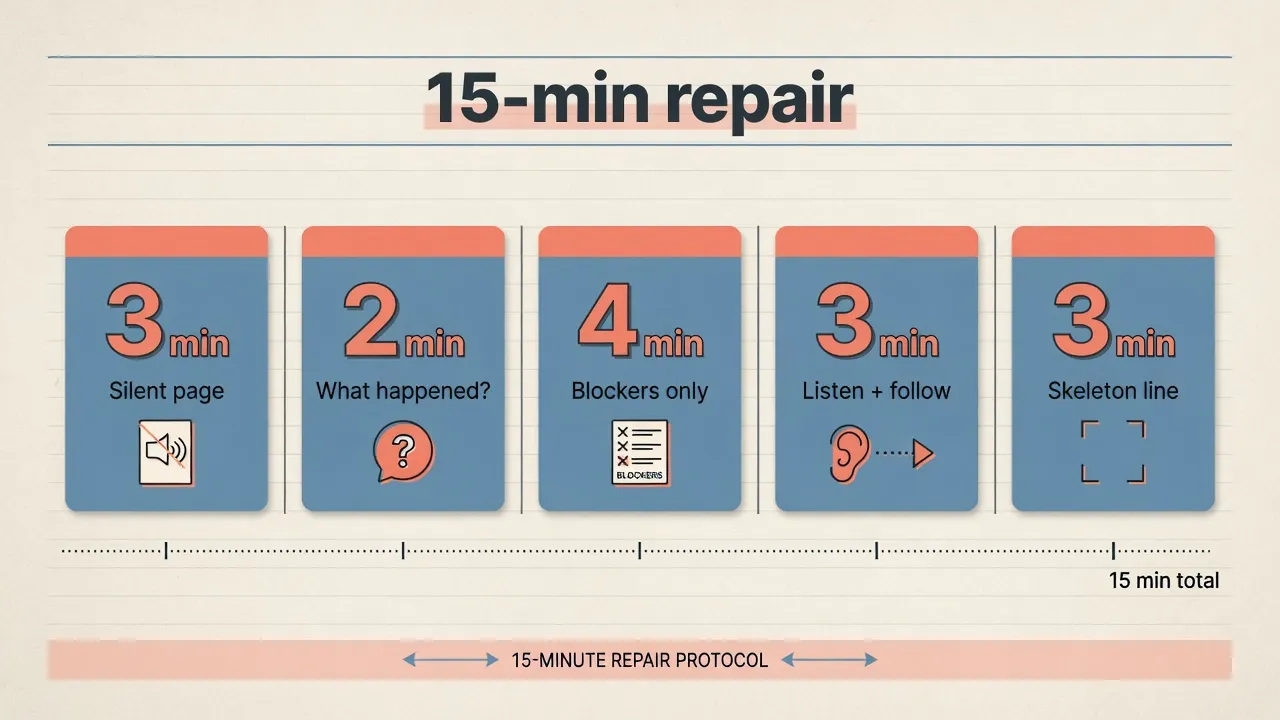
A 15-minute repair session (use today)
This is the session you can run the next time pages turn and the plot evaporates.
| Minutes | Do |
|---|---|
| 3 | Read one page silently. No dictionary yet. |
| 2 | Write one sentence: what happened? |
| 4 | Re-read only the foggy paragraph. Look up blockers only (words that kill the whole sentence). |
| 3 | Optional: listen once while eyes follow the same lines. |
| 3 | Add one plot-skeleton line; save 3-5 phrases max, not 30 orphan words. |
Stop when the timer ends, even mid-chapter. Habit beats heroics.
What not to do
These habits feel productive and still kill the plot.
| Habit | Why it backfires |
|---|---|
| Translate every adjective | Burns working memory; story never forms |
| "I'll understand later" for three pages | Fog compounds; recovery cost rises |
| Only hard prestige novels | Builds guilt, not prediction skill |
| Summarizer dependency | Outsources the muscle you need: rebuild meaning yourself |
| Weekend 3-hour marathons | Fatigue looks like "I am bad at languages" |
Especially avoid tools that replace comprehension checks with ready-made paragraph summaries. A summary can feel productive and still leave your prediction engine untrained. Reconstruct meaning yourself first; look up blockers only.
How MovaReader fits (honestly)
You do not need an app that explains the author. You need fewer tab hops and a text level your working memory can hold.
MovaReader is reading plus light practice infrastructure: graded text, click blockers, listening, short trainers. It lowers friction so you can rebuild the plot - it does not rebuild the plot for you.
Here is the honest fit for blind-skimming:
When the page is fog, warm up on a free graded article until checkpoints feel easy.
On harder pages you own, tap only the words that kill the sentence. Freemium includes about 20 translations a day; if longer sessions hit the cap, Reader at €1 unlocks unlimited translations. Listening is unlimited on freemium - use it as a pacing anchor, not a miracle narration tier.
After a short session, turn a few saved phrases into active recall. Free demos: word typing, phrase typing. Full trainers are on Pro (€5/mo). Upload EPUBs you already own - we do not ship free commercial bestseller chapters in-app. Details: Pricing.
What it does not do:
- paragraph AI summarizer that explains what the author meant
- free in-app chapters of licensed commercial bestsellers
- a guarantee that any novel becomes easy if you pay
Useful workflow:
- Graded article for about 10 minutes (checkpoints on)
- Harder page from a book you own, still with checkpoints
- Five minutes of phrase practice on what you saved
That is infrastructure for comprehension checks. Attention is still yours.
(If you want the broader eyes-versus-meaning map, not only skimming speed and plot fog, there is a related blind-reading guide.)
FAQ
Is blind reading the same as ADHD or dyslexia?
Not necessarily. Those are real conditions and can affect reading. Plenty of learners without them still blind-skim in a second language when decode load is high. Hard in every language? Talk to a specialist. Mainly in the language you are learning? Start with level and method.
Should I re-read every paragraph twice?
Only when the checkpoint fails. Mandatory double-reading of easy paragraphs kills flow. Check meaning; re-read on demand.
How many words should I look up per page?
If you need more than a handful of blockers, the text is probably too hard for extensive reading. Intensive study is fine in short bursts - just do not call it "just reading."
Does listening always improve comprehension?
No. On a page you barely understand, audio can add noise. Use listen+read when you already have partial meaning and need pacing and prosody.
Can I fix this with more flashcards?
Flashcards may grow vocabulary. Blind-skimming is often a text-processing habit problem. You still need practice holding meaning across sentences while you read.
How long until the plot fog lifts?
Usually weeks of consistent, level-appropriate reading - not one weekend. Each session where you understand most of the page trains prediction a little more.
Final takeaway
Blind-skimming is usually not a character flaw. It is overloaded working memory plus missing checkpoints - plot fog after the eyes have already moved on.
Stop at the paragraph. Recover subject and action. Keep a thin plot skeleton. Use audio for pacing. Drop books that drown you. Look up blockers, not everything.
Tools should reduce friction - click-to-translate, listening, short trainers - not invent a fake button that understands the book for you. If you want a clean start today, open a free graded text, run three paragraph checkpoints, and only then touch a harder book you actually own.
Learn languages by reading!
Try MovaReader for just €1 — read texts with instant translation and interactive vocabulary training.
Free plan: 20 word translations/day and unlimited listening. Pro (€5/mo) unlocks full trainers.