Reading Strategies
How to Read Your First Book in a Foreign Language Without Quitting on Page 5
You quit on page 5 because lookups kill the plot, not because you are bad at languages. Pick an easier book, keep help on the page, read short daily chunks, and climb a simple ladder.
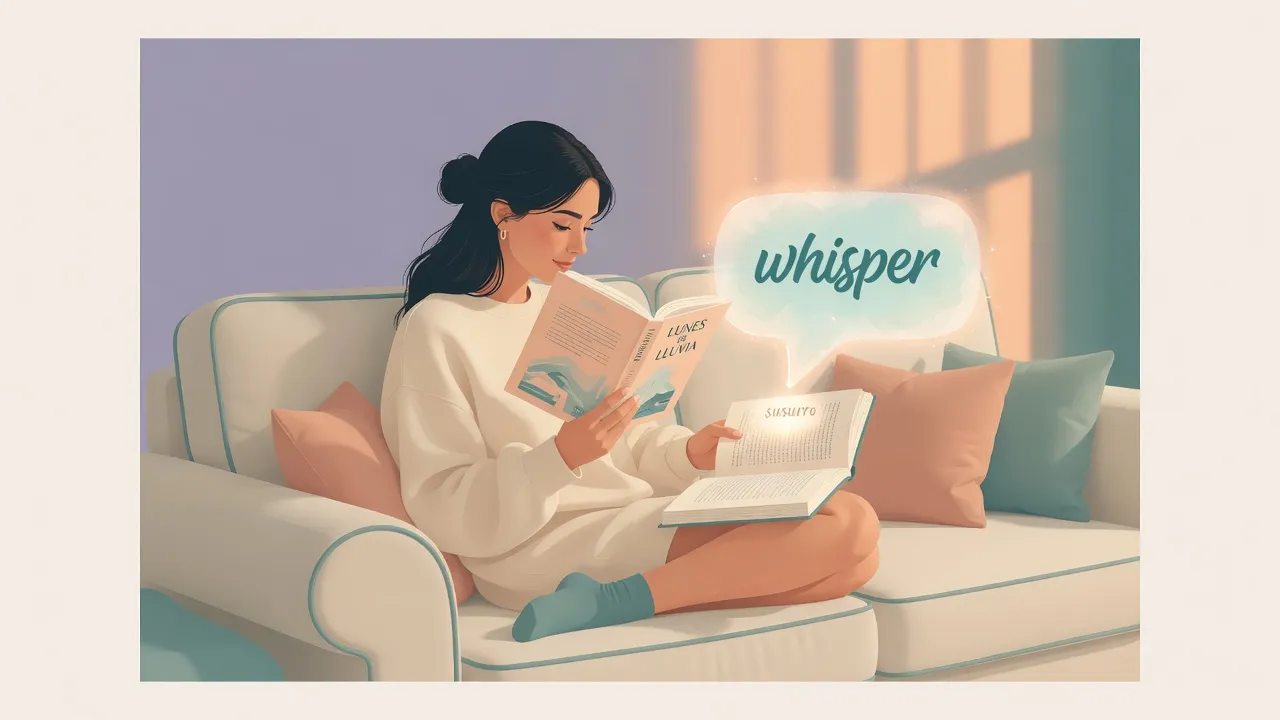
You bought the book. You were excited. You opened page one, hit three unknown words, pulled out your phone, typed them into a translator, forgot the sentence, re-read the paragraph, hit two more words, and closed the file for good.
That is normal. It is usually friction plus the wrong book level - not a character flaw and not proof that you are "bad at languages."
How to finish the first book: choose a text you already understand most of, keep help on the same page when you need it, read short daily chunks, guess before you look up, skip words that do not block the plot, then climb a simple ladder. If a full novel still feels brutal, start with a free graded article today and graduate to a book you own.
(If your only target is English as a second language, we also have a focused guide: how to read your first book in English. This post is for any target language you are learning, with the same finish-the-book logic.)
Why page 5 kills the habit
When people say "reading in a foreign language is hard," they often mean this:
- Dictionary hops take longer than the sentence.
- By the time you return, the plot thread is gone.
- Every paragraph feels like work, so your brain files the whole hobby under "pain."
None of that is mainly about how many words you "should" know. It is about interruption cost. Stop, switch app, type, pick a meaning, switch back, find your place, re-read. Do that thirty times a chapter and the story never gets a chance.
So the goal is not heroic willpower. The goal is fewer interruptions and a book that already sits near your level.
What "ready to read a book" actually means
You do not need exam B2 before you open a story. You need two things:
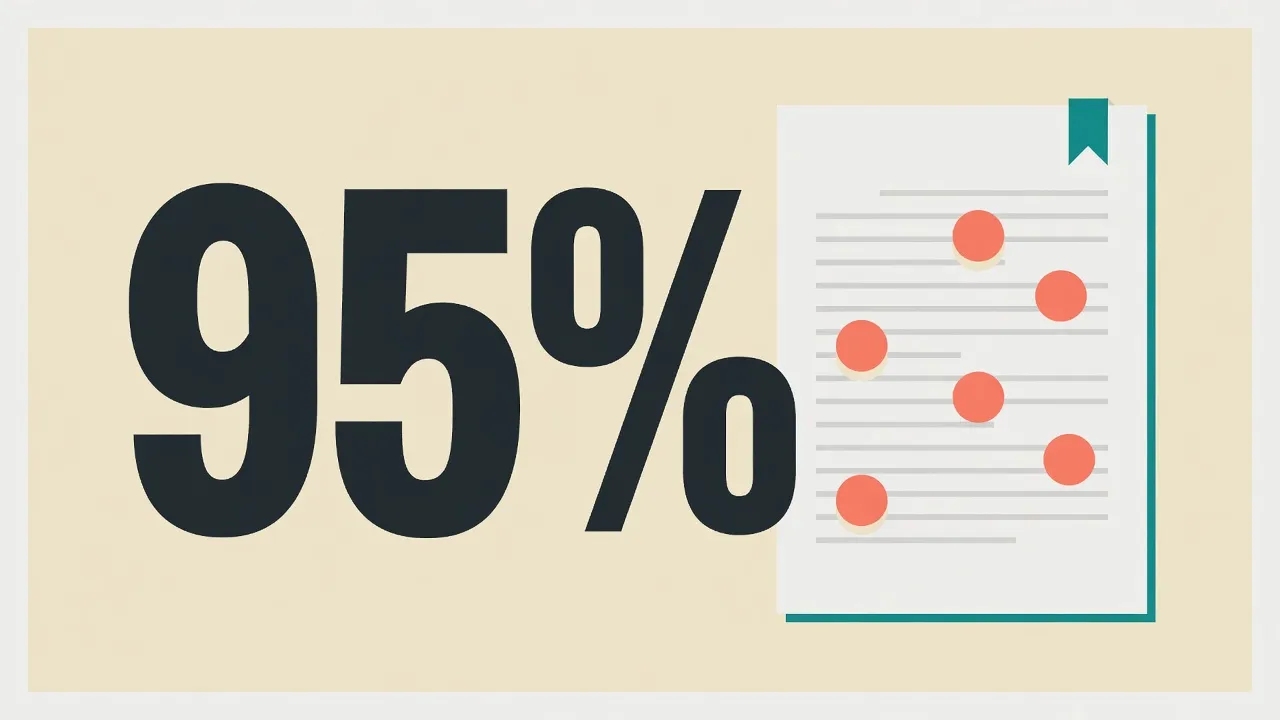
- High known-word comfort on a random page - roughly the feel of understanding most of what is happening (many teachers talk about a high percentage of known words; treat ~90-95% as a practical comfort zone, not a lab measurement).
- Interest. If you hate the genre, every unknown word feels heavier.
Comprehensible input is the friendly name for this: enough meaning to stay with the message, with a little stretch left for growth.
A quick multi-page check beats one lucky easy page. For a simple on-paper test, see the 5-finger rule for book level. Then still read a middle page with zero lookups and ask: can I retell the gist?
Step 1 - Choose the right book
Open a random middle page. Read one page without looking anything up. If almost every paragraph is dense with new words, that book is too hard for now. If you can follow the gist, keep it as a candidate - and check a second page so you did not land on a soft stretch.
Genres that work well for a first foreign-language book
| Kind of book | Why it works | Realistic note |
|---|---|---|
| Graded readers / short graded articles | Controlled vocab, finishable | Best free warm-up if novels still feel heavy |
| Young adult fiction | Clearer syntax, modern words, plot pull | Still hard if far above your level |
| Short chapters / thrillers | Natural stopping points, momentum | Dialogue-heavy text can help or hurt depending on dialect |
| Short story collections | Restart points if one story is tough | Style can jump between stories |
| A book you already know in your language | Plot memory frees attention for language | Spoilers are a feature here |
For concrete title ideas by band, browse our lists of easiest English books for A2-B1 and easiest Spanish books for A2-B1. Want a zero-cost warm-up before any novel? Open a free graded text in the article library - for example Spanish A2 sample or Spanish A1 sample.
Step 2 - Stop the 8-step dictionary hop
This is the step most learners get wrong out of good intentions.
Do not keep a paper dictionary as your default. Do not open a translator in another tab for every sticky word. Do not hop across five dictionary apps.
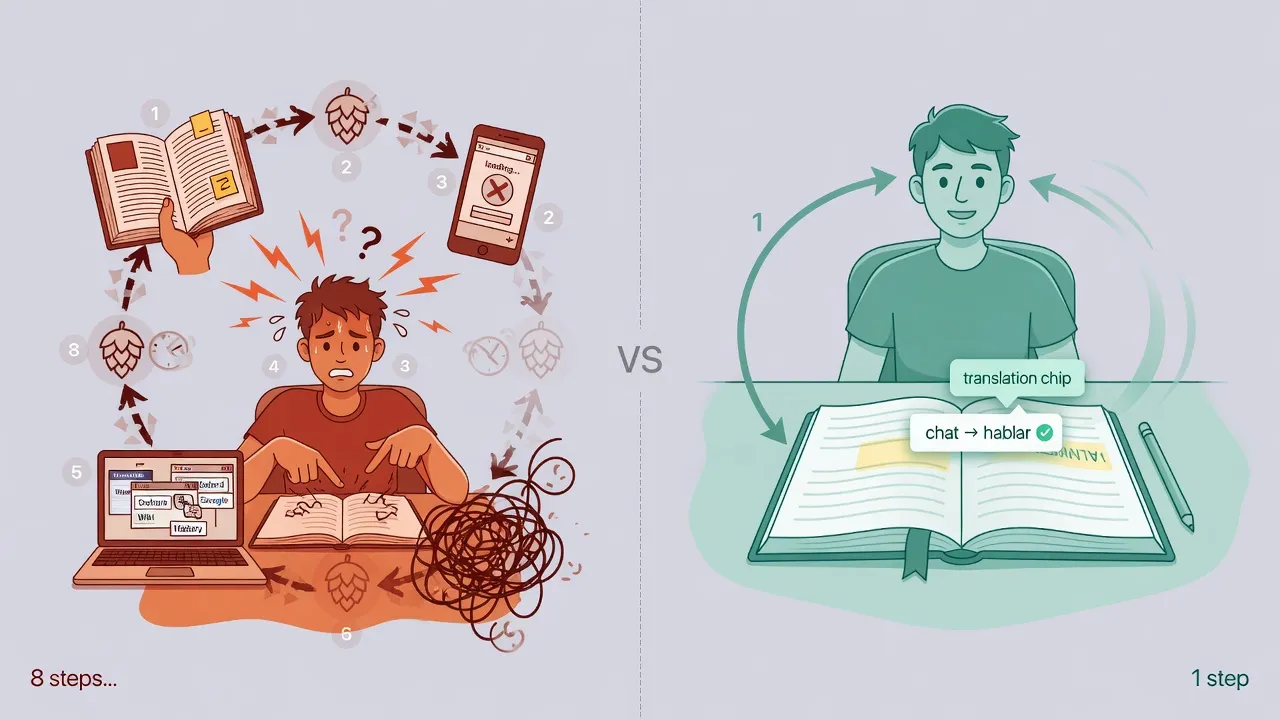
Every hop tends to look like this:
- Stop reading
- Switch context
- Type or search
- Read a definition (often several senses)
- Decide which sense fits
- Switch back to the book
- Find your place
- Re-read the sentence
Eight micro-steps between you and the plot. Exhausting by page 5.
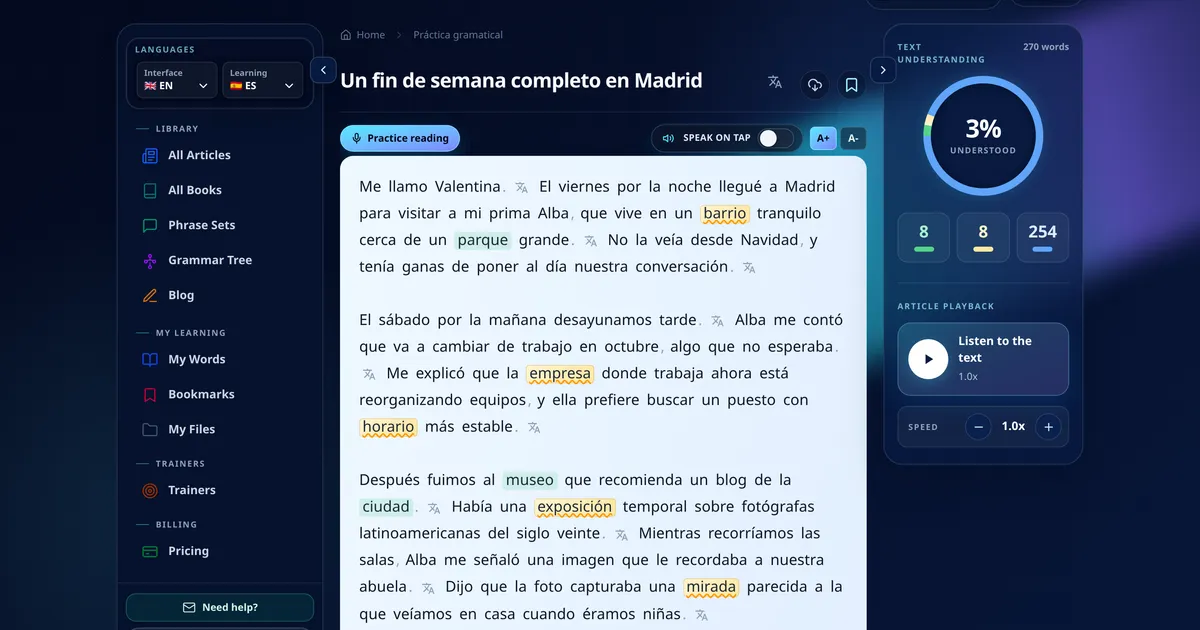
What you want instead is help that stays on the page: one click, a meaning in context, then back to the sentence. Same screen. Same paragraph. Story still warm.
Here is the idea as a simple comparison:
You can learn the click-and-keep-reading flow in how to use MovaReader. Pricing and plans are on pricing if you later want more daily translations for real book volume.
Step 3 - Short sessions beat marathons
Your first foreign-language book is training, not a weekend stunt.
A realistic first-week map
| Days | Goal | Time |
|---|---|---|
| 1-2 | 2-3 pages (or one short graded text). Learn the tool and the voice of the text. | ~15 min |
| 3-4 | 5-7 pages. Fewer lookups if the book fits. | ~20 min |
| 5-7 | 10-15 pages if energy allows. Stop while it is still pleasant. | 25-30 min |
| Week 2+ | Keep the streak. Volume grows when friction is low. | 30+ min as desired |
Authors reuse their favorite words. After a few chapters of a fitting book, the same furniture of language keeps showing up, and pages feel lighter. That is not magic - it is repetition inside one world.
Short and consistent beats rare marathons. If time is tight, the 15-minute rule for vocabulary with no free time pairs well with this schedule.
The loop you want looks like this: open the text, guess or click only when stuck, keep going, stop while it is still fun.
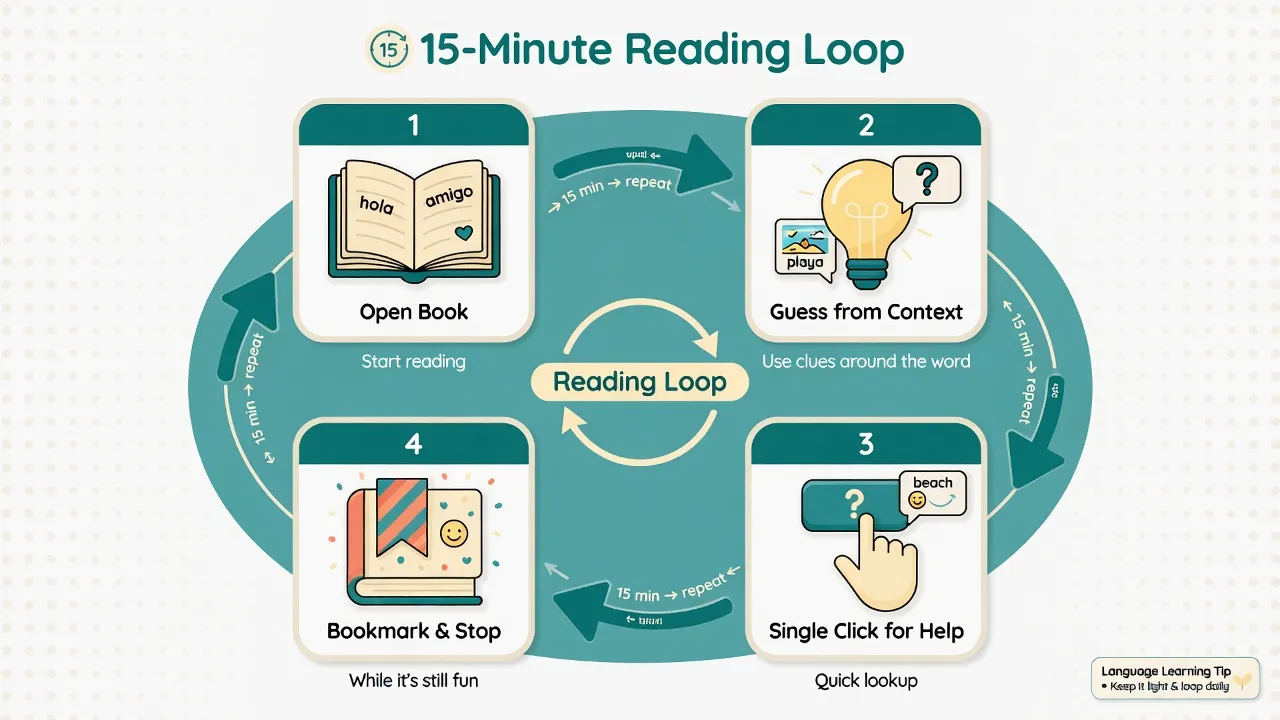
Step 4 - Guess from context for 3 seconds, then click if needed
Before you look a word up, give yourself about three seconds of honest guessing.
Try this Spanish sentence:
"La anciana caminaba lentamente por el sendero, apoyándose en un bastón de madera."
You might not know anciana, sendero, or bastón. Clues still pile up:
- Someone is walking slowly (lentamente)
- They are leaning on something (apoyándose)
- That something is made of wood (de madera)
Your brain drafts a picture: an older person on a path with a wooden walking stick. Then you confirm only what is still foggy. That tiny prediction makes the later confirmation feel earned - you were already thinking about the scene, not collecting isolated dictionary lines.
For more practice on this skill, see guessing words from context without a dictionary. The same habit works in Spanish or English.
Step 5 - Do not look up every word
Perfectionists hate this rule. Finishers need it.
If you can follow the plot without a word, skip it.
Often skip:
- Rare flavor words you may never see again
- Names you can treat as labels
- One-off technical blips in a single scene
- Archaic flourishes that do not carry the action
Look up if the word blocks the plot or it keeps repeating and stays opaque.
The goal is comprehension and momentum, not a perfect word list. High known-word comfort plus a plot filter beats "translate the whole page."
Step 6 - Light tracking without a paper notebook guilt trip
You do not need a beautiful notebook you never open again.
Keep tracking light:
- Notice words you click more than once.
- Optionally mark a few high-value items in your reading tool or language map when you care.
- Skip evening "review homework" sessions that feel like punishment after a good chapter.
If paper lists already killed your motivation once, you are not alone - there are lighter alternatives to paper vocabulary notebooks. The point is simple: capture only what helps, then return to the story.
Step 7 - Ladder to harder books
When book one is done, do not leap to the hardest classic you can name. Climb.
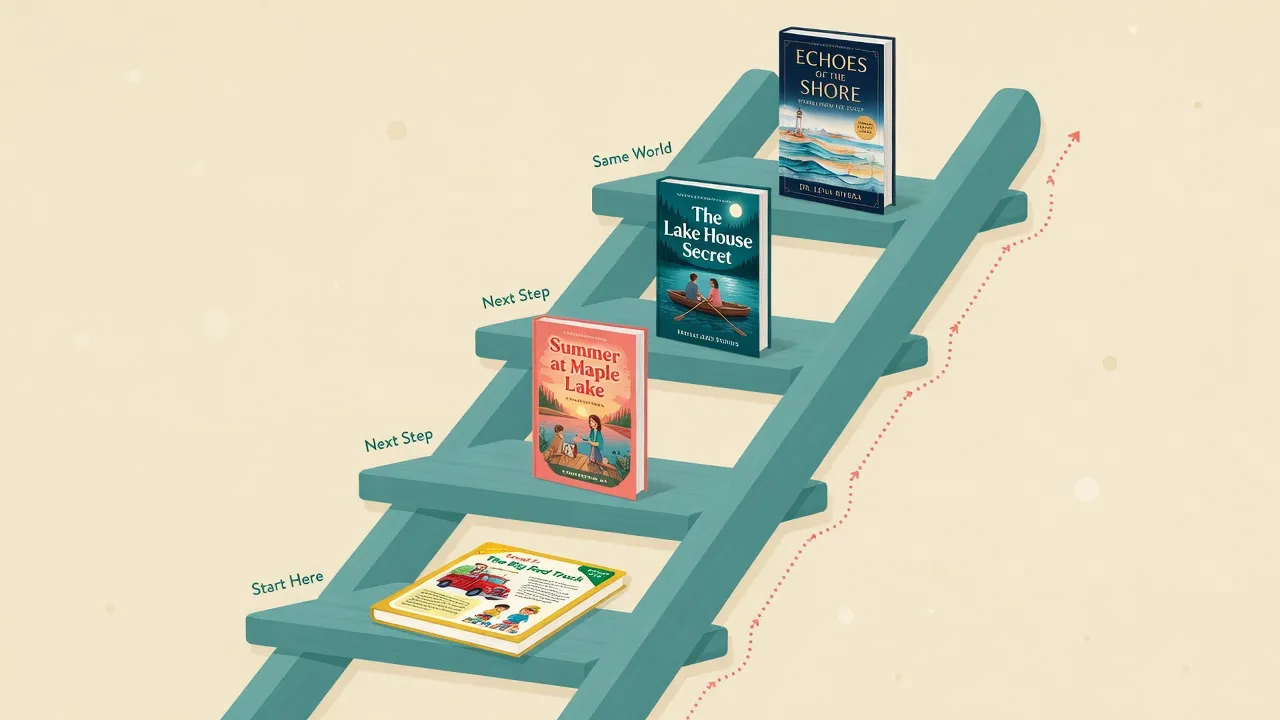
- Finishable graded text or very easy YA (A2-B1 feel)
- Same genre, different author (genre words start sticking)
- One step harder contemporary book (B1-B2 feel)
- Non-fiction on a topic you love (domain words with real interest)
- Free choice - you are a reader with a method, not a tourist stuck on page 5
Warm up on a free graded article when you need an easy win, then open a book file you already own when you are ready. Graded vs original is its own debate; if you are between levels, our notes on graded readers vs original texts can help you choose the next rung.
On good days you may even feel flow while reading longform. Flow is not required for every session. Finishing is.
A note on tools
MovaReader is built around one job: click a word, see a translation in context on the same page, keep reading.
What you get in plain terms:
| Fact | Detail |
|---|---|
| Free start | Graded library in all articles |
| Freemium translations | About 20 word translations per day |
| Listening | Often unlimited on free |
| Reader | About €1/month for higher translation volume suited to real books |
| Pro | About €5/month for full trainers (phrases, typing, and more) |
| Uploads | EPUB, FB2, or text you already own legally |
See pricing for current details, try phrases or demo phrase typing when you want active practice after reading, and use the language map as a compass for what you already know.
No tool replaces choosing an easier book. Tools only remove friction so the right book can do its job.
FAQ
Do I need B2 before my first book?
No. You need a text near your current level and a way to clear a few sticky words without wrecking the story. Many people start with graded articles or easy YA long before exam B2.
Should I look up every unknown word?
No. That is the fast path to quitting. Prefer plot-critical words and high-repeat words. Guess first; confirm only when stuck.
Are children's books always best?
Sometimes. Picture books can be oddly hard (idioms, wordplay). Easy YA or graded readers often feel more adult and more motivating.
Can I start with a book I already know in my language?
Yes. Plot memory is a feature. You can focus on how the language says what you already understand.
What if even easy books feel impossible?
Drop to free graded texts at a lower band for two weeks. Rebuild the habit of finishing, then climb. Start with something small in the article library.
Is MovaReader free for unlimited novel reading?
Freemium includes a free graded library path and about 20 word translations per day. Listening is often unlimited on free. Reader (€1/mo) unlocks higher translation volume for real book sessions. Pro (€5/mo) adds full trainers. Upload books you already own legally; the app does not host free commercial bestsellers as a library.
English only or any language?
This method is language-general. MovaReader's reading product focuses on English and Spanish as study targets, with UI in Ukrainian, English, and Spanish.
Start today
Three next steps:
- Test a page of a candidate book (or open a free graded article if novels still feel heavy).
- Read ~15 minutes with on-page help only for words that block the plot. Guess for three seconds first.
- Stop while it is still pleasant and plan the same short block tomorrow.
You already know enough to start something finishable. Pick an easier text, cut the app-hop tax, and protect the story. Page 5 is not a verdict. It is a design problem - and design problems have fixes.
Want more reading strategy? Explore guessing from context, comprehensible input, or the full blog.
Keep reading with translations inside the text
With a free account, an unknown word translates with one tap, and the words you are learning wait for you in the trainer.
Free account: 7 days of Pro, then 20 word translations a day or a paid plan.