II. Un hombre muy raro
«, », . « , . ¿ ?».
. .
« », .
«¡ !», . « , . ».
. . . . .
An English fairy tale retold for A1
Joseph Jacobs
This is a retelling of Joseph Jacobs’s English fairy tale in simple Spanish, not the original text: a MovaReader adaptation for readers who are just starting to read in Spanish, in which Jack is called Juan. In the catalog it is A1: about 3,400 words told in the present tense, with sentences of 6 words on average. 8 short chapters about a poor boy who swaps the family cow for a handful of beans and climbs the plant that grows from them up to an ogre’s house above the clouds.
This text
You can manage it at A1: sentences are short, the story stays in the present tense, and words like bolsillo or terneros translate with a tap.
Check this passageWith room to spare
At A2 you will read it with hardly a tap: a quick tale for building speed before longer books in Spanish.
Start readingThe average sentence has 6 words: the story moves in short present-tense statements, and about a quarter of the words are the characters’ lines in quotation marks. A word of 9 letters or more comes up about once in 90 words, and 17 of those 37 long words are habichuelas, the beans of the title. The difficulty is even: each of the 8 chapters has 5-6 words per sentence. Full texts in Spanish start at B2 in the catalog: Unamuno’s Mist has 13 words per sentence and one long word in fourteen. Hence A1. This is the catalog’s assessment, not a certificate.
MovaReader. Project Gutenberg
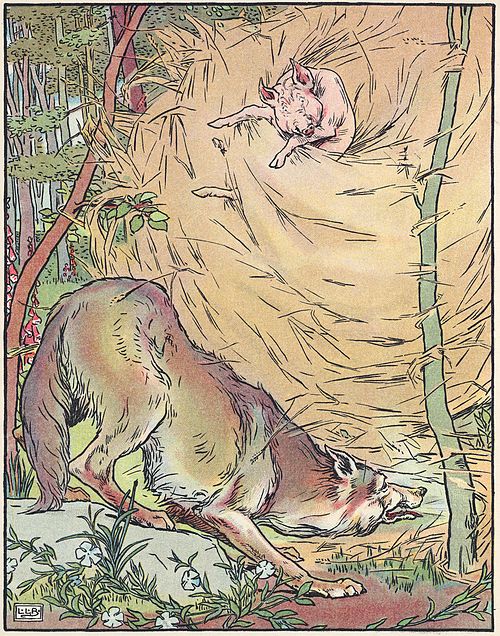
Juan and his widowed mother live on the milk of their cow, Blanca, until one morning she gives none. On the way to market Juan meets a funny little old man who knows his name, asks him a riddle and offers a handful of strange, colourful beans for the cow. His mother is furious and throws the beans out of the window, but by morning a plant has grown past the clouds. At the top Juan finds a long straight road, a huge house and the wife of an ogre who likes boys roasted for breakfast. What Juan brings back from his three climbs, and how it all ends, is not revealed here.
II. Un hombre muy raro
«, », . « , . ¿ ?».
. .
« », .
«¡ !», . « , . ».
. . . . .
V. Fi, fa, fo, fum
. . . . .
.
«, », . «... ¿ ?».
. . :
«¡, , , !
.
, :
».
, . .
Choose an underlined word.
The old man’s riddle uses hacer, “to make”: ¿Sabes cuántas habichuelas hacen cinco? asks “do you know how many beans make five?”, and Juan’s answer simply counts them, two in each hand and one in the mouth. Eres listo means “you are clever”: with ser, listo describes a person; with estar it means “ready”, as later in tu desayuno está listo. Saca unas habichuelas: sacar is “to take out”, here from his pocket.
Huele and Huelo come from oler, “to smell”: when the stress falls on the stem, o becomes hue, so huelo, hueles, huele. Ásame is the command asa, “roast”, with me added to the end; the written accent keeps the stress on the first syllable. Me da igual means “it’s all the same to me”. The rhyme keeps the Englishman of the English tale: un inglés.
The book stays free on every plan. Reader, €1 a month, removes the daily limit on words and sentences.
€1 a month
Reader translates the whole sentence where simple words add up to an unfamiliar phrase, as in Vivo o muerto, me da igual, “alive or dead, it’s all the same to me”.
ReaderAn adaptation, not the original text. It is MovaReader’s own retelling in simple Spanish of Jack and the Beanstalk as Joseph Jacobs published it in English Fairy Tales, 1890. The language and length have changed: the present tense, 6 words per sentence on average, Jack is called Juan and the cow Milky-white is called Blanca, and a few scenes are opened up into short conversations, so the tale runs to 8 chapters and about 3,400 words. The episodes of the source remain: the funny little old man and his riddle about five beans, the angry mother and the supperless night, the ogre’s wife and the oven, the ogre’s Fee-fi-fo-fum rhyme (here ¡Fi, fa, fo, fum!), the bags of gold, the hen that lays golden eggs and the golden harp. The full text of the tale is not in the catalog.
No, there is no audio version of this tale on MovaReader; the text is read on screen. Tap an unfamiliar word and its translation appears: here that will mostly be words such as habichuelas (beans) or terneros (calves).
Yes: whole-sentence translation comes with the Reader plan. But sentences in this tale average 6 words, so you will rarely need a whole one translated: mostly lines like Si las plantas por la noche, por la mañana llegan hasta el cielo or ¿Me puede dar algo de comer?, where the words are simple but the pattern is not. Without the plan you can translate single words until the daily limit runs out.
About an hour for the whole tale: the pace of someone who still translates new words, not a native speaker’s. There are 8 chapters of roughly 300 to 550 words each, so a chapter is easy to read in one sitting.
The difficulty is even from start to finish: each of the 8 chapters averages 5-6 words per sentence. Chapter III, where the mother scolds Juan, has the shortest sentences, about 5 words; chapters I and VI, with a little more narration, have about 6.
Yes. After you sign in, the reader remembers where you stopped and which words you opened. The contents on this page also open any of the 8 chapters directly, for example chapter V, “Fi, fa, fo, fum”.