Reading Strategies
Intensive vs Extensive Reading for Spanish
You do not need to choose forever between the dictionary and the story. A practical way to combine intensive and extensive reading in Spanish, with a flexible 80/20 week.
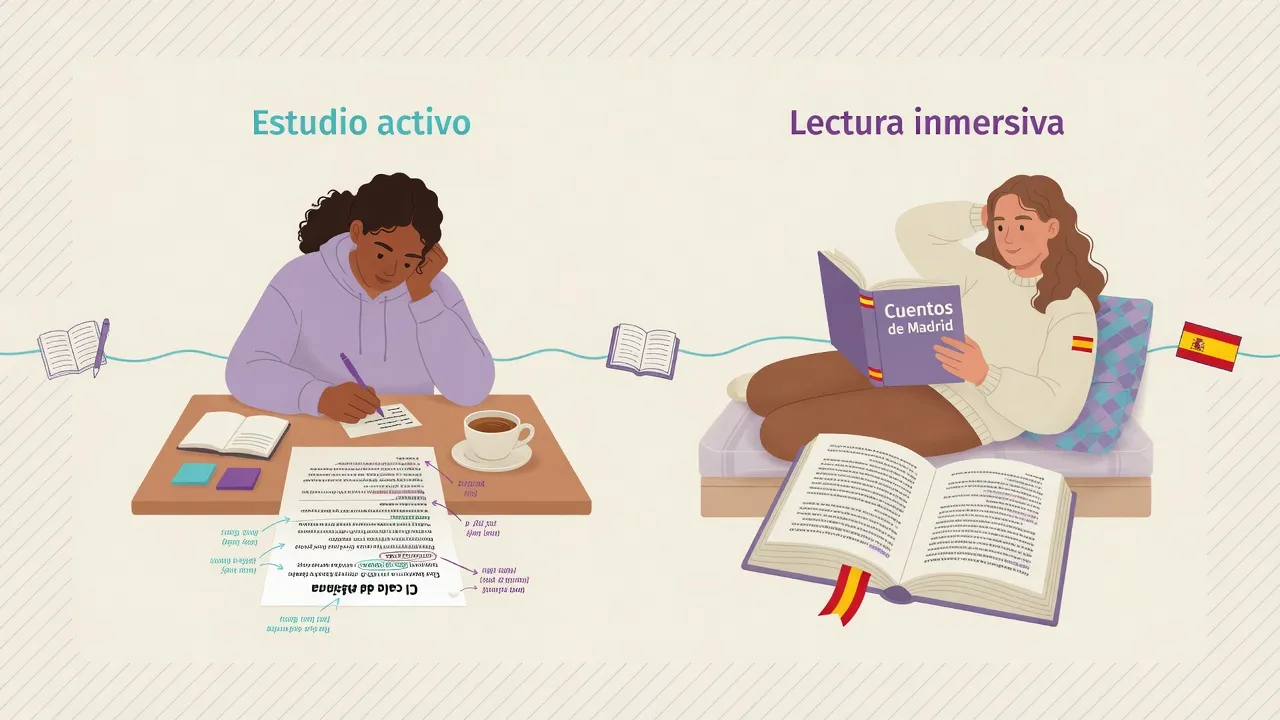
You open a page in Spanish. Two unknown words appear in the first paragraph. Your hand reaches for the dictionary - or for another browser tab. Halfway through typing the second word, you have already forgotten what the paragraph was about.
That tiny fork is the whole debate. Intensive reading digs deep into a short text: accuracy, form, careful lookups. Extensive reading keeps going through easier material: story first, volume, pleasure. You need both for Spanish progress. You do not need both on every line of the same session.
Here is the plain answer. Prefer more extensive time at a level where you know most of the words (often around 90%+), plus short intensive bursts on phrases you actually want to keep. Most learners over-intensify and quit. Soft 80/20 is a reminder, not a law.
What intensive reading is
Intensive reading means a short Spanish text, slow pace, deliberate focus on words and structures. Your goal is not "finish the chapter." Your goal is to understand how the language works in this small stretch.
A typical intensive session:
- pick a paragraph or a few hundred words
- look up words that block meaning (and a few you want to own)
- notice useful phrases and grammar patterns
- re-read until the passage feels clear
- save a small set of items for later practice
Strengths: depth, accuracy, better notice of forms you keep missing.
Costs: high energy, low volume. Easy burnout if this is your only mode for a whole novel.
Take a line many learners meet early:
"Me di cuenta de que me había equivocado."
(I realized that I had been wrong / made a mistake.)
A quick translation is fine for extensive mode. An intensive pass notices more:
- darse cuenta de - a fixed way to say "realize," not word-for-word "give myself account of"
- había equivocado - past-before-past (pluscuamperfecto): the mistake sits before the moment of realizing
- the whole chunk is more useful than the isolated words cuenta or equivocado
That kind of noticing is gold. It is also tiring if you do it to every sentence of a 300-page book.
What extensive reading is
Extensive reading means longer text at a comfortable level, general understanding first, dictionary only for blockers. You read for the story, the news, the argument - not for a perfect notebook.
A typical extensive session:
- pick something you mostly understand and actually want to finish
- read 15-40 minutes with few stops
- skip words when context is enough
- look up only what blocks the whole sentence
- enjoy the page more than the review queue
Strengths: speed, stamina, breadth of vocabulary, motivation, a natural feel for common Spanish patterns.
Costs: many "almost known" words never move into active use unless you review a few later. Nuance can slip past you.
This sits next to the practical idea of comprehensible input: material that is mostly understandable helps more than constant decoding of text that is still too hard.
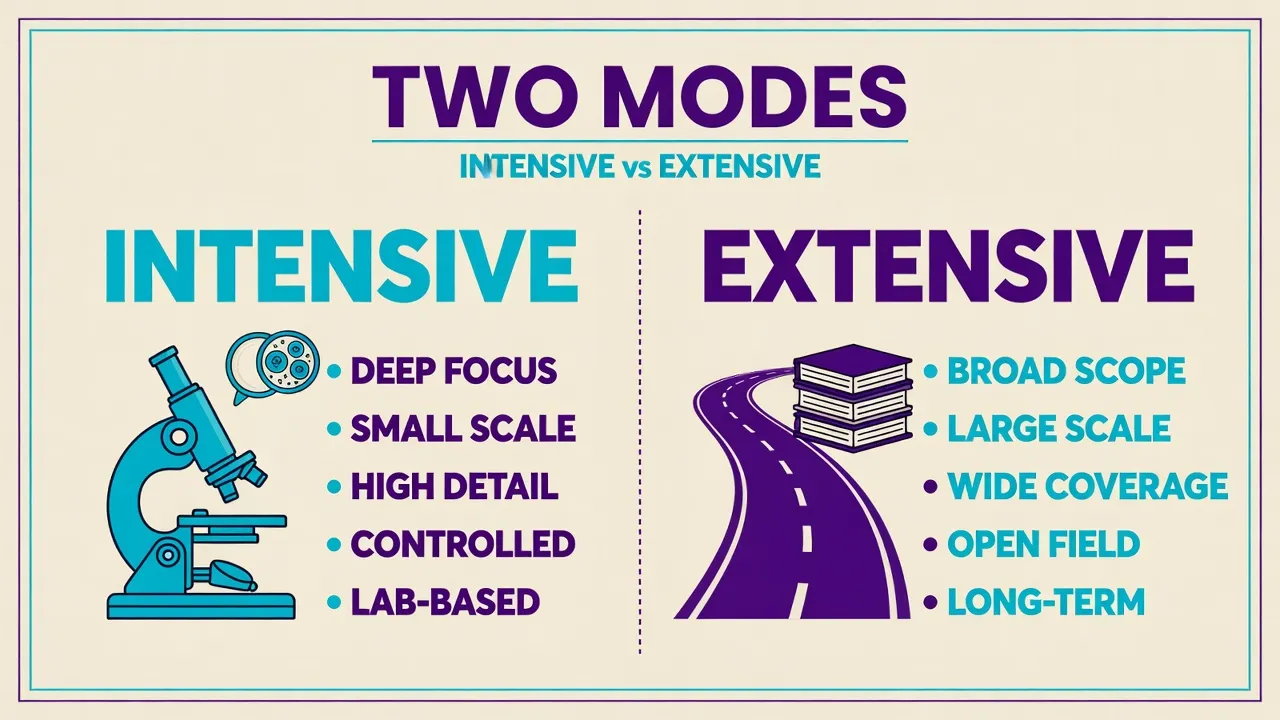
Intensive vs extensive: side-by-side
| Factor | Intensive | Extensive |
|---|---|---|
| Goal | Accuracy, form, detail | Volume, story, feel of Spanish |
| Text length | Short (paragraph to a few pages) | Longer (article, chapter, session) |
| Dictionary | Often, deliberate | Rare; only blockers |
| Energy | High; short bursts | Lower per minute; can last longer |
| Feel | Study | Reading |
| Best unit | Paragraph / page | Chapter / sitting |
You do not need a winner. You need a weekly blend that fits real life.
When to use which mode
Use intensive when:
- a grammar pattern keeps tripping you (subjuntivo, por/para, clitic pronouns)
- you need a work email or exam text to be precise
- a phrase shows up again and again and you want it active
- you re-read a hard paragraph from something you already enjoyed extensively
Use extensive when:
- you have a free evening and want Spanish that feels like reading, not homework
- the text is graded or already familiar in your first language
- you are rebuilding love of reading after a burnout week
- you want listening after the page, not a second dictionary marathon
Decision rule of thumb: if you understand the plot and only a few words itch, stay extensive. If you cannot follow the thread without a dictionary every line, drop the level or switch to a short intensive piece - do not "extensive" your way through fog.
Why the paper dictionary (and tab hopping) kills extensive flow
Paper books and plain PDFs make "both modes" look simple on paper and miserable in practice.
You read a paragraph. Unknown word. Phone out. Translate app. Type. Scroll. Maybe open Anki. Write a note. Back to the book. The story is gone. Your brain paid a full context switch tax for one gloss. After ten of those, Spanish feels like work you fail at, not a language you live in.
The problem is not dictionaries. The problem is mode mixing on every line. Extensive needs flow. Intensive needs focus. When every unknown word becomes a full tab tour, you get neither a story nor a clean study session.
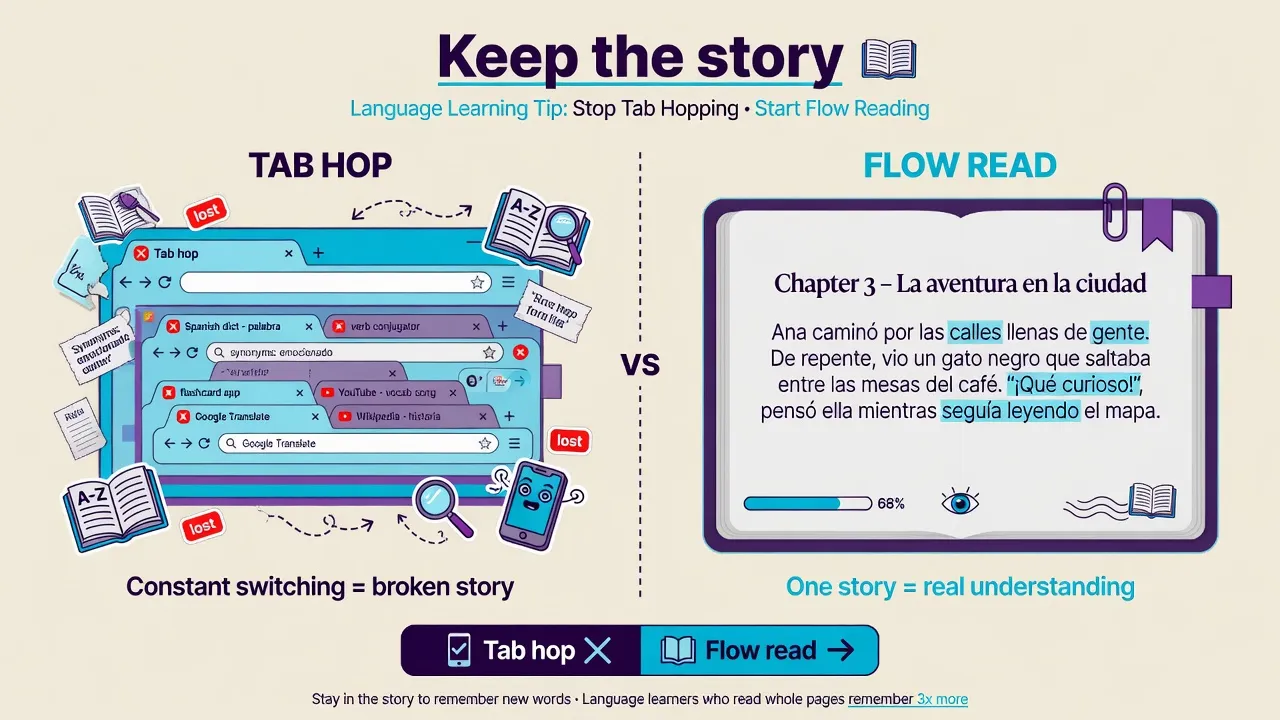
A cleaner split:
- While reading: protect the story. Help only for blockers.
- Later: short intensive work on a handful of lines or phrases you care about.
That is the whole method. Tools only matter if they reduce friction between step 1 and step 2.
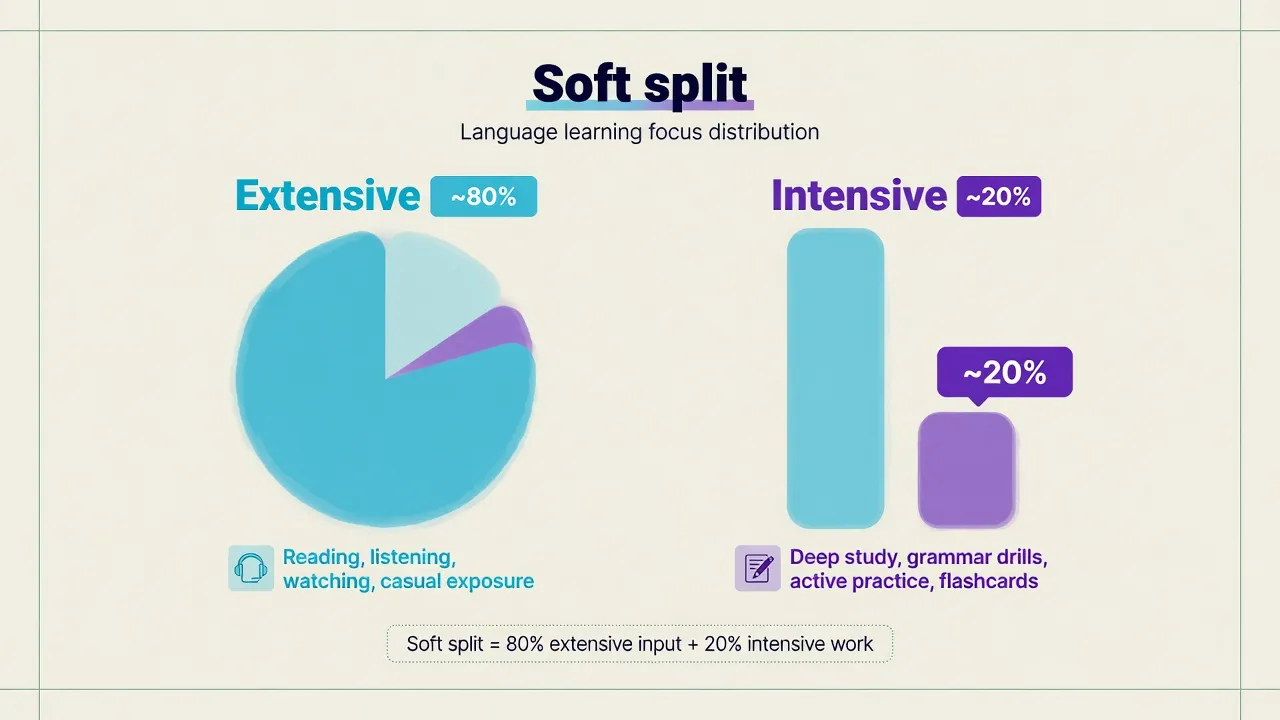
Soft 80/20 and a week you can actually keep
Many teachers and polyglots point to something like 80% extensive / 20% intensive of reading time. Treat it as a soft guideline: a reminder not to spend every session in microscope mode.
Some weeks you need more intensive (exams, a hard work text). Some weeks you need pure extensive to recover motivation. The rule fails only when it becomes guilt math.
Weekly skeleton
- Daily: 15-30 minutes extensive Spanish at a comfortable level
- 2-4 times a week: 10-15 minutes intensive on saved phrases or a short hard paragraph
- Once a week: re-read one short extensive piece you already understand (speed + confidence)
Total can stay around 2-4 hours a week. Consistency beats heroic weekends.
Sample week with real materials
- Mon: free graded Spanish article, 15-20 min extensive
- Tue: continue or start the next one; save 5 phrases max
- Wed: 20 min from a book or EPUB you own at a level that still flows
- Thu: free article + a few minutes of listening after you understand the page
- Fri: extensive only - no review guilt
- Sat: 15-20 min phrase or typing practice from what you saved
- Sun: rest or one short easy piece
Session recipes
Extensive ~25 minutes
- Pick text where you know roughly 90%+ of the words (many learners still manage near ~90% if the topic is familiar; under ~70-80%, switch text or go intensive on a short piece).
- Mute the phone.
- Read for story first.
- Click or look up only blockers.
- Stop before frustration, even if the chapter is unfinished.
Intensive ~15 minutes
- Choose a short paragraph (from today's reading or a pattern you keep missing).
- Look up and note 5-10 items max - phrases beat orphan words.
- Say the useful lines aloud once.
- Optional: 10 minutes later in a trainer or notebook. Then stop.
Save fewer items than your perfectionism wants. A review queue of 40 random nouns is punishment, not progress.
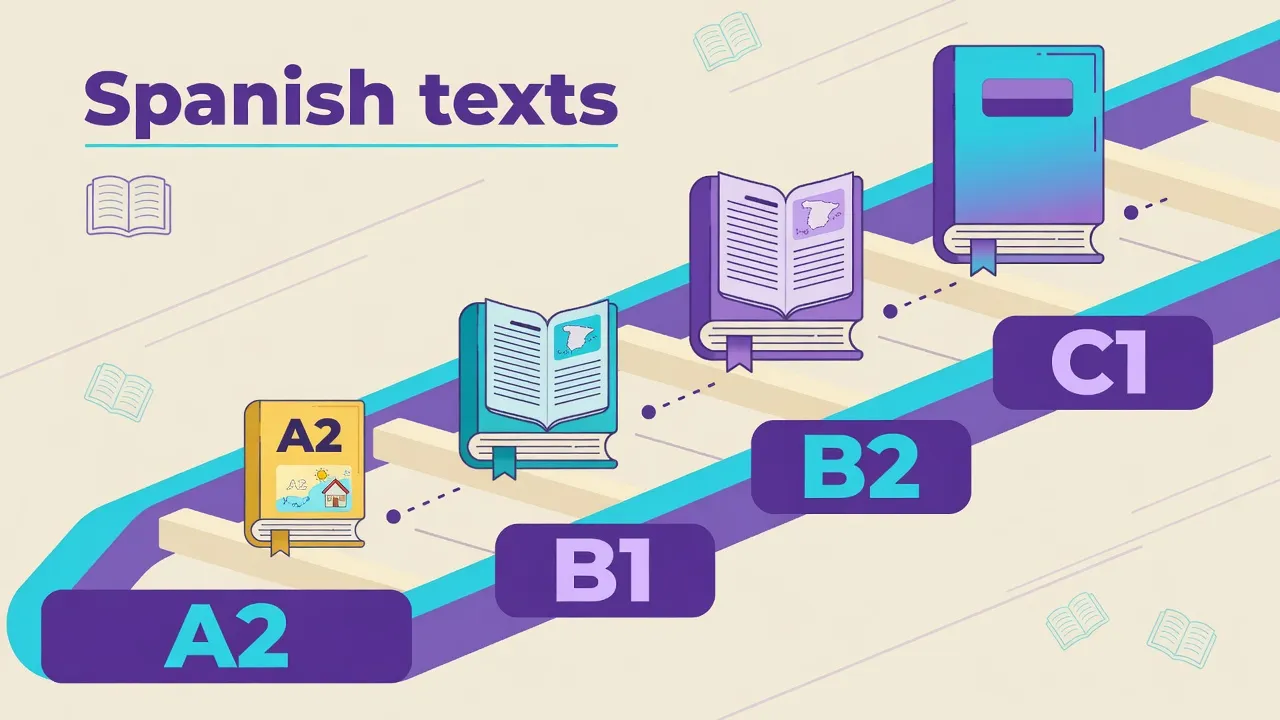
What Spanish texts fit which level (rough ladder)
| Level band | Extensive-friendly starting points |
|---|---|
| A2-B1 | Graded readers, simple news, easy kids/YA, short adapted articles |
| B2 | Modern novels you already know in L1, blogs, lighter press |
| C1+ | Denser press, literature - with patience and a real interest |
Prestige classics too early are a common trap. Cien años de soledad is wonderful; it is a harsh extensive text if your known-word ratio is still low. Start where the story still pulls you forward.
If you are unsure where your vocabulary sits for reading, the language map is a compass for words and phrases you mark as known.
Common mistakes
- Intensive mode on every page of a novel. That is research, not reading. You will quit.
- Extensive mode on text you understand at ~50%. That is guessing, not input. Drop a level.
- Saving every unknown word. Your queue becomes a guilt list.
- All-or-nothing "only extensive" or "only intensive." Depth and volume solve different problems.
- Prestige books before pleasure books. Ego level is not reading level.
- Expecting reading alone to cover speaking. Reading builds a lot. Production still needs some speaking or writing practice.
How MovaReader fits
MovaReader is useful when you want clean reading for extensive flow, click-translate for blockers without a tab tour, then optional practice later on lines you actually met.
What the free and paid plans give you:
- free graded Spanish and English articles in the library
- about 20 word translations per day on freemium
- unlimited listening on freemium
- Reader ~€1/month when you need heavier reading support
- Pro ~€5/month for full trainers
- import of files or URLs you can legally use
- free samples to try the rhythm: Spanish graded article
Suggested loop:
- Extensive session on an easy Spanish article
- A few clicks on real blockers only
- Later, 10 minutes on phrases you care about (how to use, phrases, demos: free Spanish vocabulary trainer, everyday Spanish phrases practice)
- Check pricing only if freemium limits start to get in the way
Related reading if you want more method: flow and long reading, reading aloud vs silent.
FAQ
Is extensive reading alone enough?
It builds a lot of comprehension, speed, and passive vocabulary. You may still want short intensive bursts and some speaking practice. Extensive is the engine; intensive is the scalpel.
How many unknown words for extensive reading?
Aim for high comprehension. A common comfort zone is near ~95%+ known words for easy extensive; many learners still manage around ~90% if the topic is familiar. Under roughly 70-80%, switch to easier text or run intensive mode on a short piece.
Graded readers or real Spanish books?
Both over time. Graded and free adapted articles are excellent for extensive volume early. Native books when interest and known-word ratio match. Skip "prestige only" until the pages still feel readable.
Is 80/20 a hard rule?
No. It is a soft reminder not to spend all energy on dictionary sessions. Exam weeks and grammar deep-dives can tilt intensive. Burnout weeks can go almost fully extensive.
Is MovaReader free for this method?
Partly. Free graded library, about 20 word translations per day, unlimited listening on freemium. Reader is about €1 when you need more reading support; Pro is about €5 for full trainers. Start free and see if the loop sticks.
Spanish only, or English too?
The intensive/extensive split works for English as well. This article uses Spanish examples because the dilemma shows up clearly there; the product library includes both Spanish and English.
Bottom line
Intensive reading builds depth. Extensive reading builds volume and the feel of Spanish. Progress usually needs both - mostly flow, a little focus, repeated often.
Skip the idea that one pure method "wins." Pick easier text than your ego wants, save fewer words than your perfectionism wants, and come back tomorrow. That blend beats any strategy you abandon after two weeks.
Keep reading with translations inside the text
With a free account, an unknown word translates with one tap, and the words you are learning wait for you in the trainer.
Free account: 7 days of Pro, then 20 word translations a day or a paid plan.