Vocabulary
How to Track Your Vocabulary Progress When Learning a Language
Real vocabulary progress is known items, reading comfort and marks you would still stand by next week. A simple system: a fixed catalogue and a read-and-mark loop.
Your streak is green. "Words known" keeps climbing. A three-minute quiz stamps a CEFR letter and it feels like a win. Then you open a real page and freeze every other line - or your language map sits at 0% and you wonder if the product is broken.
Usually it is not broken. The dashboard was measuring something else.
Real vocabulary tracking is not a streak, a vanity "words known" counter, or a three-minute free CEFR badge. Pick one fixed system (a catalogue or one deck), mark only items you would bet on recognizing again, and watch reading comfort on real pages. A language map fills as marks / catalogue items for that path - learning analytics, not an exam certificate. Fifteen to thirty minutes of read → translate blockers → save a few → mark carefully beats logging theater.
Below: what looks good but fails, which metrics still mean something next month, how catalogue coverage works, a simple daily loop, when freemium vs paid volume matters, and why personal progress can show 0%. Learning targets in MovaReader are English and Spanish (Ukrainian can be the UI or article language, not a learning path).
For size orientation, open the free language map, the pillar How many words for CEFR?, and the B2 deep-dive. If two apps disagree on your total, fix the unit first: Lemma vs word form.
What looks like progress but fails?
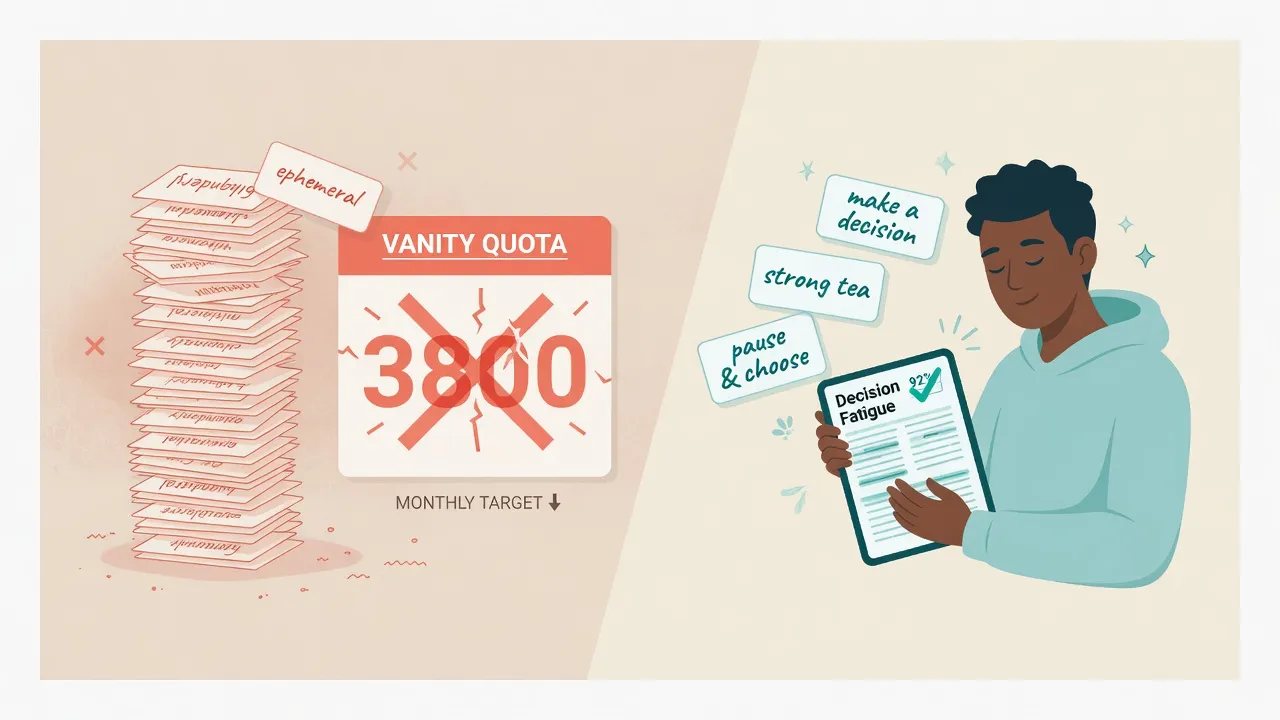
Green numbers feel productive. Many of them only measure whether you showed up, not whether you own more language.
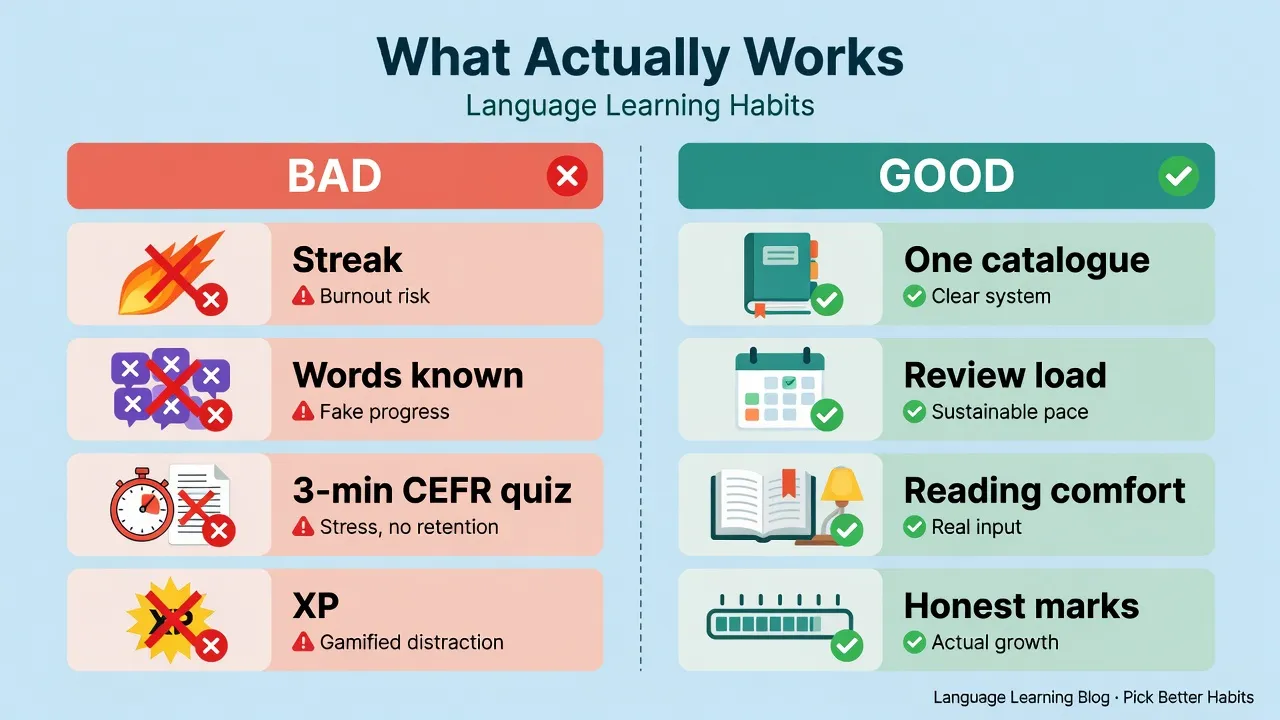
Here is the contrast at a glance: metrics that look busy versus ones that still mean something next month.
Streaks
A streak measures calendar presence, not vocabulary quality. You can keep a 90-day streak by opening the app and tapping five cards you already know. Missing one day does not erase known words. Useful as a habit nudge; useless as a size measure.
"Words known" vanity counters
Apps often count every surface form as a separate word, every card you ever created (including duplicates), and items you only saw once. Without a fixed unit - form vs lemma vs family - the number is marketing. When two totals clash, start with lemma vs word form.
One-off free CEFR quizzes
A short multiple-choice quiz can sample high-frequency recognition. It cannot certify B2, replace IELTS / Cambridge / DELE, or map your full productive range. Treating it as a badge is the fastest path to false confidence or false panic.
Minutes and XP
Time on task matters for habit design. Alone, it does not answer: "Will I recognize this item next week?" or "Is this page less painful than last month?"
What does still mean something? Known items in one system, a review load you can finish, reading comfort on real pages, and an honest label for receptive vs productive knowledge. That is the next section.
Which metrics still mean something next month?
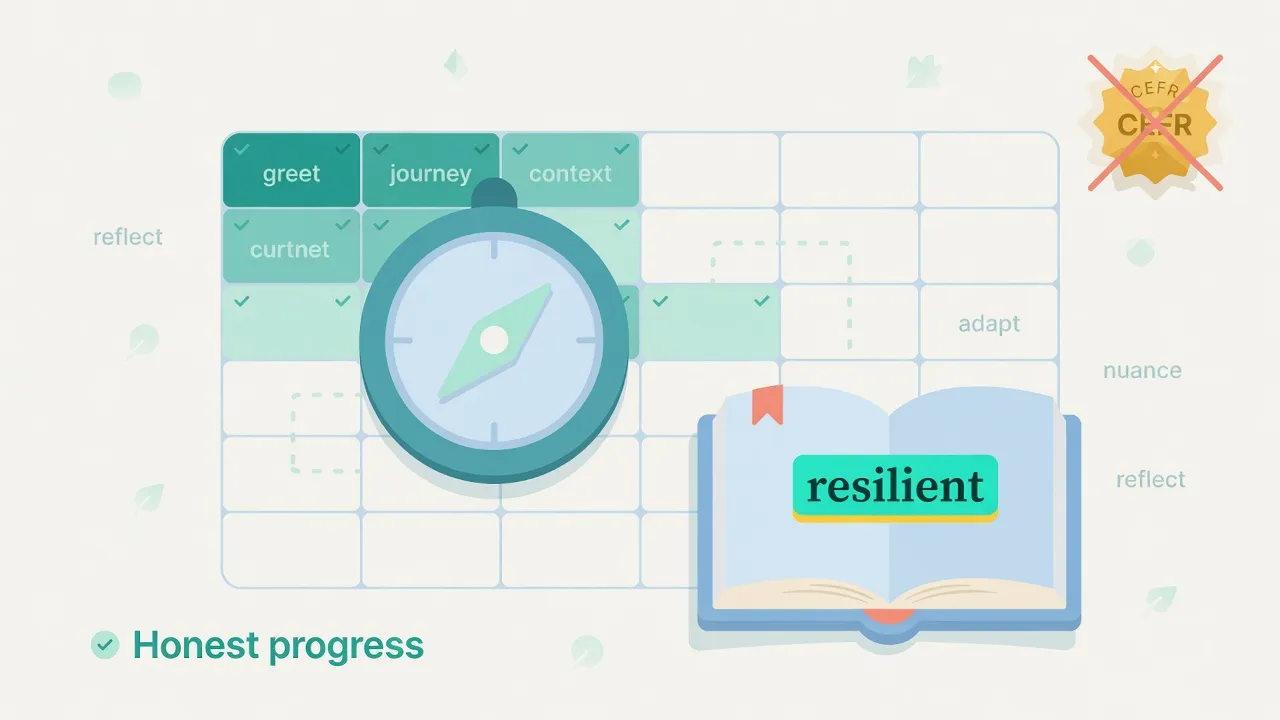
Think of a language map as a compass (or a quiet dashboard) for coverage - not a diploma stamp. Four signals hold up after the novelty dies.
1. Known items in one consistent system
Pick one primary system: a level catalogue, one SRS deck, or one frequency list. Progress is "items I have decided I own" inside that system, not the sum of three incompatible trophies.
2. Review load you can sustain
If new saves outrun reviews, your deck becomes a graveyard. A healthy tracker asks: can I finish today's reviews without burnout? Volume without retrieval is not mastery.
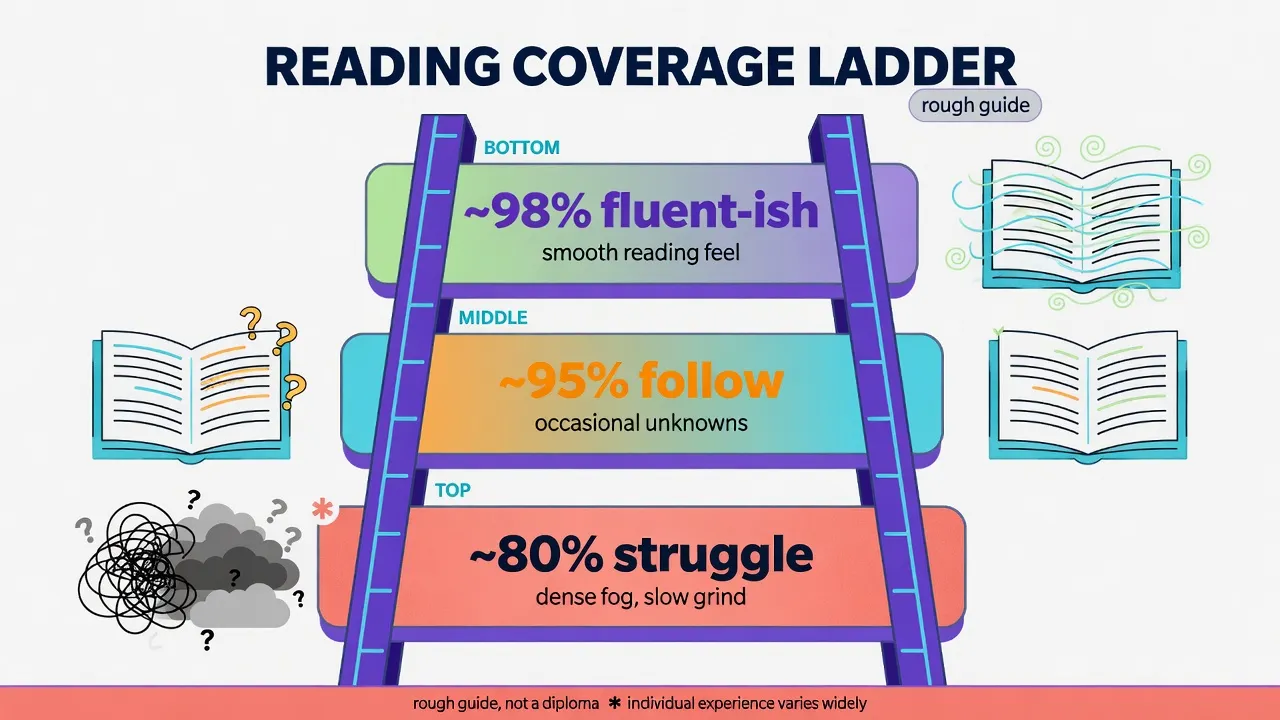
3. Reading comfort (unknown density)
On a page at your target difficulty, roughly how often do you need a lookup?
- Constant lookups every sentence - the text is above comfort, even if your ego total looks "B2-ish."
- Occasional lookups with flow intact - useful growth zone.
- Almost no lookups - easy input; good for speed and confidence, weaker for new mid-frequency words.
This metric does not need a certificate. It needs real pages and real attention.
4. Receptive vs productive honesty
Receptive knowledge: you understand the item in context.
Productive knowledge: you can retrieve and use it under pressure.
Most reading-based marks start receptive. That is fine if you label it honestly. A map of "learned" can overstate speaking readiness if every mark only means "I recognized this once."
How does catalogue coverage work (and what is a language map)?
A catalogue map is not a lab X-Lex score and not an exam. The simple model:
personal progress ≈ marked learned / catalogue items (for that path)
On MovaReader, the language map has two layers:
- Public ranges - research-informed orientation (frequent lemmas by band). Free to browse.
- Personal % / approximate stage - needs an account, a learning language (English or Spanish), and many learned marks.
Catalogues are curated progressive lists. Their sizes are navigation aids, not a 1:1 match with every site's "8,000 words" claim or with every research band (rough A1 orientation around ~1,500 lemmas, up through larger mid and upper bands discussed near C2). Marks usually come from use: read with in-context translation, save useful items, then mark when the item is solid enough for your workflow.
For a fuller tour of the same idea, see language map explained. For size expectations by level, stay with how many words for CEFR and how many words for B2.
Freemium can start the habit. When daily translation limits block real pages, Reader from €1 is the practical step for volume that actually feeds marks. More on plans later.
Useful level pages after sign-in (examples): A2 vocabulary, B1 vocabulary, B2 vocabulary.
What is the daily read → mark → map loop?
You do not need a two-hour logging ritual. Fifteen to thirty minutes of focused reading is enough if the marks stay honest.
This is the loop that actually fills a map: read near level, clear blockers, save a few, mark only what you would defend, and let coverage follow.
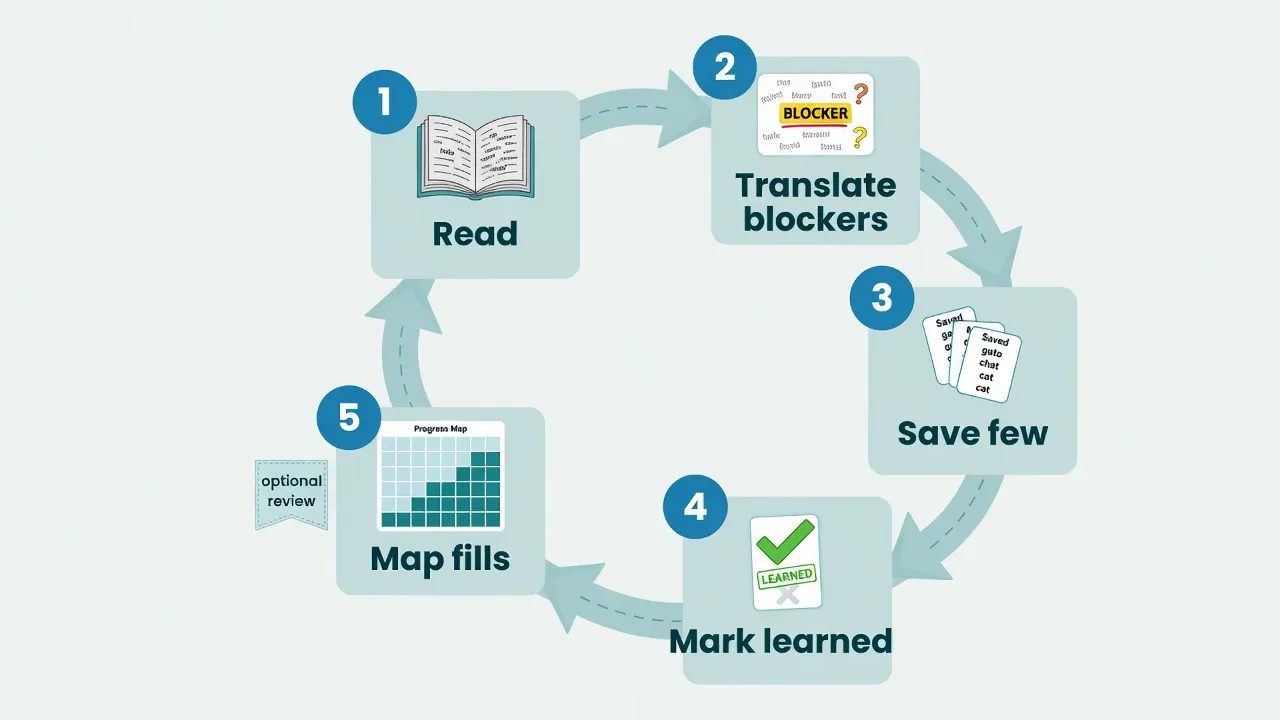
Daily loop (15-30 minutes)
- Read something near your level (graded articles, news explainers, a chapter of a book you own).
- Translate only blockers - skip decorative unknowns.
- Save a small high-value set - not every glance.
- Mark learned only when defensible - would you bet on recognizing the item again soon?
- Optional light review - freemium trainers are limited; full unlimited trainers are more of a Pro (€5) path.
In MovaReader terms: library and reading loop via how to use and all articles; progress on the map; optional practice at trainers. Full grammar reading path is more of a Pro aside: grammar tree.
Weekly check (~10 minutes)
Five short questions, not another dashboard:
- Map check: Did % move only because you marked real items? If not, stop trophy-marking and re-mark carefully.
- Review load: Are reviews finishable without burnout? If not, slow new saves for a week.
- Reading comfort: Same text type, fewer freezes? Keep the level or go slightly easier.
- Unit discipline: Still one system, one learning language path? Separate EN and ES; do not merge counters.
- Plan friction: Did freemium limits stop useful reading? Trial is fine; Reader from €1 when volume matters.
What "good" progress looks like
Slow, boring, cumulative. A few solid items per session beat a hundred optimistic marks. Map fill is a byproduct of reading volume, not the main sport.
Freemium, Reader €1, Pro €5 - when does the plan actually matter?
Pricing matters for tracking friction. Here is the ladder for vocabulary volume only.
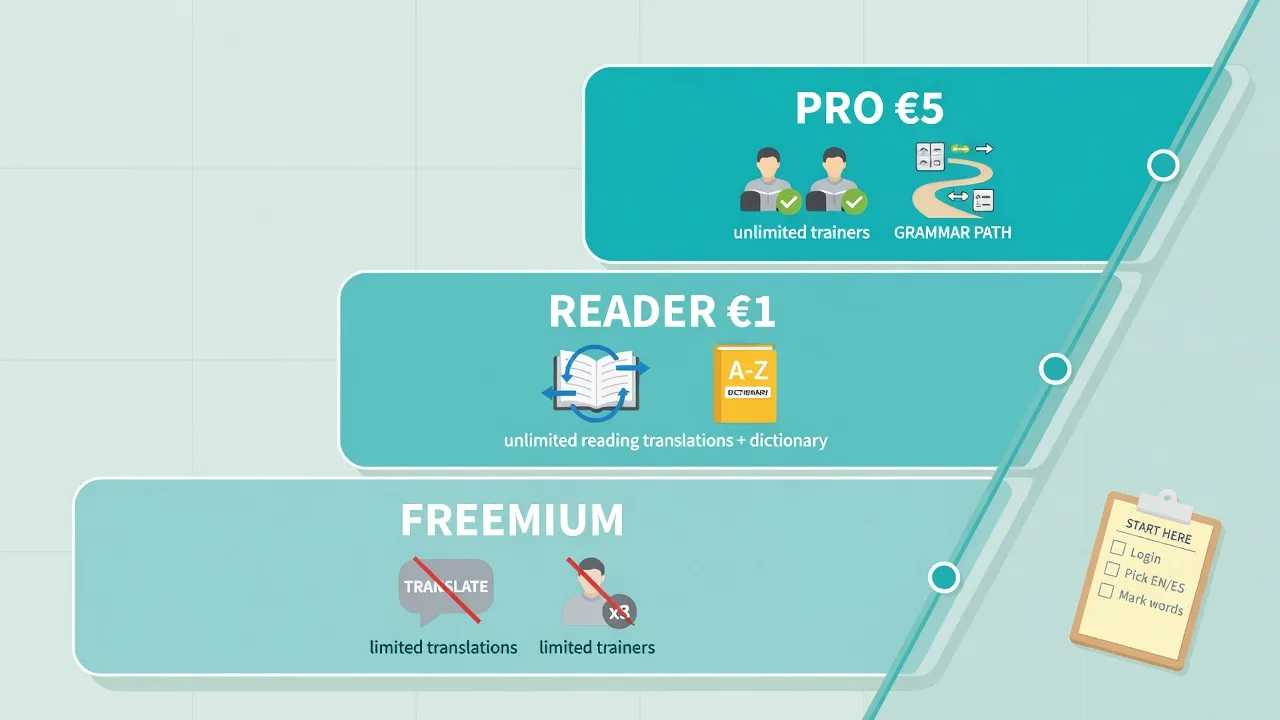
- Freemium - try the workflow: about 20 word translations/day, limited trainers, 1 URL parse/day. Enough to learn marking and see how the map works.
- Reader from €1/mo - real reading + dictionary volume: unlimited reading translations and practical personal dictionary use that feeds map marks.
- Pro €5/mo - unlimited trainers, full grammar-tree path, heavier URL import. Not required to browse free map ranges.
When freemium is enough: you are testing whether reading-with-translation fits you; a few minutes a day; you are not trying to fill an entire level catalogue quickly.
When Reader is the practical step: freemium's ~20 word translations/day break your flow on real pages; you want to save and work with many dictionary items; you care about personal map fill over weeks, not a one-time quiz.
When Pro helps: you want full unlimited trainers / heavier review load, the full grammar-tree reading path, or heavier URL import. Pro is not required to understand free map ranges.
AI Plus and higher AI tiers are separate; they are not needed to track vocabulary.
Details: pricing. Onboarding: how to use. Register only if you want personal tracking: register.
Why does personal progress show 0%?
You open the map and see 0%. Is it broken?
Usually no. Guests see public orientation ranges; your personal layer stays empty until you sign in, pick English or Spanish, and leave real learned marks. That is by design.
| Cause | What is going on | Fix idea |
|---|---|---|
| Not signed in | Guests see public orientation ranges only | Register / sign in |
| No learning language | Progress needs English or Spanish as target | Pick EN or ES in the app |
| Wrong path | Marks live on a different language path than you are viewing | Confirm the language you marked |
| Zero learned marks | % is marks vs catalogue size | Read, save, mark solid items |
| Over-strict never-mark | You never mark anything | Mark carefully, but do mark |
| Expecting free full test | Map is not an auto level exam | Ranges = orientation; marks = personal analytics |
| Freemium friction | Too few translations to build a habit | Trial ok; Reader €1 for volume |
Public map pages can look full of information while your personal layer stays empty. That gap is expected until marks exist.
FAQ
Is map progress the same as my CEFR level?
No. It is learning analytics for catalogue items you marked on that path. Exams and real conversation still judge performance. CEFR itself has no official word quota. Use ranges for orientation; use marks for personal coverage. Browse the free language map with that frame in mind.
Why do streak apps show huge "words known" while my map is empty?
Different units, different lists, and often no requirement that a "word" is stable knowledge. Apps may count surface forms, duplicates, or one-glance cards. Fix the unit first (lemma vs form), then rebuild marks in one system. Empty personal map usually means few or no learned marks - not that the map is broken.
How many words should I mark per day?
As many as you can still recognize next week - often fewer than you think. Quality marks beat map inflation. A few solid items from real reading beat a hundred optimistic taps.
Do I need Pro to use the language map?
No. Public ranges are free. Personal fill needs an account + marks on English or Spanish. Practical volume that feeds the map usually wants Reader from €1. Pro (€5) is for unlimited trainers, grammar-tree path, and import depth - not a gate to free orientation ranges. See pricing.
Can I track Ukrainian vocabulary in MovaReader?
No. Ukrainian can be a UI language (and article language). Learning targets are English and Spanish only.
What if my % barely moves for weeks?
Common causes: rare marks, a large catalogue band, or freemium volume limits. Recheck the 0% list above. Set size expectations with how many words for CEFR so slow fill does not feel like failure.
Next steps
- Open the free language map and treat ranges as orientation.
- Align size expectations with A1-C2 ranges, B2, and counting units.
- Sign in, choose English or Spanish, and run the loop: read → save carefully → mark honestly.
- Use freemium to learn the habit; step to Reader from €1/mo when translation/dictionary limits slow real pages. Add Pro trainers only if review volume is the bottleneck.
- More reading help: how to use, all articles. Register only if you want tracking: register.
Real tracking is quieter than gamification. One consistent catalogue, reading that you actually finish, and marks you would defend next week will beat any free badge that expires the moment you open a real page.
Keep reading with translations inside the text
With a free account, an unknown word translates with one tap, and the words you are learning wait for you in the trainer.
Free account: 7 days of Pro, then 20 word translations a day or a paid plan.