Vocabulary
Why a 3000-Word Monthly Quota Is a Myth (Read + Phrases Instead)
You pass Anki reviews, then freeze in a real article. A huge monthly word quota is usually marketing math. Read near your level, save phrases, review lightly, and track finished pages - not a vanity counter.
You load Anki for a huge monthly target, pass reviews, then freeze in a real article or chat. The cards feel solid. Living English does not.
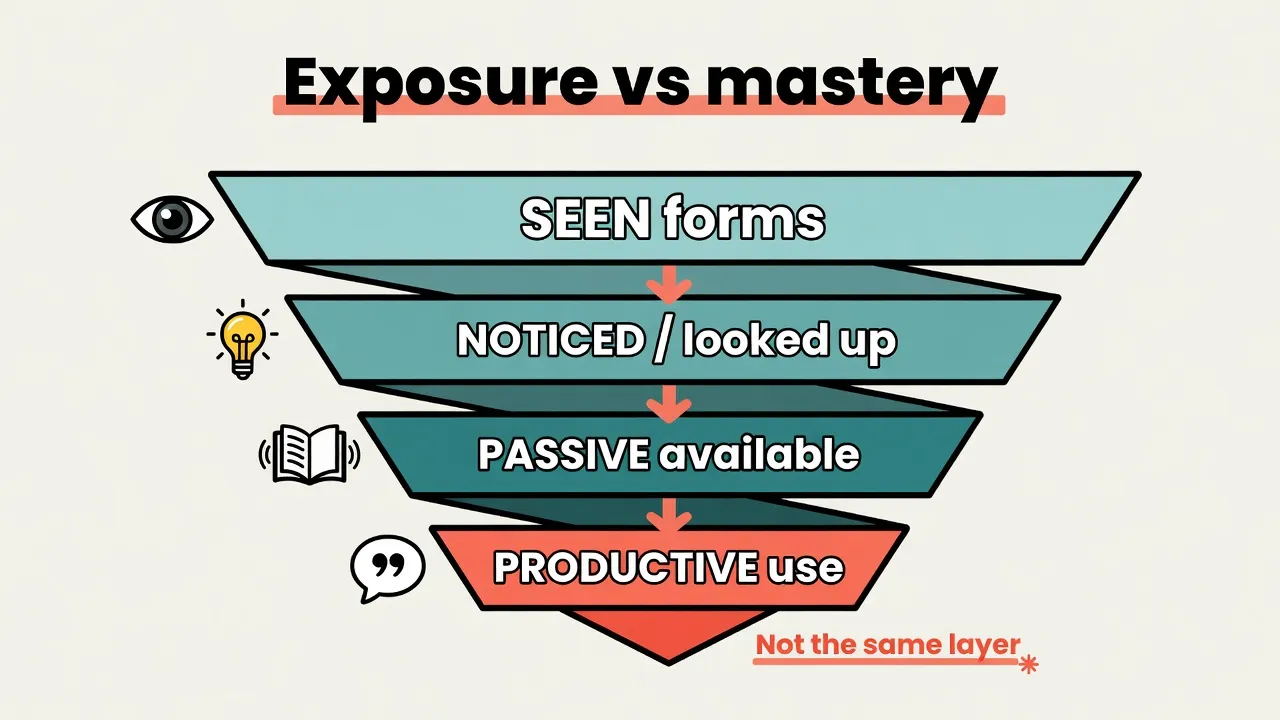
Here's the short version. A 3000-word monthly quota fails because card recognition and unique forms in a novel are not the same as mastered word families you can use. One meeting is not durable passive knowledge; productive use is a smaller layer still. Better measures: finished near-level texts, fewer lookups, phrases you can deploy - not a vanity monthly counter. If you already sit around A1-B1+, light days may stick dozens of units; stable daily reading often lands near ~100-300 more available words/phrases (high variance); intensive input means more meetings, still not three thousand mastered families per month.
This article keeps the myth-busting spine and a practical path: context over bare pairs, phrases over isolated lemmas, realistic ranges, a 30-day reading-first plan, when Anki helps or harms, and how MovaReader fits in. Learning targets here are English (and Spanish in the product); the site UI can be Ukrainian - that is not a learning path.
Anki grind vs real English
Hundreds of cards. Test scores that look fine. Then a show, a news page, or a work chat, and the words will not surface.
That gap is not always "bad memory." Recognition on a flashcard is a thin skill. You often see the L2 word, recall a short translation, and tap again. Reading and speaking need speed, collocations, and the right neighbors in a real sentence.
A few caveats:
- three thousand mastered families every month is not realistic on a normal adult schedule
- Anki can still work as a small hybrid layer
What does work for many learners past absolute beginner: near-level reading plus selective phrase capture, not vanity counters and bare-pair cram.
Why context beats isolation
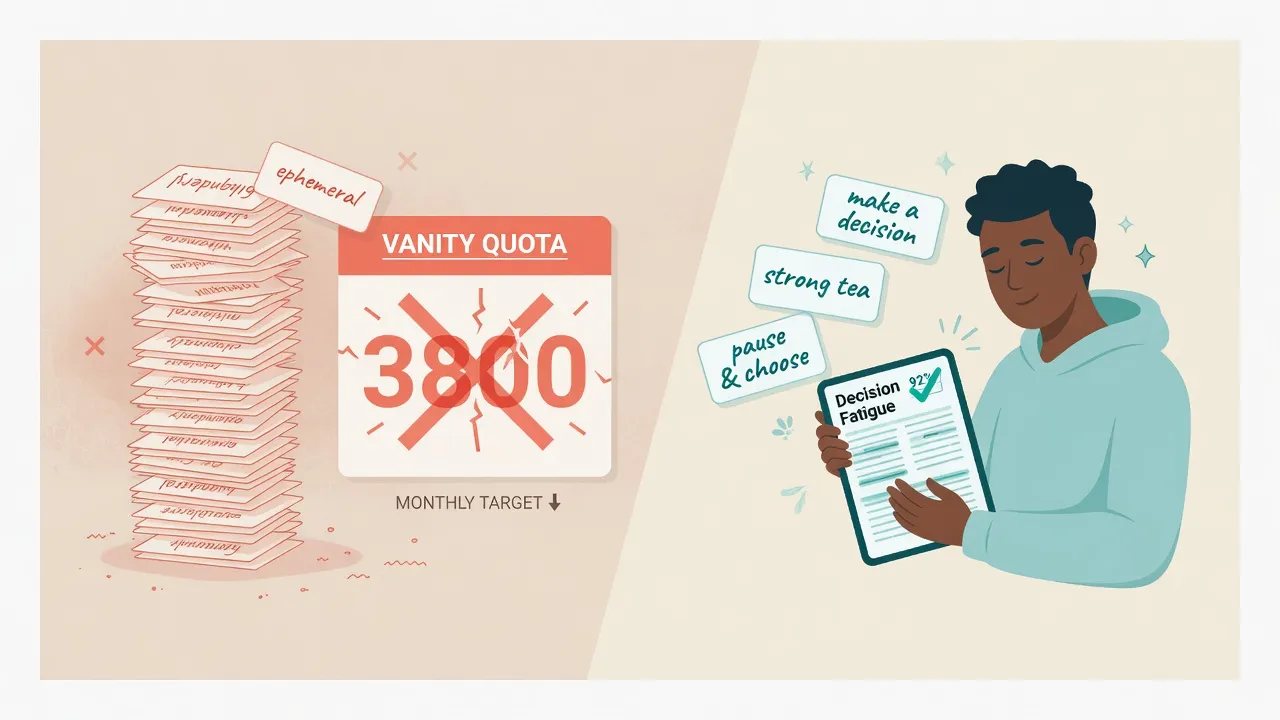
A bare pair like ephemeral → short-lived is easy to flip and easy to forget. There is no scene, no tone, no company of other words. Your brain treats it as disposable noise.
Put the same item in a sentence:
The intricate patterns of cultural exchange were ephemeral, lasting only for a fleeting moment before dissolving into the greater narrative of time.
Now you get shade: brief, temporary, slightly formal, tied to a story. You are not only learning a gloss. You are learning when the word fits.
Vocabulary research in the tradition of Paul Nation and extensive reading keeps pointing to the same practical truth: a word usually needs many meaningful meetings in different contexts before it feels easy. One card is one thin meeting. Graded pages, re-reads, and same-topic texts stack meetings.
Collocations: words travel in packs
Words do not live alone. English wants strong tea, not hard tea. You can "know" make and decision and still produce do a decision.
Useful packs you meet constantly:
- make a decision
- take responsibility
- raise a question
- highly likely
The better learning unit is a phrase from your reading, not a bare lemma dump. When you save make a decision with the sentence you found it in, review practices living English - not a dictionary line. For more on multiword units versus single words, see words vs expressions at CEFR.
Motivation: review debt kills the habit
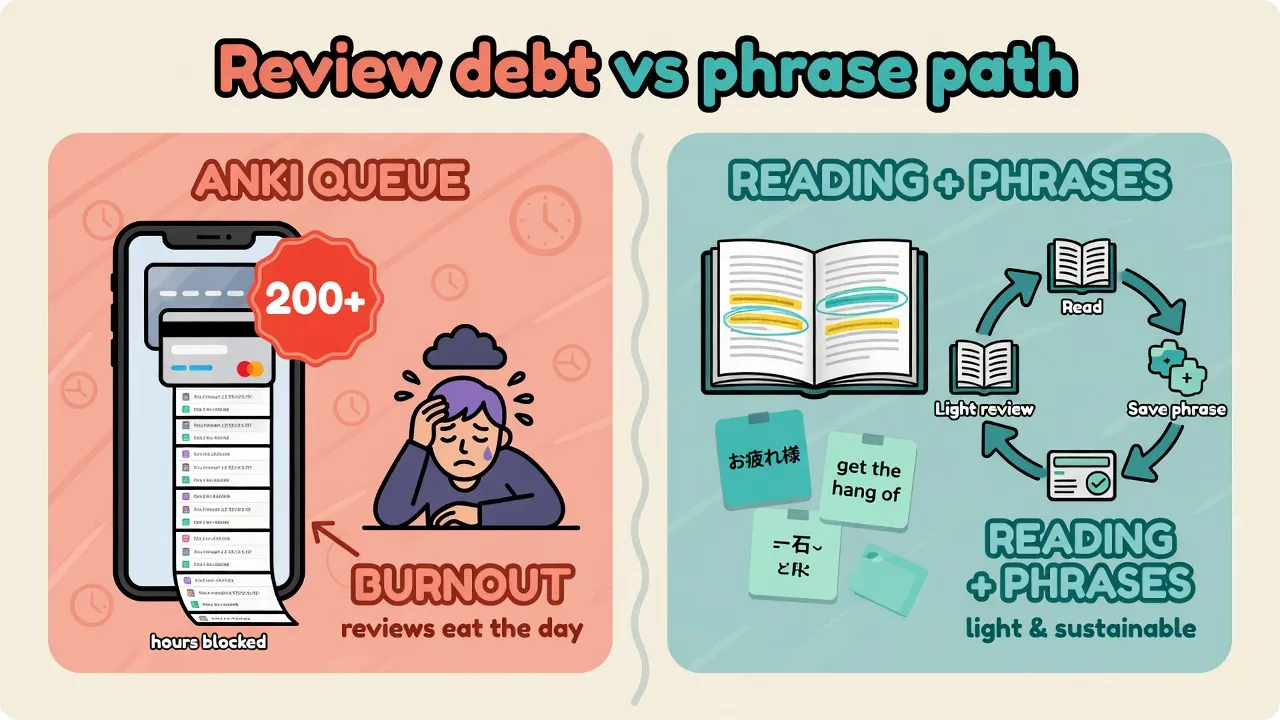
Two hundred-plus daily reviews often feel like debt, not language. You clear the queue to avoid shame. Interest shrinks. Skip days pile up. Then the app becomes the enemy.
Reading flips the emotion. You open an article about design, tech, psychology, or a short story you actually care about. New items arrive as a side effect of attention. Contact hours go up without the "punishment" frame.
Anki is not the villain. Review debt dressed up as a monthly quota is. If the queue grows every week and you cancel reading to "clear Anki," the tool is eating the habit. Invert priority: input first, tiny review second.
Here is that contrast in one picture:
We will spell out when Anki stays healthy later. First, the math that makes vanity targets collapse.
Exposure is not mastery
Old clickbait math: "a novel has thousands of unique forms, so you learned thousands this month." The equation is wrong.
| What you measure | More realistic picture |
|---|---|
| Unique word forms in a long book | Thousands, including names, rare words, inflections |
| High-frequency lemmas / families you actually need | Smaller critical layer for general reading |
| Words you noticed and looked up | Dozens to hundreds per week (level + volume) |
| Words that become easy passive vocabulary | Usually a subset of what you met, after multi-meeting |
| Words you freely produce | Smaller layer still |
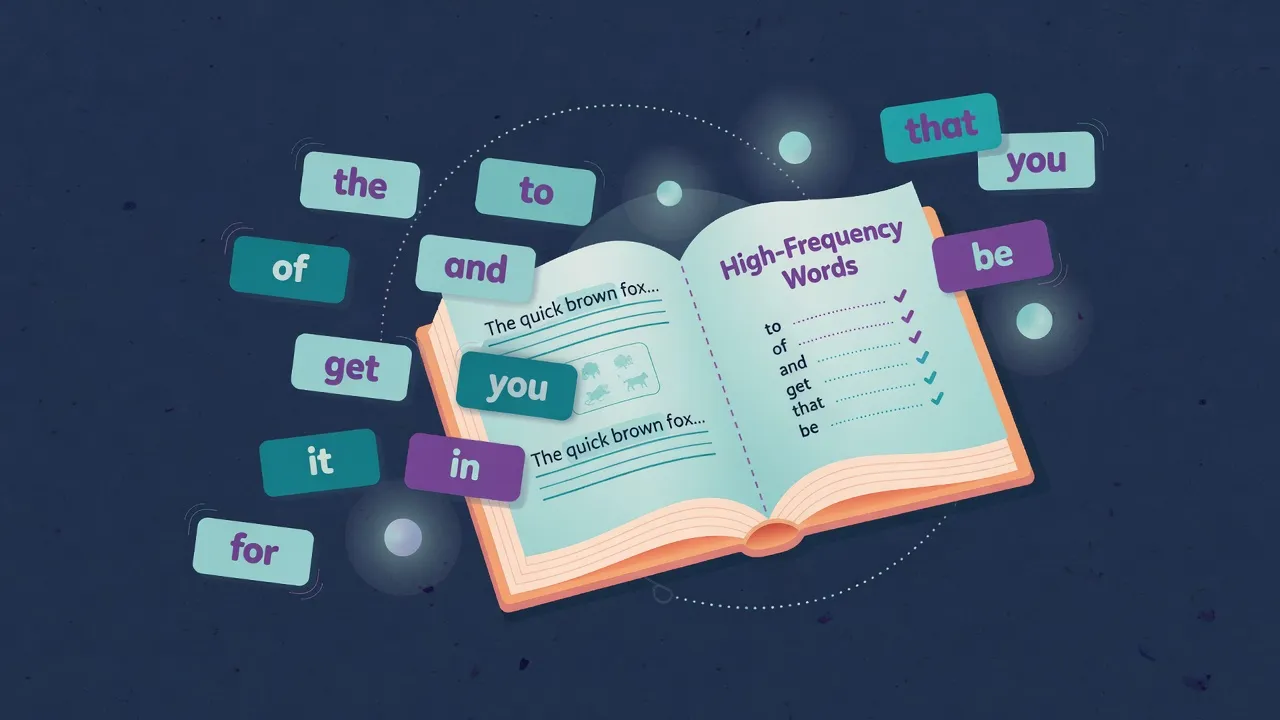
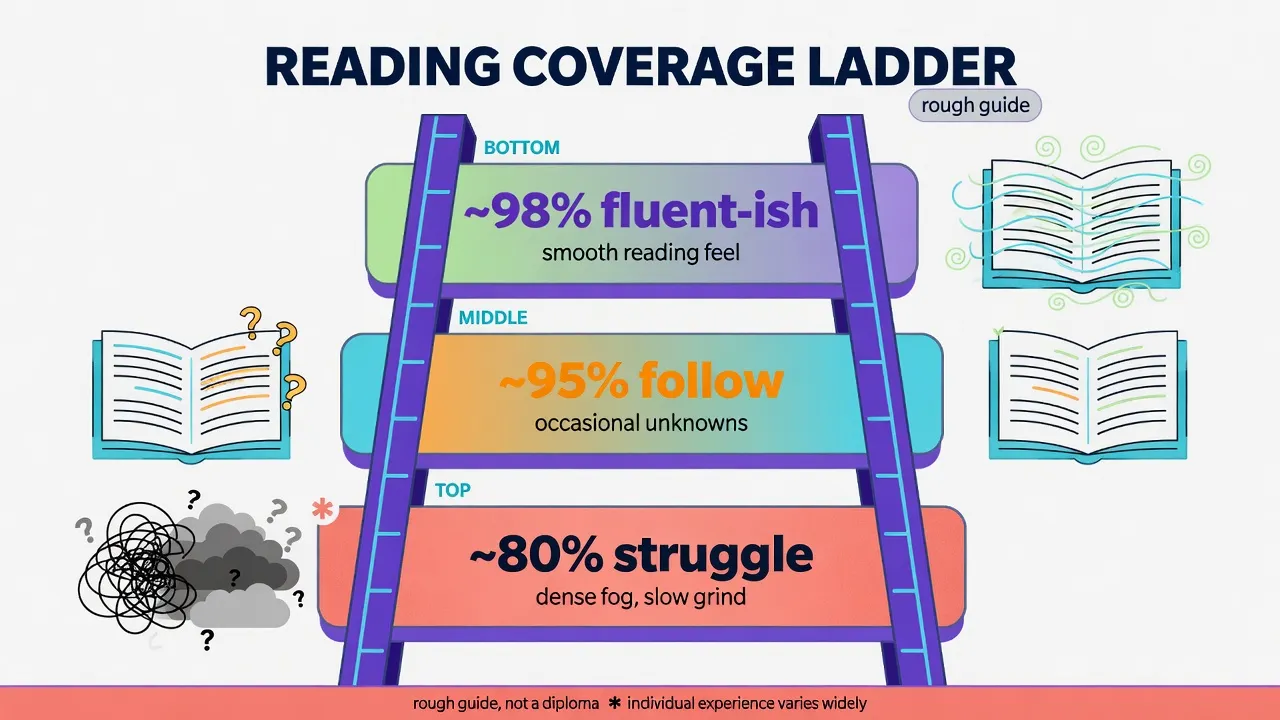
Coverage note: a few thousand frequent word families cover a large share of many general texts. That is about priority, not "download 3000 families in 30 days." Orientation ranges for levels live on the free language map and in how many words for CEFR. Counting units (form vs lemma/family) get a deeper treatment in lemma vs word form. Trophy totals without use also show up in does 5000 words mean C2?.
Oxford / top-3000 stockpile is not a monthly mastery quota
Lifetime useful stockpile goals (for example, roughly 2,500-3,000 frequent items in everyday coverage talk) are not the same claim as mastering a 3000-word monthly quota this calendar month. Priority lists help you choose what matters over years. Reading and multi-meeting build availability week by week. This post is not a top-3000 word list.
How many English words can you learn in a month? Realistic ranges
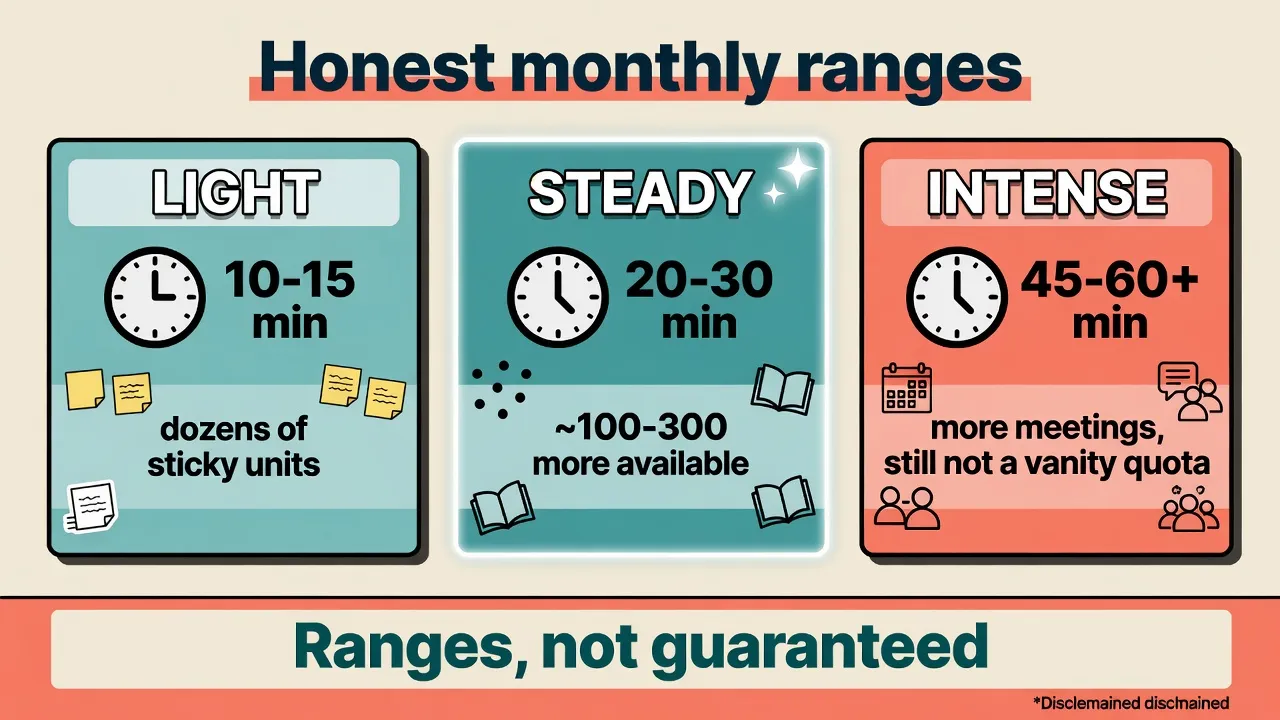
There is no universal number. The ranges below assume you already have a base (roughly high A1-B1+) and read almost daily. Variance is high: text density, first language, prior vocab, and what you count as "available" all move the needle.
| Mode | Time / day | What is realistic |
|---|---|---|
| Light | 10-15 min, easy texts | Dozens of sticky new units + heavy recycle of known |
| Stable | 20-30 min, graded + simple authentic | Orient ~100-300 more available words/phrases (high variance) |
| Intensive | 45-60+ min | More meetings and notice-events; still not a guaranteed three thousand mastered families per month |
Curve notes:
- Near zero base: almost everything is new, but durable stick still needs repeats. First glance is not "learned."
- B2+: pages rarer yield bulk "new words." Growth moves to nuance, collocations, idioms, and domain vocabulary. See how many words for B2.
- No guarantee: intensive hours are not marketing math for ~3000 mastered families every month.
Measure instead of a vanity counter:
- Finished near-level texts
- Fewer lookups on the same text type
- Phrases you can actually deploy in writing or speech
For tracking without self-deception, track vocabulary progress pairs well with this article. Short daily windows (not hero sessions) also match the 15-minute daily vocabulary rule.
30-day reading-first plan
You do not need a perfect system. You need a loop you can repeat when life is noisy.
near-level text → blockers only → save 5-15 phrases
→ light review (trainer or mini phrase deck) → re-read short texts
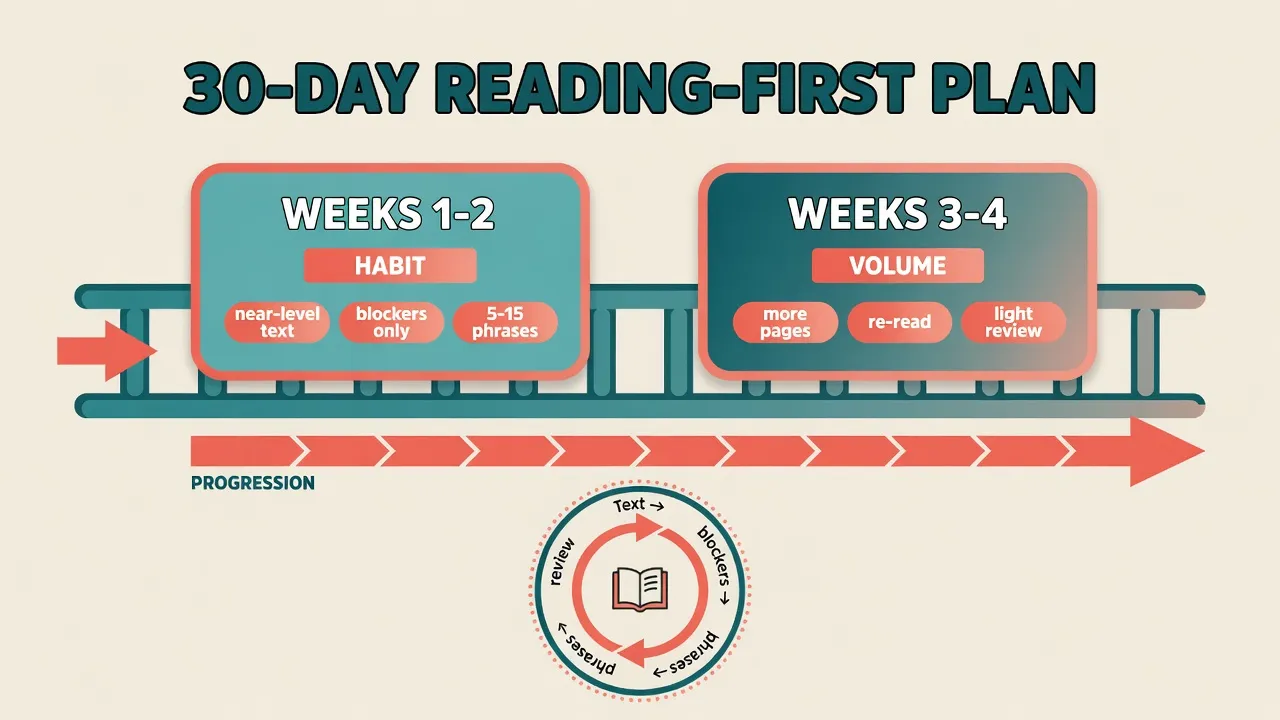
Weeks 1-2: rebuild habit
| Step | Action |
|---|---|
| 1 | 15-25 min/day of English you mostly understand |
| 2 | Free library warm-up: all articles |
| 3 | Look up blockers only (meaning of the sentence breaks) |
| 4 | Save 5-15 phrases per session, not 40 bare lemmas |
| 5 | 5-10 min light practice of saved items (demo trainer or mini phrase deck) |
Weeks 3-4: raise volume carefully
| Step | Action |
|---|---|
| 6 | Same minutes; slightly longer or harder texts when lookups drop |
| 7 | Own legal EPUB only if you have rights; MovaReader does not ship free commercial novels |
| 8 | Once a week: re-read a short old text (free multi-meeting) |
| 9 | If the free plan's 20 translations/day feels tight: simpler texts, or Reader for volume (pricing) |
| 10 | Still ignore vanity monthly counters; score finished pages + usable phrases |
A sibling deep-dive on the same method: build B1 vocabulary by reading.
Anki when OK / when harmful
Anki is optional, not a religion and not "dead." The trap is review debt sold as a path to three thousand words every month.
Keep Anki when
- The deck stays small
- Cards are your sentences or phrases from reading (not bare lemma dumps)
- Reviews never eat reading time
- New cards are capped so the queue shrinks or stays flat on busy weeks
- Hybrid wins: reading first, mini phrase deck second
Stop or cut hard when
- You add 100+ new bare L2→L1 pairs a day "because monthly quota"
- Daily reviews last longer than input itself
- Shame and backlog are the main emotion of the day
- Success is only card count, not pages or usable phrases
- You pass zombie cards on recognition but never meet them in real English
| Signal | Action |
|---|---|
| Review queue grows every week | Cut new cards to near zero until the queue is calm |
| You pass cards but freeze in articles | Switch unit to phrases from text; add re-reading |
| You skip reading to "clear Anki" | Anki is eating the habit - invert priority |
| Mini phrase deck from last week's reading | Healthy hybrid |
Light practice without a giant deck: type training demo and phrase typing demo. Full unlimited trainers fit Pro better (trainers).
How MovaReader fits
MovaReader is built for vocabulary growth by reading: near-level graded articles, click-to-translate in context, phrase save, light trainers, and optional listen when the page is mostly clear. You bring own legal EPUB/files for longer books. We do not ship free commercial bestsellers.
How to use it in four steps
- Warm up on free graded articles with click translate (all articles).
- Upload own legal files when you want a longer book (rights required).
- Save phrases → practice on type demo, phrase demo, or full trainers on Pro.
- Listen when the written page is already mostly clear (audio as support).
| Need | Realistic plan |
|---|---|
| Learn the loop; short sessions; free graded | Free plan (library + listen + ~20 word translations/day) |
| Real page volume + unlimited reading translations | Reader from €1/mo |
| Full unlimited trainers / heavier practice path | Pro €5/mo |
AI higher tiers (if any) are separate and not required for this reading + phrase method. Soft onboarding: how to use. Plans: pricing.
MovaReader does not include commercial novels or licensed bestsellers out of the box.
| Approach | Strength | Weakness |
|---|---|---|
| Anki-only (bare pairs) | Review discipline; short-term recognition | Weak collocations; review debt; "zombie words" in real use |
| Read-only (no notes) | Pleasant input; volume of meetings | Easy to skip fixing high-value rare-but-needed units |
| Read + phrases + light review | Context + selection + retention | Needs level discipline; must not over-save |
Reading does not ban flashcards. It selects which phrases deserve a tiny review layer. Moving passive items toward use is a separate layer: passive to active vocabulary.
Language map as a compass
Think of the free language map as a compass for vocabulary and CEFR-ish orientation ranges.
- Guests can open research-style A1-C2 orientation ranges.
- Personal marks need sign-in, English or Spanish as the learning language, and your own learned marks on words and phrases.
- Empty personal % for guests or unmarked accounts is by design.
- The map shows ranges and gaps; this article is the method; the graded library is the gym.
If you want the map walkthrough in more depth: language map explained. Stockpile sizes: how many words for CEFR. After sign-in, catalogue views such as B1 vocabulary only make sense once you mark what you actually know.
FAQ
How many English words can you realistically learn in a month?
There is no universal number. With daily reading and a base above zero, many adults notice progress on the order of low hundreds of units first becoming more available (often passive), with huge variance. Light days may stick only dozens; intensive hours add meetings, not magic. Measure finished texts, fewer lookups, and phrases you can use - not a vanity monthly counter. Use the ranges board above.
Is a 3000-word monthly quota realistic?
As mastered word families you can use, almost never for normal adult schedules. People confuse unique forms in a long book, card flips, and short-term recognition with durable passive or productive knowledge. A stockpile goal of a few thousand frequent items over years of use is a different claim from a calendar-month mastery quota. Prefer realistic low-hundreds-ish ranges when you already have A1-B1+ and read consistently - still with high variance, never as a guarantee.
Do I still need Anki?
Only if it helps. You do not need Anki as the whole religion. A strong default for many learners is a mini phrase deck from your reading, with reviews that never eat reading time. Drop or freeze Anki when bare pairs and review debt are the main habit. Anki is optional hybrid tooling - not mandatory, not "dead."
Is learning the 3000 most common words the same as mastering 3000 this month?
No. Oxford-style / top-frequency lists describe a lifetime useful stockpile and a coverage story for everyday texts. That is not a plan to master three thousand families in one calendar month. Priority lists help you choose what matters; reading plus multi-meeting builds availability. Disambiguation only - this article is not a top-3000 word list. See how many words for CEFR and lemma vs word form.
Why do I forget flashcard words the next day?
Shallow encoding: no scene, weak collocations, no second meeting in real content, too many new cards at once. Forgetting is normal. Design for multi-meeting in stories (re-read, same topic, phrase cards from text), not for one perfect pass on a bare pair.
Can I grow vocabulary only by reading?
Passive vocabulary - often very well, if texts are near-level and you meet items again. For speaking and writing, add short production of the same phrases (say, type, or a light trainer). Pure read-only without any save or review can still work for volume, but high-value items slip more easily. See passive to active vocabulary.
What should I do in 20 minutes today?
- Open one near-level text on all articles.
- Read 1-2 screens; translate blockers only.
- Save up to ~10 phrases (not 40 bare words).
- Spend ~5 minutes on a demo trainer or mini phrase review.
- Skip the vanity monthly counter.
Optional: glance at the language map for orientation, not as a scoreboard.
Do free plan limits mean the method fails?
No. About 20 word translations/day on the free plan teaches selection. For real page volume, Reader from €1; full unlimited trainers fit Pro €5. Limits are product tiers, not proof you lack talent. Details: pricing.
Next steps
Vocabulary is not a download quota. It is a network of phrases you meet again in texts you care about. Finished pages and usable chunks beat a vanity 3k monthly target.
Today (20 minutes): one near-level text, blockers only, 5-10 phrases, light review. Ignore the vanity counter.
- Gym: all articles
- Compass: language map
- Method sibling: build B1 vocabulary by reading
- Soft start: how to use
- Volume when the free plan is tight: pricing
Read your level. Save fewer items, but better ones. Review lightly. Let real English, not a monthly scoreboard, decide what sticks.
Learning English?
The English version of MovaReader teaches Spanish and Ukrainian. To read English with a translation for every word, open the reader in Ukrainian or Spanish:
Книги англійськоюЦя стаття українськоюLibros en inglésEste artículo en español