Vocabulary
15-Minute Rule: Daily Vocab Without Free Time
No free evening? Protect 15 minutes a day for interesting reading, a few words in context and a short review. A small daily habit beats a weekend marathon.
You downloaded three apps last month. You planned "one solid hour after work." By Wednesday the hour never appeared, the streak died, and the guilt sat heavier than the empty lesson.
Busy adults usually fail language plans that need a full free hour. The 15-minute rule is simpler: protect a short daily block, start in under 30 seconds, and stop before you hate it. Best use for vocabulary is short reading of something you like, click only words that block meaning or keep repeating, then optional review of a few phrases later. Consistency compounds. Fifteen minutes a day will not finish English or Spanish for you - it keeps the vocabulary pipeline open when evenings disappear.
Below: why long adult sessions collapse, what the rule actually is, rough yearly math, three session templates, a commute script, realistic word targets, common mistakes, where MovaReader fits, a 7-day starter, and FAQ.
Why hour plans fail busy adults
After a full workday, a clean 60-minute block is rare. Even when the calendar shows it, energy does not. You open a textbook, fight setup (tabs, notebook, "which unit?"), and the first boring paragraph finishes the session before it starts.
Typical collapse pattern:
- You need continuous focus when focus is already spent
- High setup cost eats half the block
- Materials feel dull when you are tired
- One missed day becomes guilt, then "I'll restart Monday," then silence
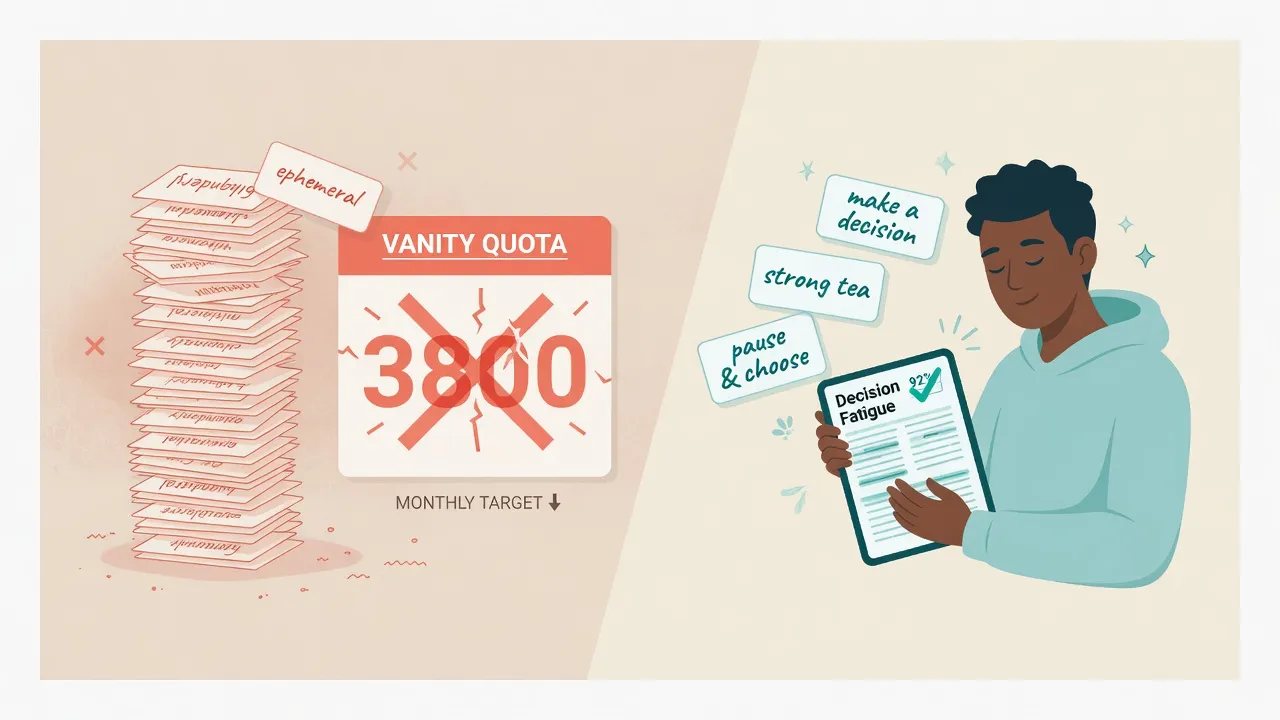
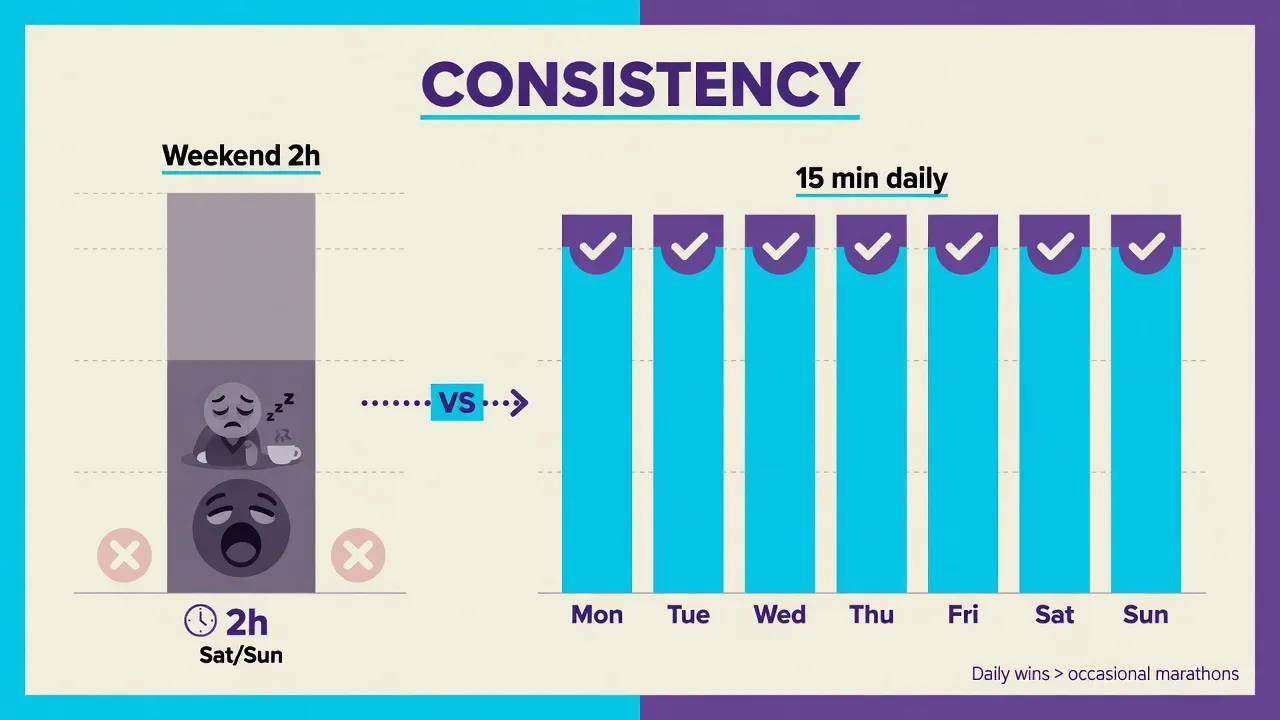
Weekend marathons feel productive once. They do not rebuild a daily habit. For vocabulary, re-meeting words across many short days usually beats one heroic Saturday list. If you want the wider frame of short easy pages vs deep slow pages, see intensive vs extensive reading.
Here is the contrast in one picture - long weekend guilt vs a short daily block that actually happens:
What the 15-minute rule actually is
It is a habit engine, not a fluency certificate.
You pick a fixed low-friction slot (commute, coffee, queue, early lunch). You open material that is already chosen - not "find something good for 10 minutes." You work until the timer ends. Win condition: you finished the block. Not "I mastered 20 words" and not "I felt brilliant."
Why short blocks help adults:
- Low start barrier - almost anyone can find a quarter hour
- Easier max focus - attention often holds better in a short window
- Habit loop forms faster - the brain learns "this is just what we do on the train"
- Fits dead time - transit, waiting rooms, the gap before a meeting
Microlearning is not magic. It is contact with the language you can still keep when life is full. On some weeks you will still want longer speaking practice, writing, or a deep grammar patch. The rule protects the base layer: words in context keep arriving.
Rough yearly math
Do the calendar, not the sales pitch.
Fifteen minutes a day for roughly a year is on the order of ~90 hours of contact if you mostly show up. That is useful volume for reading and vocabulary if the sessions are real learning - not scrolling, not dictionary thrashing every line, not passive tabs you never open.
What that does not mean:
- fluency in a year
- a fixed "3,000 new words" scoreboard
- a CEFR jump "guaranteed" by arithmetic alone
Hours are fuel. Quality of input and review still decide what sticks. Treat ~90 hours as a soft picture of why daily short sessions matter more than waiting for a perfect free evening that never comes.
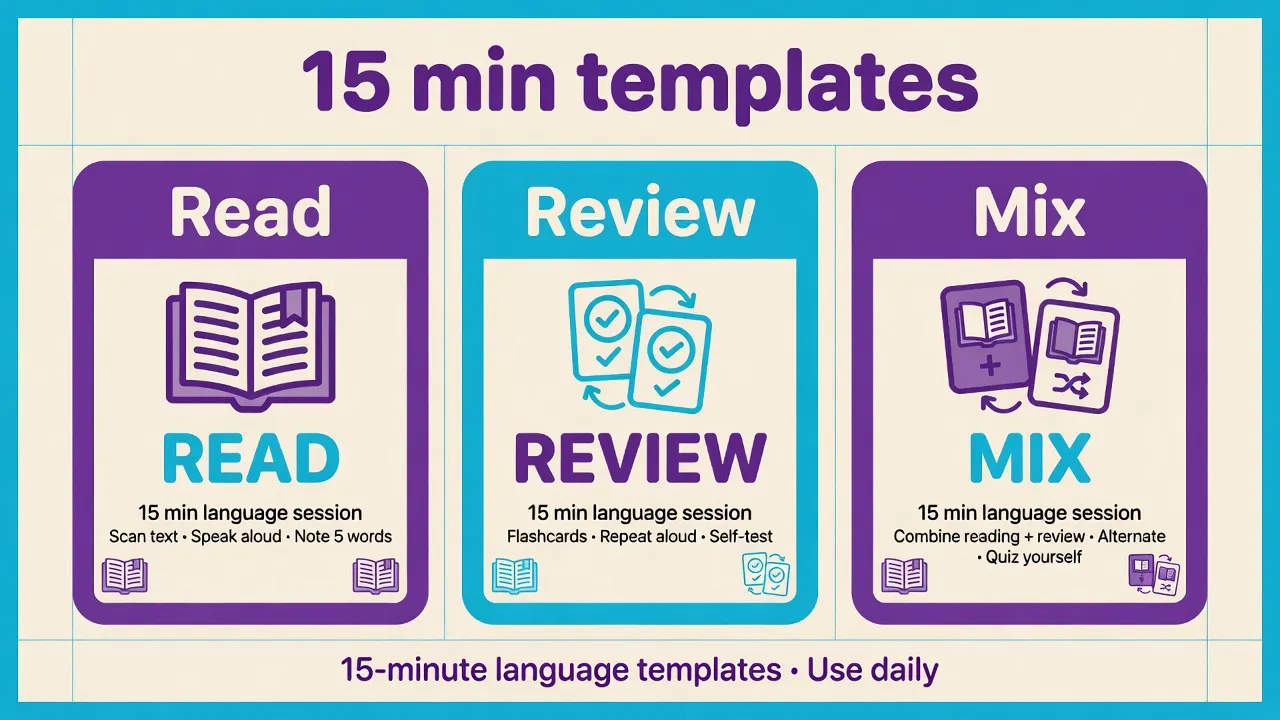
Three 15-minute templates
Not every block needs the same shape. Rotate by energy and goal.
| Template | Minutes | What you do |
|---|---|---|
| Read | 15 | One interesting article or short chapter; click only blockers |
| Review | 10-15 | Phrases from recent reading; say them aloud or type them |
| Mix | 10+5 | Ten minutes read + five minutes on yesterday's 3-5 items |
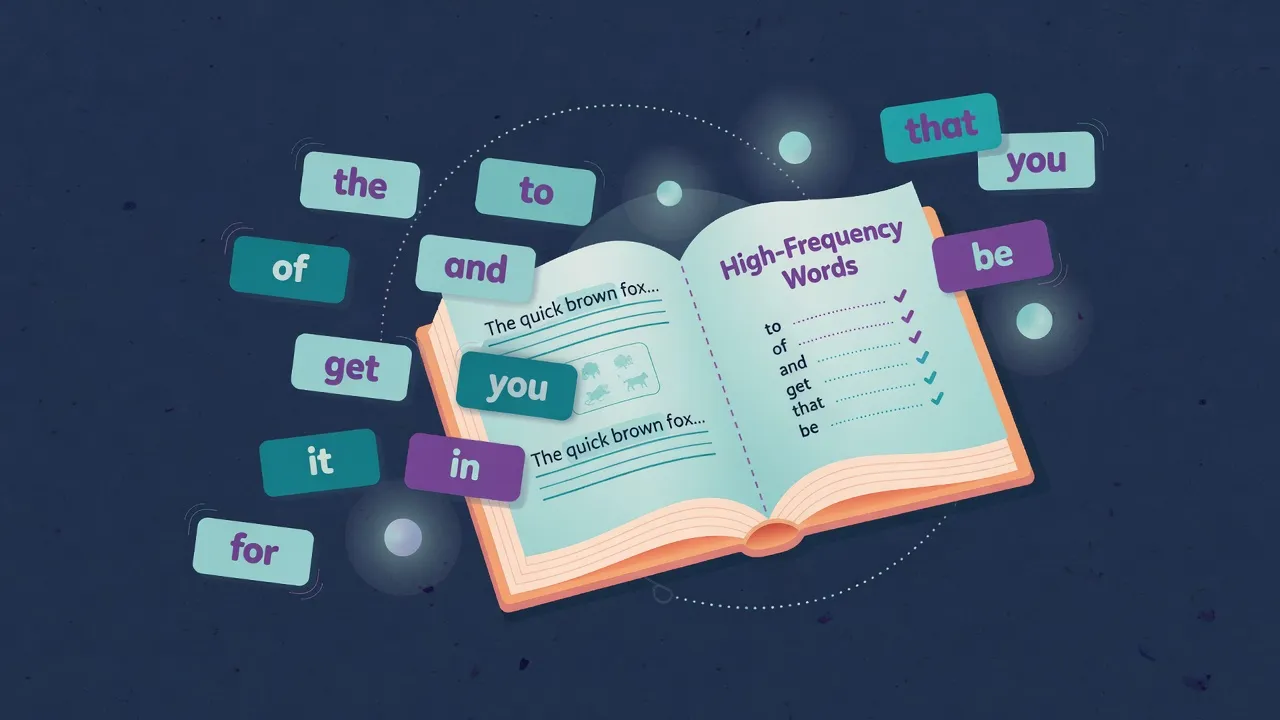
Read is the default when you are tired. Story first. Look up only words that break sense or keep showing up. Skip the rest; frequency will bring many of them back.
Review is for days when eyes are full but memory needs a pass. Three to eight sticky items beat a 40-card guilt stack. Trainers help when you want structure - more on that below.
Mix is the steady weekday pattern for many people: enough new input to stay interested, enough revisit that yesterday's words do not vanish.
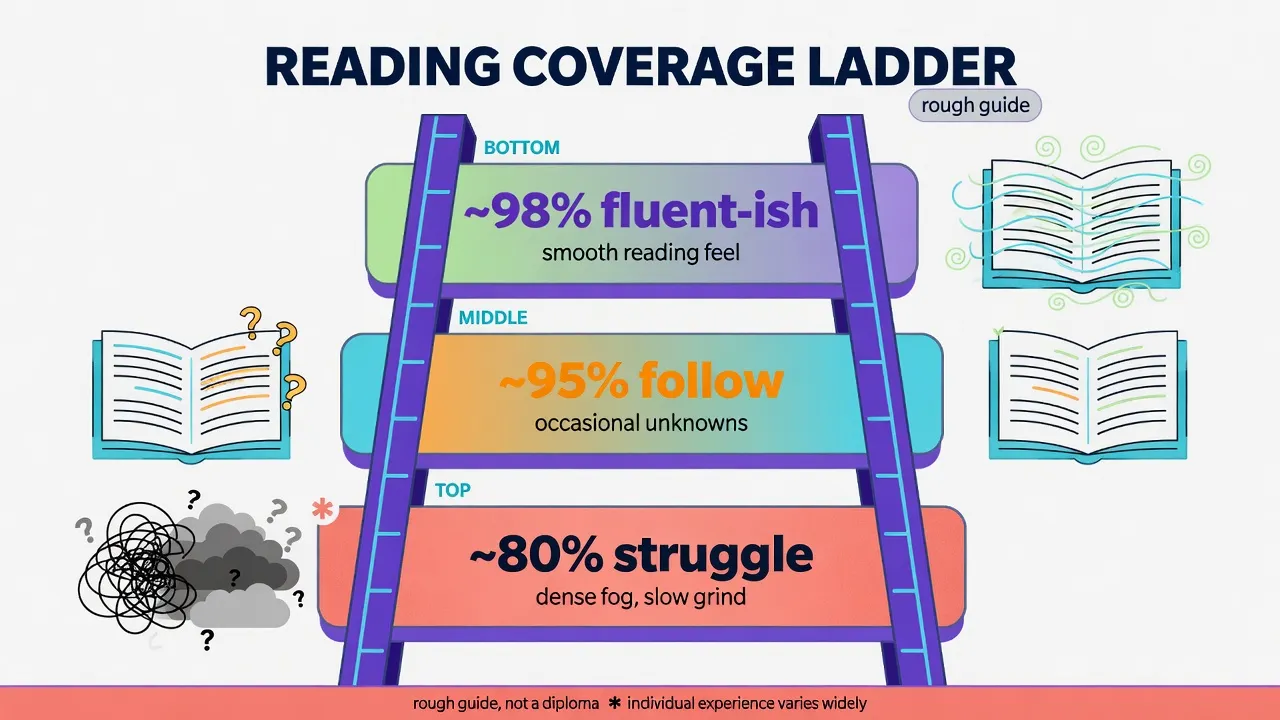
A simple split of a focused block looks like this - choose, read for story, capture few words, optional micro-review:
If longreads sometimes pull you into flow, protect shorter days anyway; flow is a gift, not a daily requirement. Related: flow state while reading.
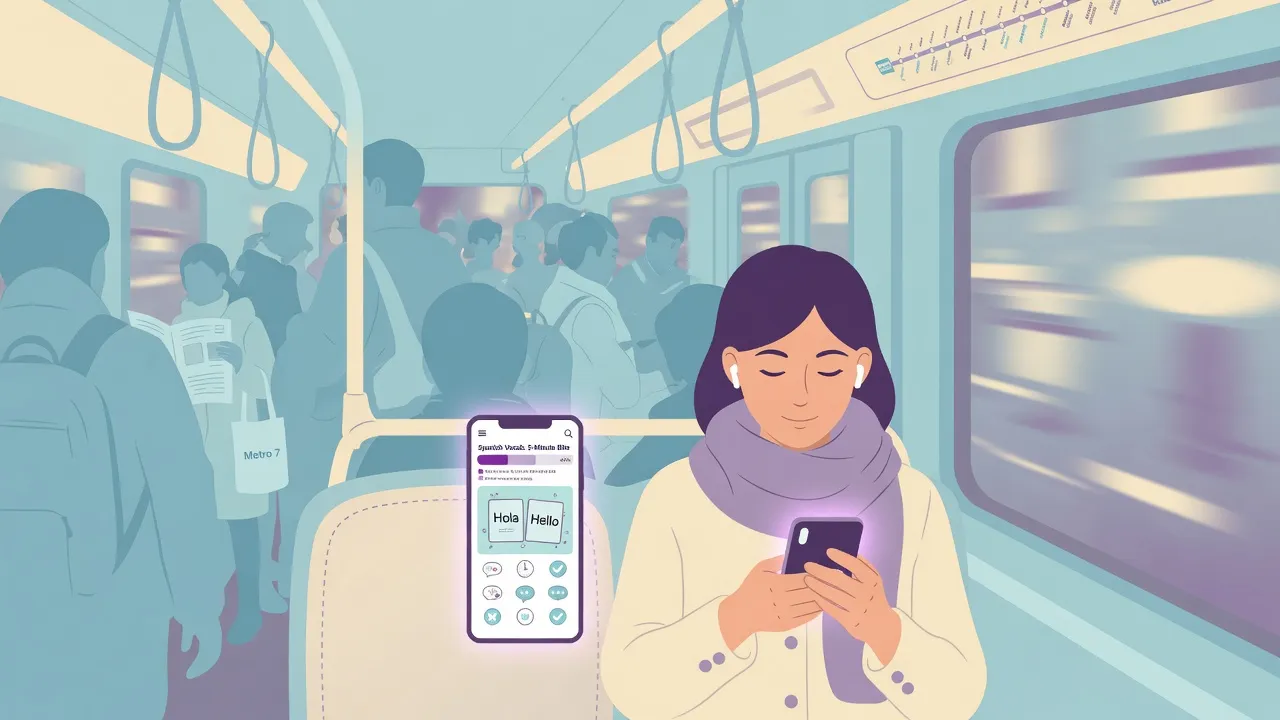
Commute scenario, step by step
Transit is the classic 15-minute classroom. The trap is using the whole ride to decide what to study.
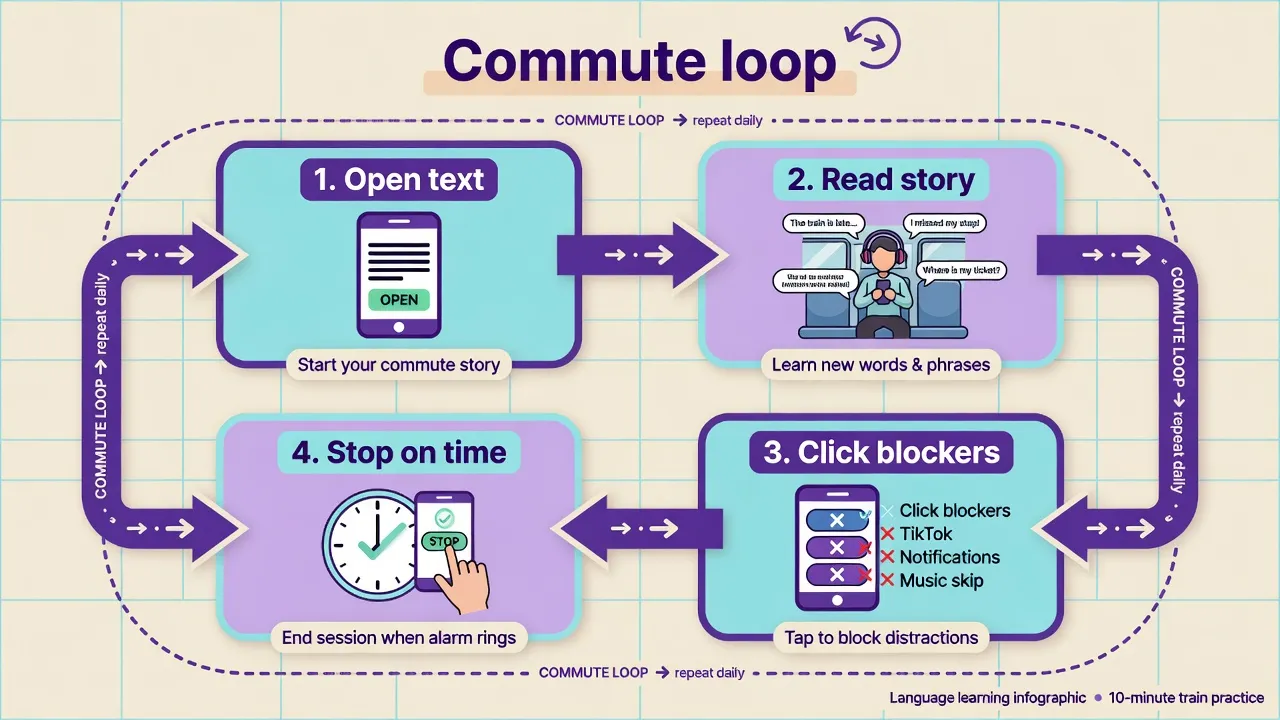
- Before you leave - save one article or open one graded piece at roughly your level. Zero "browse for ten minutes" on the platform.
- Open and read for the story - follow the plot or the point, not every unknown word.
- Click critical unknowns only - blockers and repeat offenders. Leave decorative rare words alone.
- Optional mark - save 3 phrases for a later 5-minute review, not 30.
- Close when the timer ends - finishing the block is the win. You can continue if energy is high; you do not owe a second session out of guilt.
Phone tip: airplane mode or Do Not Disturb for those minutes. Notifications kill more vocabulary than hard grammar ever did.
Sample doors if you want something ready: Spanish A2 piece, or browse the free library. Own files and setup notes live in how to use.
How many words per day is realistic?
Marketing loves "10-15 new words every session, guaranteed." Real life is messier.
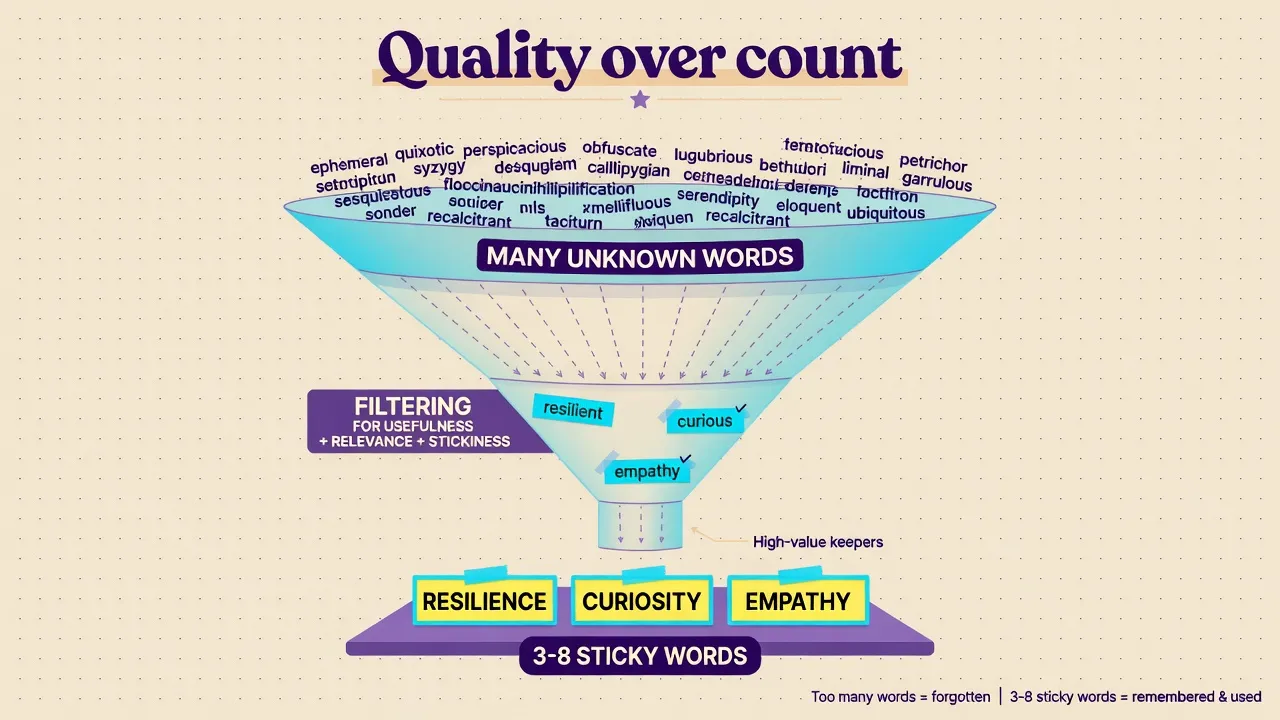
A better target for sticky growth is often 3-8 contextual items a day that you actually re-meet: words and short phrases tied to a sentence you understood. Forcing 15 isolated lookups in 15 minutes often means shallow capture and zero reuse.
Quality funnel in plain words:
- Words you see on the page
- Words you look up because they matter
- Words you save as phrases
- Words you revisit in a new text or short review
Only the last layers pay rent. Re-meeting a word in a new article beats a one-shot list you never open again. For map-style orientation of your known bank, peek at the language map.
Reading alone is not the only path. Flashcards and phrase practice help review. In your only 15 minutes, prefer context first. Isolated lists without a story are easy to abandon by week two.
Common mistakes that kill the rule
- Waiting for a free Saturday - the perfect hour is often a postponement machine.
- Only random flashcards - no story, no scene, weak glue.
- Hard text + dictionary every line - 15 minutes becomes three sentences and frustration.
- Zero review forever - pure input still helps, but a tiny revisit multiplies stickiness.
- All-or-nothing after one miss - one gap is normal; shame marathons end habits.
Short daily reading is ordinary discipline with low friction - useful, not magic.
If perfectionism makes you freeze on every unknown, stop translating every word in your head is a useful companion read. Soft voice practice without a full speaking hour: reading aloud vs silent reading.
Where MovaReader fits (optional)
You can run the 15-minute rule with any readable text and a light dictionary. A reading app only helps if it cuts friction: open graded text or import a legal file, tap a word without tab-hopping, listen when you want sound, practice a few phrases later if you choose.
MovaReader is built for that short-session shape:
| Need | Plan |
|---|---|
| Try the loop, free graded library | Freemium - about 20 word translations/day, unlimited listening |
| Heavier daily reading without hitting the free cap mid-page | Reader ~€1/month |
| Full trainers after input | Pro ~€5/month |
The built-in library has no commercial novels, and the languages you can learn are English and Spanish. You can upload books you already own legally.
Path for a commute week: pick an easy interesting text the night before → 15 minutes read with taps only on blockers → optional 3 phrases into phrases or trainers later. Plans and prices: pricing. Demos if you want to feel the loop first: type training, phrase typing.
Stay freemium while you test whether 15 minutes sticks. Move up only when the free translation cap or trainers become the real bottleneck - not because a streak badge yelled at you.
7-day starter plan
Keep the same easy article family for a week so vocabulary reappears. Goal: finish seven short blocks, not "master a level."
| Day | Block | Focus |
|---|---|---|
| 1 | Read 15 | Easy interesting text; 3-5 taps max if you can |
| 2 | Read 15 | Same topic family; notice repeats |
| 3 | Mix 10+5 | New page + yesterday's 3 phrases |
| 4 | Read 15 | Slightly longer piece if energy allows |
| 5 | Review 10-15 | Speak or type saved phrases only |
| 6 | Read 15 | Fresh text, same level band |
| 7 | Re-read | One short piece from the week; spot "old new" words |
Success signal for day 7: a few words feel less foreign than on day 1. Not fluency. Not a certificate. Just proof the pipeline is open.
FAQ
Is 15 minutes enough to learn a language?
It is enough to keep progressing when life is busy. Full skill balance (speaking, writing, hard listening) may need more on some days. The rule protects consistency; it is not a promise of native fluency or a fixed yearly CEFR outcome.
Morning or evening - which is better?
Whichever you actually keep. Many people protect a fixed slot (commute, after coffee). Consistency beats optimal-science debates. If evenings die, stop fighting evenings.
Only flashcards or only reading?
Reading in context is strong for sticky vocabulary. Flashcards and trainers help review. Mix if you can. Do not only grind isolated lists in your only 15 minutes.
What if I miss a day?
Start the next day. No punishment marathons. Habits die from shame spirals more than from one gap. Two days back is still a habit; a guilt weekend is often a restart fantasy.
Is MovaReader free for this?
Freemium: free graded library, about 20 word translations per day, unlimited listening. Reader about €1/month when you need more translation volume. Pro about €5/month for full trainers. Details on pricing. Optional - paper plus a simple dictionary still counts as the 15-minute rule.
English and Spanish both?
Yes. Same 15-minute logic. The library includes graded English and Spanish pieces; pick the language you are building now. Samples: ES A2.
Should I aim for 10-15 new words every session?
Prefer quality over forced count. 3-8 sticky contextual items often beat 15 shallow lookups. Re-meeting words in new texts matters more than a daily leaderboard.
What to do today
- Pick one 15-minute slot you already have (commute is ideal).
- Save one easy interesting text before the slot starts.
- Read for the story; tap only blockers; optional 3 phrases for later.
- Stop when the timer ends - that is a full win.
- If you want low-friction taps and listen: open the library, stay freemium while you test, check pricing only when limits get in the way.
You do not need a free evening to grow vocabulary. You need a short block you protect, material you would almost read anyway, and permission to stop after fifteen minutes without calling it failure.
Open the text. Start the clock. Finish the block. Tomorrow, do it again.
Keep reading with translations inside the text
With a free account, an unknown word translates with one tap, and the words you are learning wait for you in the trainer.
Free account: 7 days of Pro, then 20 word translations a day or a paid plan.