Vocabulary
Build B1 Vocabulary by Reading - Not Endless Lists
Stuck at B1 - lots of words, heavy pages, growing decks? One near-level text, few lookups, few saves, and a 15-20 minute loop grows vocabulary faster than endless lists.
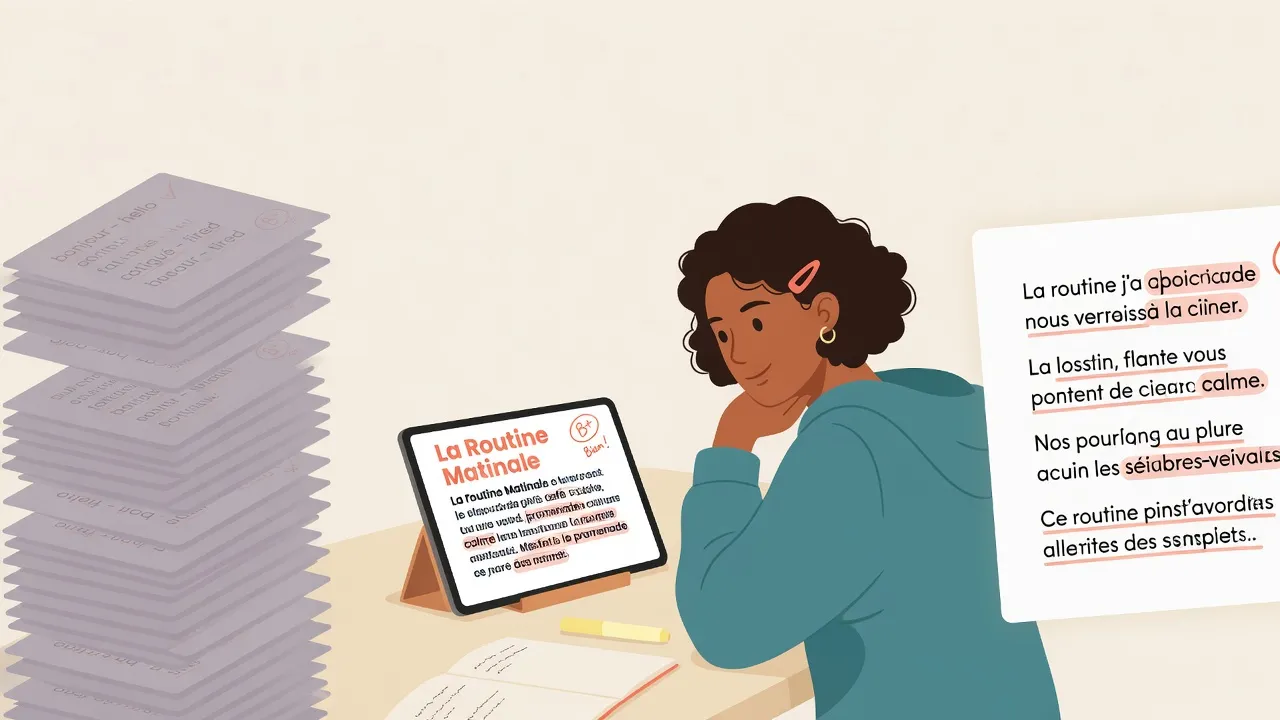
You already "know lots of words." Yet real pages still feel heavy. Flashcard decks grow, review guilt grows with them, and reading comfort barely moves. That stuck-at-B1 feeling is common - and more lists rarely fix it.
Intermediate vocabulary grows faster from slightly hard graded reading than from endless word lists. Aim for near-level texts (i+1): follow the story, look up only blockers, save a small high-value set, and review lightly. For orientation, B1 sits near ~2,500-3,250 frequent lemmas on research-informed ranges - a navigation band, not an exam pass mark. A 15-20 minute weekday loop beats a guilt-filled deck when you want fewer freezes on real pages.
Below: how hard the text should be, what to save, a weekday timer, and how the language map actually works. Learning targets here are English and Spanish (the app UI can be Ukrainian; that is not a learning path).
What does B1 vocabulary feel like - and how big is the band?
CEFR describes what you can do, not a mandatory word quota. Roughly, B1 means you handle main points on familiar topics, travel and work situations of intermediate difficulty, and produce connected text on personal interests - still with gaps and strain.
For high-frequency size, MovaReader's free language map uses research-informed orientation bands (a navigation aid, not a certificate):
| Level | Orientation (frequent lemmas) |
|---|---|
| A1 | up to ~1,500 |
| A2 | ~1,500-2,500 |
| B1 | ~2,500-3,250 |
| B2 | ~3,250-3,750 |
| C1 | ~3,750-4,500 |
| C2 | ~4,500-5,000+ |
Treat ~2,500-3,250 as a band for high-frequency navigation, not a pass mark for IELTS, Cambridge, or DELE. Spanish Plan Curricular defines themes and content, not one official total. Catalogue sizes inside the app are curated progressive lists and are not identical to research ranges. Full table and caveats: How many words for CEFR?. When you outgrow intermediate, see the B2 deep-dive. Counting units matter: Lemma vs word form. After sign-in, the catalogue view lives at B1 vocabulary.
What B1 reading often feels like
- News explainers and graded stories: possible with effort
- Unadapted novels and dense opinion pieces: still frequent freezes
- You recognize many core verbs and connectors, but mid-frequency topic words still block flow
That pattern is normal. B1 growth is less "learn 50 random nouns" and more "meet the next frequent layer in context until freezes drop."
Why do isolated lists stall at intermediate?
Lists help at A1-A2, when almost every basic word is new and needs a first anchor. Around B1 they often fail for structural reasons:
- Wrong sample. Random deck words are not the next words you will meet on real pages.
- No collocation. You "know" make and decision but freeze on make a decision / tomar una decision.
- Receptive vs productive confusion. Recalling a translation on a card does not mean you parse the word at reading speed.
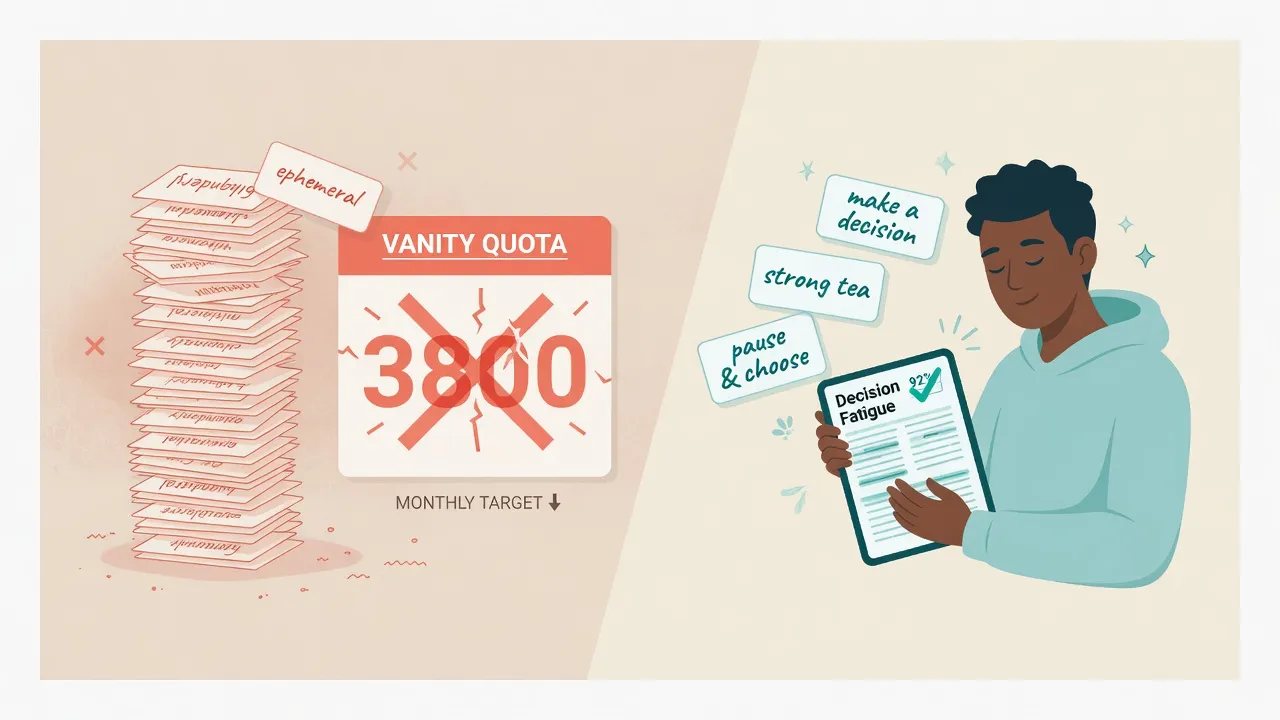
- Deck debt. New cards outrun review; the queue becomes a guilt machine.
- No density feedback. Lists never tell you if a page at your goal is still too hard.
Reading does not replace all deliberate study. It selects which items deserve study and rehearses them in the form you actually need: sentences, not dictionary lines.
| Approach | Strength | Weakness at B1 |
|---|---|---|
| Isolated lists / pure SRS | Controlled review | Weak topic relevance; easy over-collection |
| Native-only hard books | Authentic input | Unknown density too high; quitting |
| Graded / i+1 reading + few lookups | Relevance + flow | Needs discipline on what to save |
| Reading + light review of saved items | Retention without deck death | Requires honest marking, not trophy hunting |
How hard should the text be? (i+1 and few lookups)
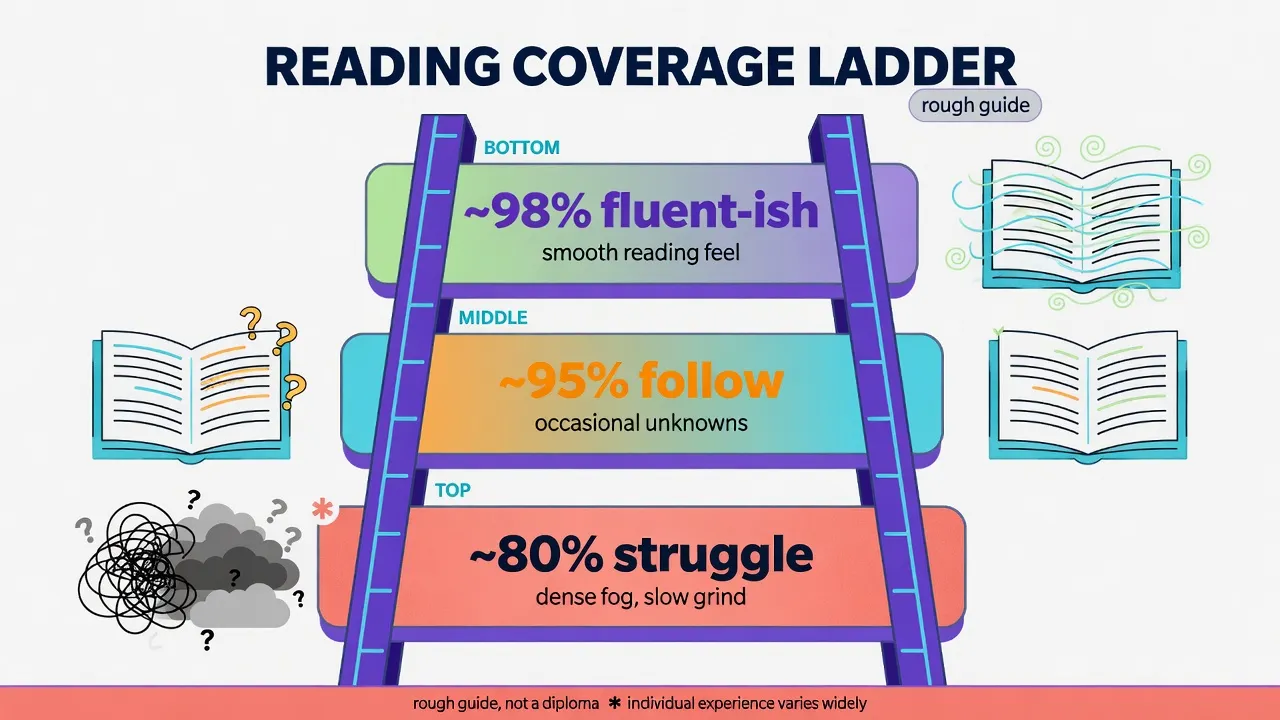
i+1 (Krashen-style shorthand) means input that is mostly understandable, with a small stretch of new material. You do not need a lab score. Use a practical density test:
- If you need a lookup almost every sentence, the text is too hard for vocabulary growth through flow.
- If you never look anything up, the text is easy input: good for confidence and speed, weaker for new mid-frequency items.
- Sweet spot: you can follow the story or argument, look up a handful of blockers per page, and still finish the session.
Here is that scale at a glance:
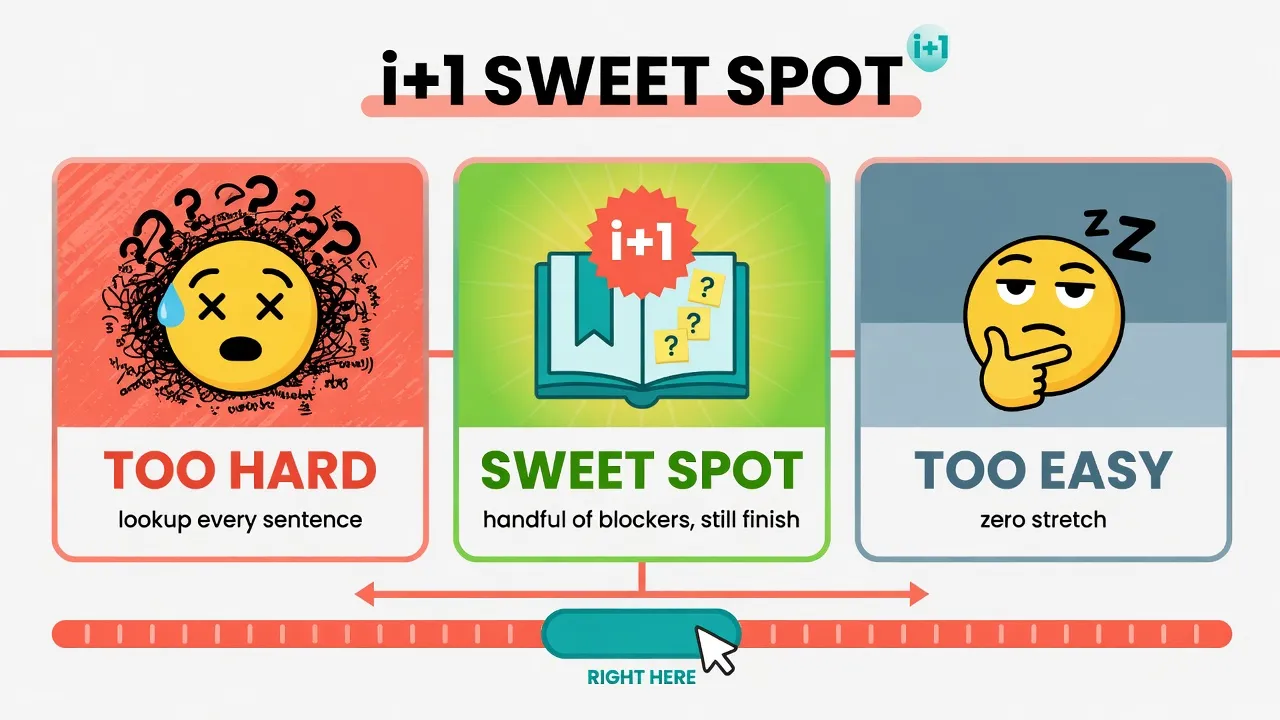
Graded texts (levelled articles, adapted stories, simple news) exist to hold you near that zone. Authentic texts work when the topic is familiar and the style is plain. Browse the library via all articles. Samples used elsewhere include Spanish A1 article 1127 and Spanish A2 article 1209. Match difficulty to comfort, not to ego.
Click-to-translate workflow
- Open a text near your level.
- Read for meaning first; do not stop on every unknown.
- When meaning breaks, translate in context (word or sentence).
- Decide: ignore (decorative / rare) or save (high value).
- Continue until the timer ends; finish the paragraph if possible.
- Optional: mark solid items as learned when they stop needing lookup.
Freemium is enough to learn that habit (about 20 word translations/day). Real page volume usually wants Reader from €1 so mid-session limits stop breaking flow. Onboarding once: how to use.
What should I save vs ignore?
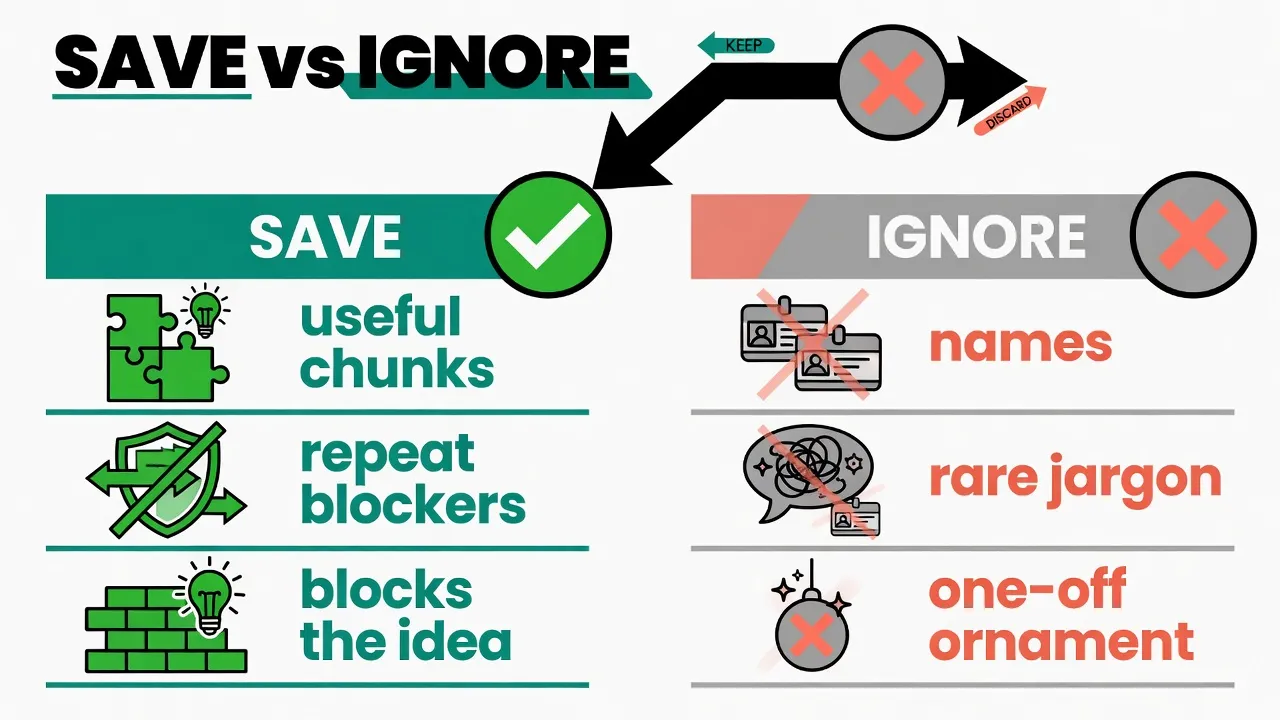
Intermediate learners over-save. Every unknown feels important. It is not.
Usually worth saving
- High-frequency verbs and connectors you still misread
- Topic words that repeat in your goals (work, travel, exams, hobbies)
- Multi-word chunks: on the other hand, as a result, por lo tanto, darse cuenta
- False friends that keep tricking you
Usually safe to ignore (for now)
- Proper names, once recognized as names
- One-off technical jargon outside your domain
- Rare literary ornaments on a graded page
- Every synonym of a word you already own
A simple decision fork:
| Signal | Action |
|---|---|
| Appears twice in one session | Strong save candidate |
| Blocks the main idea of a paragraph | Save or at least translate carefully |
| You already know a close synonym | Optional; prefer the form the text uses if it is common |
| Only needed for a side detail | Skip |
| You cannot restate the sentence after lookup | Save and re-read the sentence aloud or silently |
Aim for a small daily set you can still recognize next week - often 5-15 solid items, not 40 half-noticed glances. Map inflation with optimistic marks is worse than a slow catalogue. See Track vocabulary progress. For chunks vs single words, words vs expressions is a useful companion.
How much review do I need without over-training?
Reading plants many receptive seeds. Light spaced review helps fragile items stick without turning study into card farming.
Light review rules
- Review saved items first, not random list dumps.
- Prefer short sessions after reading, not hour-long cram blocks.
- If the review queue grows every day, cut new saves for a week.
- Mark learned / mastered only when you would bet on recognizing the item soon - not to force map %.
- Full unlimited trainers and heavier SRS load fit Pro (€5) better; freemium trainers are limited. Hub: trainers.
You do not need perfect production of every reading word. For B1 reading growth, stable recognition and fewer freezes are the primary win. Speaking and writing need extra deliberate production practice.
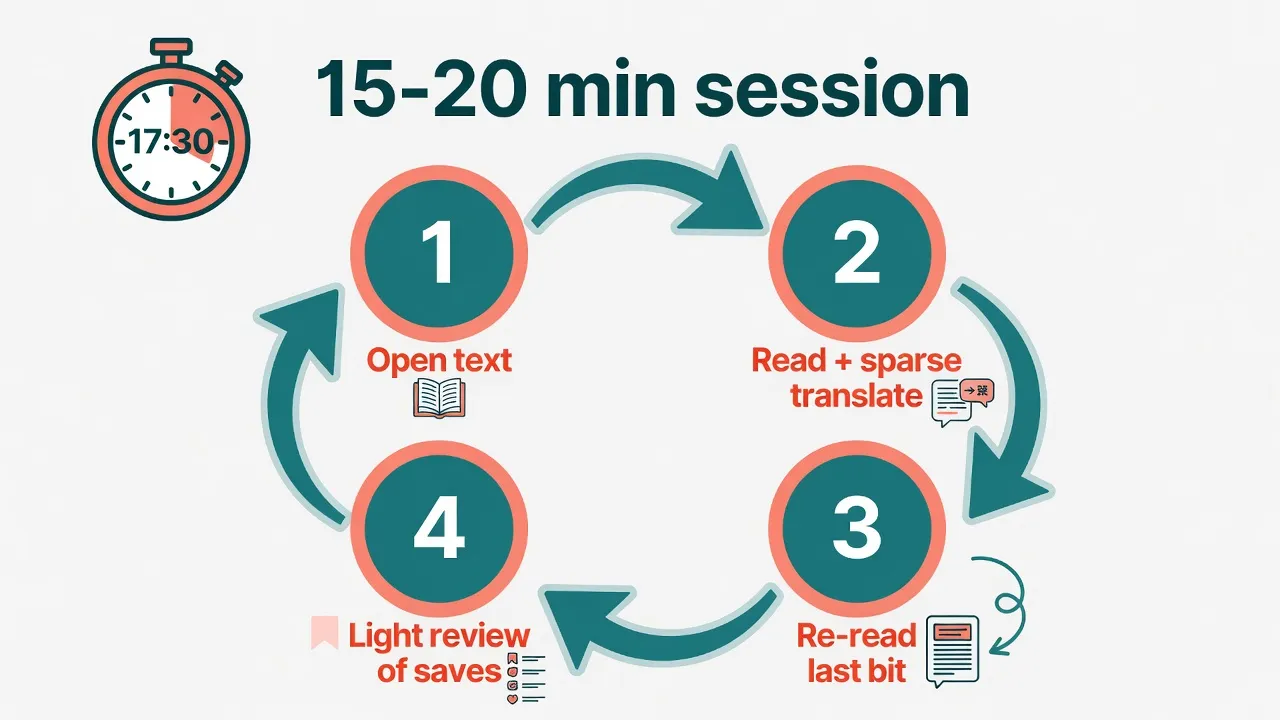
What does a 15-20 minute weekday session look like?
A session that fits a real weekday beats a heroic plan you skip.
| Minute | Action |
|---|---|
| 0-2 | Open one text near level; set a finish line (section, not "whole book") |
| 2-14 | Read for meaning; translate only blockers; save sparingly |
| 14-17 | Re-read the last paragraph with fewer lookups |
| 17-20 | Quick review of today's saves; mark 0-5 items as solid if honest |
The loop in one picture:
Weekly add-on (about 10 minutes once): check whether unknown density on the same type of text dropped; glance at the language map or B1 vocabulary for real catalogue movement, not for a badge.
If freemium translation limits break the middle of the session every day, that is a product signal, not a moral failure: either shorter texts on freemium, or Reader €1 for volume.
How do I check B1 coverage on the language map?
Use the map in two layers:
- Public orientation - free ranges for A1-C2, including the B1 band ~2,500-3,250 frequent lemmas. Hub: language map.
- Personal progress - approximate coverage of catalogue items you marked learned for English or Spanish. Needs account + marks. Level page: B1 vocabulary.
| Question | Answer |
|---|---|
| Does 60% on B1 catalogue mean official B1? | No. It means marks vs that list. |
| Does empty personal % mean you know nothing? | No. Guests and unmarked accounts show empty personal layers by design. |
| Should you mark every translated word? | No. Mark stable knowledge only. |
| Is the map a free full level test? | No. Never treat it as DELE / IELTS / Cambridge. |
Related posts: Does 5000 words mean C2?, Track vocabulary progress.
Which plan fits this reading method?
Fit the plan to the bottleneck. This method does not need every paid feature.
| Plan | Fit for B1-by-reading |
|---|---|
| Freemium | Learn the loop; short sessions; limited daily translations (~20 word translations/day) |
| Reader €1/mo | Real intermediate volume: unlimited word/sentence translations + practical personal dictionary that feeds map marks |
| Pro €5/mo | When full trainers, grammar-tree reading path, or unlimited URL import become the bottleneck |
AI higher tiers are separate; they are not required for this reading method.
Simple path: pick texts near your level, save only useful words, review lightly. Upgrade when freemium blocks flow. Pricing. Register if you want catalogue tracking. Library: all articles.
FAQ
How many words do I need for B1?
As orientation for frequent lemmas, roughly ~2,500-3,250 on MovaReader's research-informed map ranges. That is not an exam pass mark and not identical to any single catalogue. Full table: How many words for CEFR?.
Is graded reading enough to reach B1 alone?
It is a strong core for receptive vocabulary and reading comfort. Many learners still need listening, speaking, and some deliberate grammar. Vocabulary maps track catalogue marks, not full skill certificates.
Should I look up every unknown word?
No. Look up blockers. Too many lookups kill flow and flood the dictionary with junk you will never review. Aim for a handful per page in the i+1 sweet spot, then save only high-value items (often 5-15 solid saves a day).
Can I build B1 Spanish and B1 English the same way?
Yes in method (i+1 reading, selective saves, light review). Keep separate progress per learning language. For Spanish content framing vs CEFR charts, see Spanish vocabulary and Plan Curricular. MovaReader learning targets are English and Spanish only (UI can be Ukrainian; that is not a learning path).
Do I need Pro to follow this plan?
No. Public map ranges are free. The reading loop works on freemium within limits (~20 word translations/day). Practical daily volume usually wants Reader from €1. Pro (€5) helps when trainers, the grammar-tree path, or import depth matter more - not as a requirement for the core loop.
Why is my map still empty after reading?
Reading alone does not auto-fill personal %. You need sign-in, English or Spanish as learning language, and learned marks on catalogue items. Empty personal layers for guests or unmarked accounts are by design - not proof that you know zero. See Track vocabulary progress.
Next steps
- Open the language map and locate the B1 orientation band.
- Pick one near-level text from all articles or your own file.
- Run a 15-20 minute session: few lookups, few saves, optional honest marks.
- Skim how to use once so the dictionary and map loop are clear.
- Stay on freemium while testing; move to Reader from €1/mo when translation limits stop real pages. Add trainers on Pro only if review volume is the bottleneck.
- Keep size expectations realistic with how many words CEFR, how many words B2, and lemma vs word form.
B1 vocabulary is not a trophy number. It is fewer freezes on intermediate pages, a personal dictionary of items you actually meet, and map marks you would still defend next week - built in short reading sessions, not in endless lists.
Keep reading with translations inside the text
With a free account, an unknown word translates with one tap, and the words you are learning wait for you in the trainer.
Free account: 7 days of Pro, then 20 word translations a day or a paid plan.