Tips & Methods
Best App for Learning English? Match the Tool to Your Goal
Looking for the best app for learning English? Start with your bottleneck, not a crown. Compare app types, pick a small daily stack, and see when a reading-first tool actually helps.
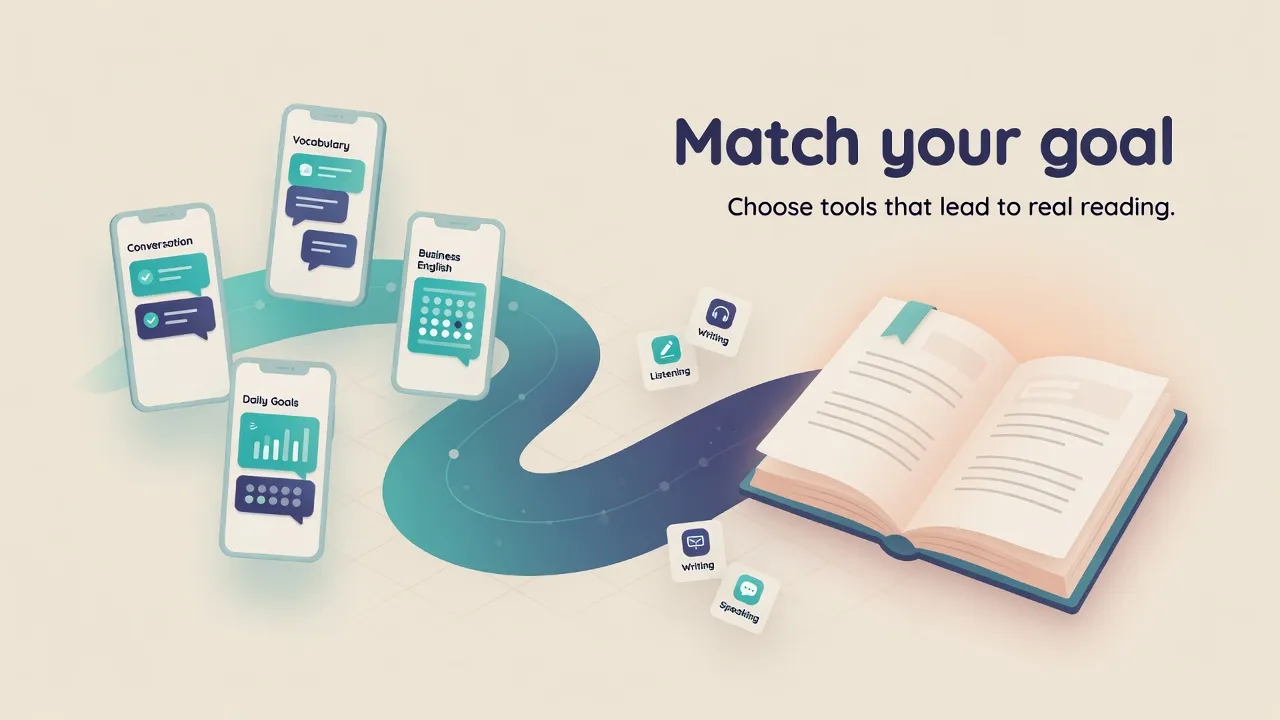
You open a "best English apps 2026" list. Ten crowns. Five "must downloads." One product that somehow wins every category. You install three of them, feel productive for a week, then freeze on a real article or a real conversation.
That confusion is normal. The store is full. Marketing is loud. Your real bottleneck is quiet.
There is no universal best app for learning English. The best pick is the one that matches what is actually stuck: daily habit, hard-to-recall words, structured grammar, speaking feedback, or vocabulary and patterns from real texts. Most serious learners use a small stack, not one forever app. No tool promises fluent results overnight.
Below: a short answer map, what apps can and cannot do, a full types comparison, a decision guide, a sample day, and a look at where a reading-first tool like MovaReader fits (and where it does not).
Short answer: match the tool to the bottleneck
| If you need... | Stronger default |
|---|---|
| Daily habit / zero-friction start | Gamified apps (Duolingo-style) |
| Hard retrieval of known words | Flashcards (Anki-style) |
| Structured grammar path | Course apps (Babbel-style) |
| Speaking feedback | Tutors / conversation platforms |
| Vocabulary + patterns from texts | Reading / input apps (MovaReader-style, LingQ-style) |
Pick a primary tool for your bottleneck. Add at most one secondary. Treat everything else as optional noise.
Why apps help (and what they cannot replace)
Apps are convenient for a reason. Your phone is already in your pocket. Five or fifteen minutes on the train still counts. Micro-lessons lower the cost of starting. Streaks and reminders help some people show up. Adaptive review can push weak items back into view.
That is real value. It is also not the whole story.
An app cannot live your hours of practice for you. It cannot replace conversation if speaking is the goal. It cannot turn a perfect streak into free reading of unadapted news. It cannot promise exam scores or a 30-day fluency fairy tale. What it can do is reduce friction so you keep meeting the language in a useful form: sentences, stories, phrases, speech.
If gamification has already become the goal instead of the language, you may like our note on the dopamine trap in language apps. Streaks reward opening the app. Skill still needs comprehension and use.
Features that actually matter
Ignore feature walls that list twenty icons. When you compare tools, look for a short list that shows up in real study:
- Words in full sentences, not only isolated dictionary lines
- Save + review for items you actually met (not a random deck you will never open)
- Audio when you care about sound and listening
- Phrases and collocations, not only single lemmas
- Clear free-tier limits (so you know what paid unlocks)
"Just use context and you win" sounds tidy in sales copy. Real progress is messier: input you understand, retrieval practice, output when you need it, and enough interest to return tomorrow. Skip magic ratios. Keep the checklist.
App types compared (pros, cons, best for)
Names below are illustrative. Products change prices and features. Use the type, not a brand loyalty war.
Here is the full board:
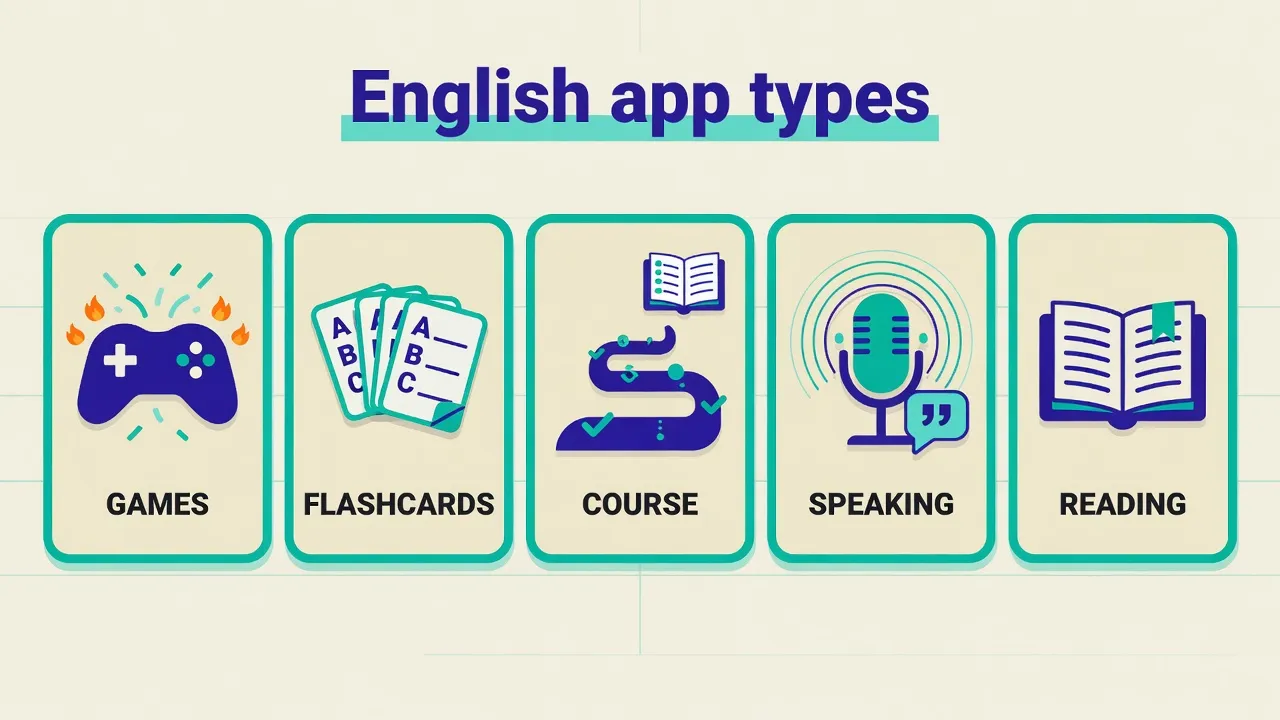
| Type | Examples (illustrative) | Pros | Cons | Best for |
|---|---|---|---|---|
| Gamified lessons | Duolingo-style | habit, low friction, friendly start | thin context, plateau risk if sole tool | absolute beginners, daily streaks |
| Flashcards / SRS | Anki, Quizlet | strong memory for items you already met | weak "use" without sentences; deck debt | targeted vocab drill |
| Structured course | Babbel-style | clear syllabus, grammar order | can feel textbook; less free reading volume | learners who want a path |
| Speaking / tutors | italki, HelloTalk-style | real interaction, feedback | cost and schedule vary | output practice |
| Reading + input | LingQ-style, MovaReader | words in context, volume of input | needs focus; not a speaking coach | A2+ reading and vocab growth |
Gamified apps
Great when the problem is "I never open anything." Weak when the problem is "I can tap answers but freeze on a paragraph." Fine as a warm-up. Risky as the only plan for job English, long texts, or natural collocations.
Flashcards
Excellent for retrieval of words you care about. Poor as a substitute for meaning-first input. A thousand isolated cards is not the same as building sentences. Use cards after you meet items in a text or lesson, not as the whole diet.
Structured courses
Helpful if you want grammar order and a syllabus. Less helpful if you already know rules but still cannot read for meaning. Pair a course with input so the rules show up in living sentences.
Speaking and tutors
Nothing replaces a patient human (or a solid exchange partner) for live output. Cost and consistency vary. Prepare with phrases from your reading so sessions are not blank stares.
Reading and input apps
These grow vocabulary and patterns from texts you actually consume. They ask for a bit more attention than a game loop. They do not replace a tutor. They shine when short graded pieces are already possible and you want more words that stick because they arrived in a story.
Decision guide: goal to tool
Use this as a quick tree, not a personality quiz.
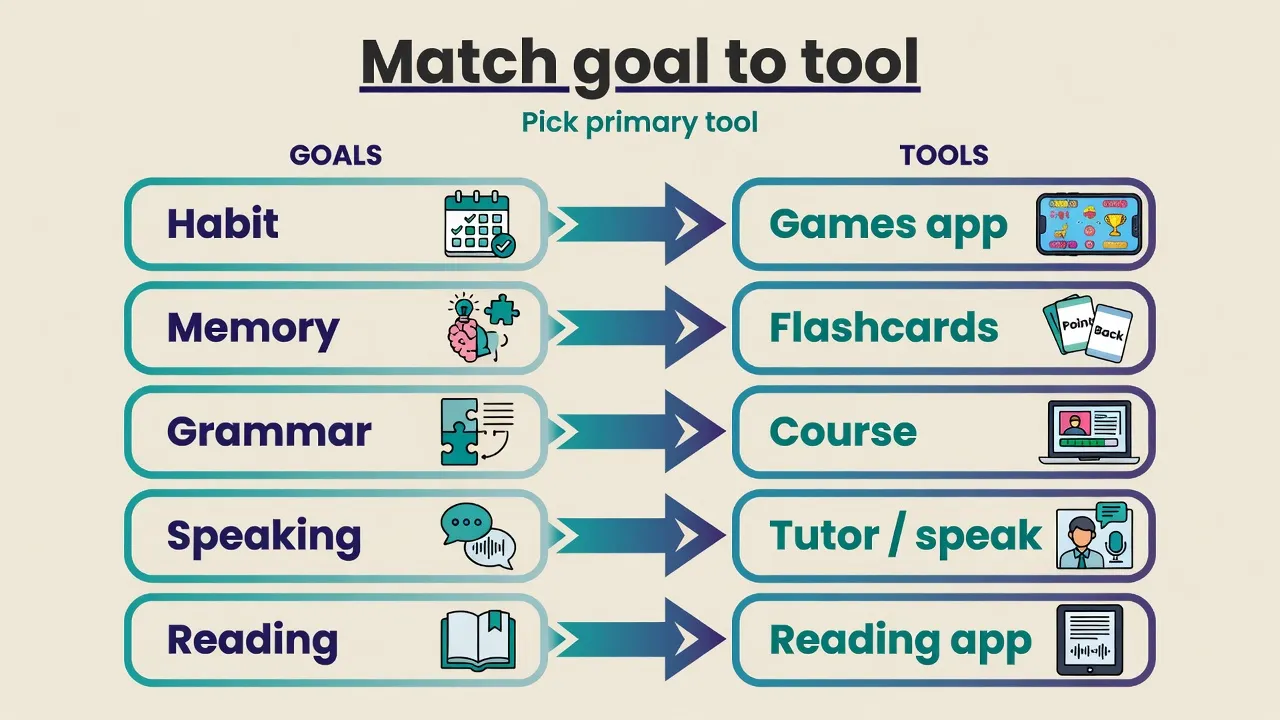
- I cannot stay consistent at all. Start with a gamified habit app (or a fixed calendar block with any tool). Consistency first.
- I know words on cards but lose them in speech or text. Keep light SRS, but move primary time to sentences and reading.
- I need grammar order and clear lessons. Course app as primary; add short reading so rules meet reality.
- I understand more than I can say. Tutor or language exchange weekly; fill phrase banks from reading between sessions.
- I freeze on real pages and want words in context. Reading / input app as primary; optional light review of saved phrases.
- I want everything from one crown. Lower the crown. Stack two tools max. Reassess in four weeks.
If you are choosing between pure games and reading once you can handle short graded texts, reading usually wins for vocabulary growth. Games still win for zero-friction starts.
A sample daily stack (about 45 minutes)
Serious learners rarely run five apps forever. They run a loop.
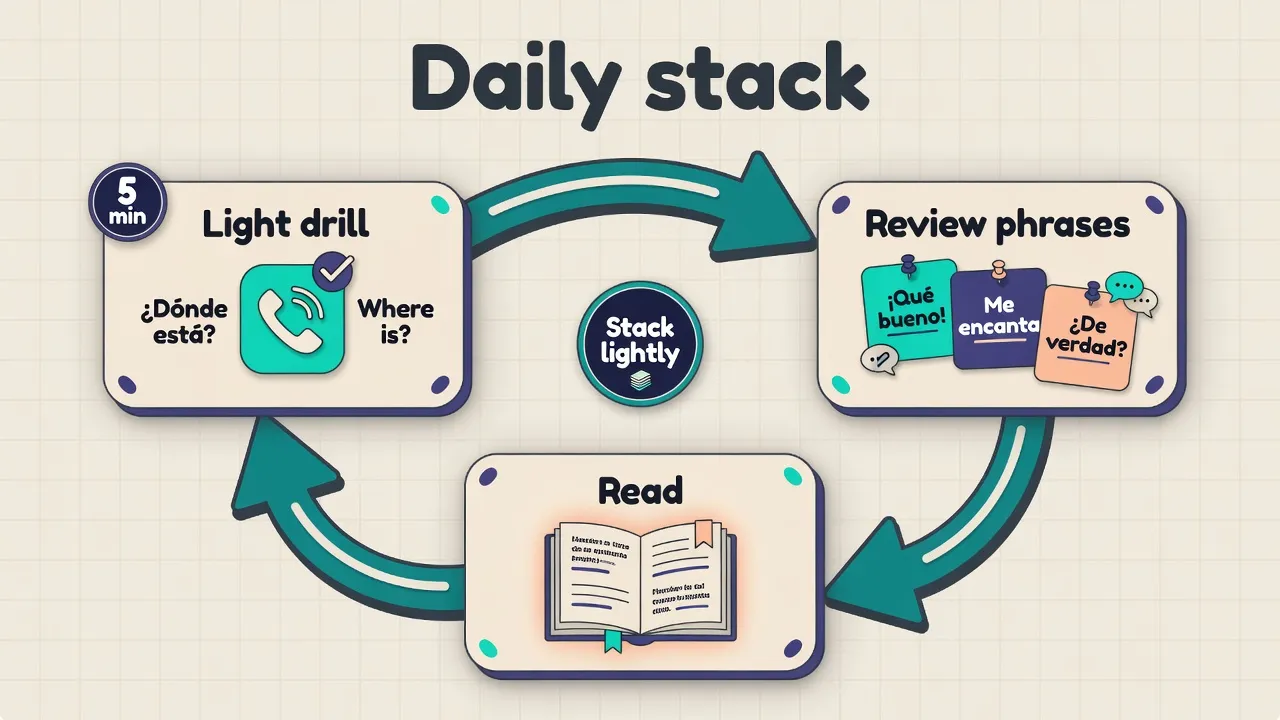
Weekday example (~45 min):
- 15 min - habit game, easy listening, or tutor prep (warm-up, not the whole day)
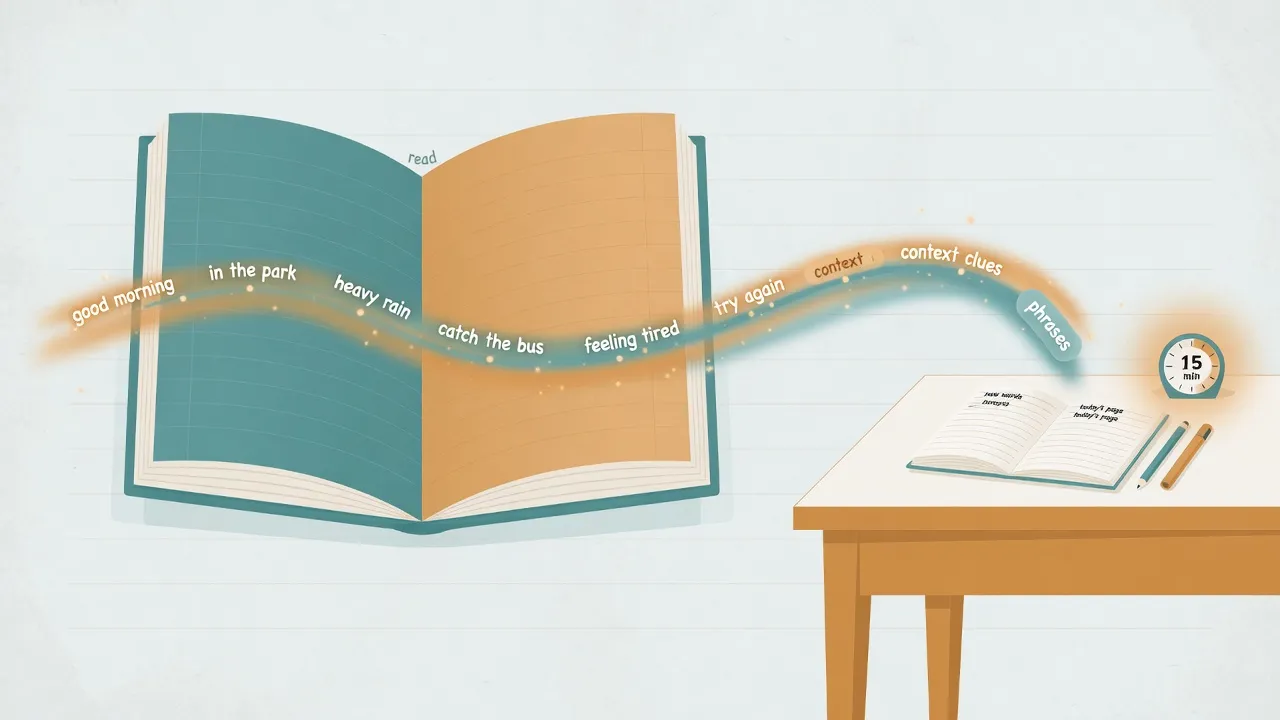
- 20-30 min - reading with click lookups (graded article, short story, or your own file)
- 5-10 min - review of saved words and phrases from that reading
- Optional weekly - conversation exchange or tutor session
Lighter day (~20 min): one short text + five minutes of review. Skip the game if you are already tired of streaks.
Rule of thumb: one primary tool + one secondary beats five open tabs. When a new app arrives, ask which bottleneck it fixes - and which tool it replaces.
For the idea of learning from context rather than isolated lists, see polyglot-style contextual learning if that path matches how you like to study.
Where MovaReader fits
MovaReader is a reading-first tool for learning English and Spanish - not "the best English app of all time," and not a replacement for every skill.
Strong fit if you want
- Graded reading paths in EN/ES with articles you can actually finish
- Click-to-translate on unknown words, then save what mattered
- Phrase and word trainers built from material you met while reading
- Listening support where available
- Your own files (for example EPUB upload) when the library is not enough
Browse the free library of all articles or walk through how to use. Phrase practice demos live at demo phrase typing and demo type training. Collections sit under phrases.
Weak fit if you only want
- Pure game loops and confetti as the main method
- A live 1:1 speaking coach inside the same product
- A free full commercial novel library hosted for you (we are not that kind of host by default)
Pricing (plain numbers)
| Plan | What you get (high level) |
|---|---|
| Freemium | Graded content access with limits: 20 translations per day + listening within free rules |
| Reader (€1) | Unlimited translations for heavier reading days |
| Pro (€5) | Trainers on top of reading (words and phrases from your path) |
Details and current options: pricing. Numbers can evolve; treat this as the current product shape, not a lifetime contract.
Same family as LingQ-style tools, different mix
Input and reading apps share a family: meet language in texts, look up, save, revisit. MovaReader focuses on EN/ES learning with a graded library, click translate, and trainers. Content mix, UI, and pricing differ. If you are comparing that family on purpose, see LingQ alternative for a side-by-side style discussion.
Bottom line for MovaReader: use it when your bottleneck is reading volume + vocabulary in context. Keep a tutor or exchange if speaking is the bottleneck. Keep a course if you need a grammar syllabus. Keep a light game only if it still helps you show up - and drop it when the flame becomes the goal.
FAQ
What is the best free English app?
Depends on the bottleneck. A Duolingo-style app is a strong free habit tool. A reading app's free plan helps when you want context and can handle short graded texts. Free never covers every skill forever. Expect limits (for example translation caps) and plan a stack, not a free forever miracle.
Is Duolingo enough alone?
Fine for start and habit. Weak as the only tool for long-form reading, job English, or natural collocations. If your streak is long but real pages still hurt, add input or speaking practice instead of more XP.
Should I use only one app?
One primary tool plus one secondary usually beats five open tabs. Too many apps create decision fatigue and shallow sessions. Revisit the stack every month: keep what fixes a bottleneck, delete the rest.
When is a reading app better than games?
When you can already handle short graded texts and want vocabulary growth from meaning-first input. Games win for absolute beginners and pure consistency problems. Reading wins for density of real language once the page is not pure pain.
How does MovaReader compare to LingQ-style tools?
Same broad family (input / reading). MovaReader focuses on English and Spanish with graded materials, click translate, and trainers; pricing and content mix differ. Compare for your workflow: library fit, lookup feel, review tools, and monthly cost. See LingQ alternative for more detail.
What about freemium, Reader, and Pro?
Freemium is enough to test reading with 20 translations per day. Reader at €1 unlocks unlimited translations for longer sessions. Pro at €5 adds trainers so saved material gets deliberate practice. None of these is a fluency certificate.
Will any app make English feel effortless overnight?
No. Apps reduce friction. Hours of comprehensible input, review, and real use still do the work. Treat marketing promises as ads, not study plans.
Close: pick the match, then show up
The best English learning app is not a universal crown. It is the tool that attacks your bottleneck, plus a light stack that you will actually open tomorrow.
- Name the bottleneck (habit, memory, grammar, speaking, reading).
- Choose one primary type from the table.
- Add at most one secondary.
- Run a four-week loop and measure real pages or real conversations - not only streaks.
If reading in context is the missing piece, start with a short graded text in the article library, keep the free plan's limits in mind, and upgrade only if unlimited lookups or trainers clearly help. Match the tool. Keep the stack small. Skip the fluency fairy tale.
Learning English?
The English version of MovaReader teaches Spanish and Ukrainian. To read English with a translation for every word, open the reader in Ukrainian or Spanish:
Книги англійськоюЦя стаття українськоюLibros en inglésEste artículo en español