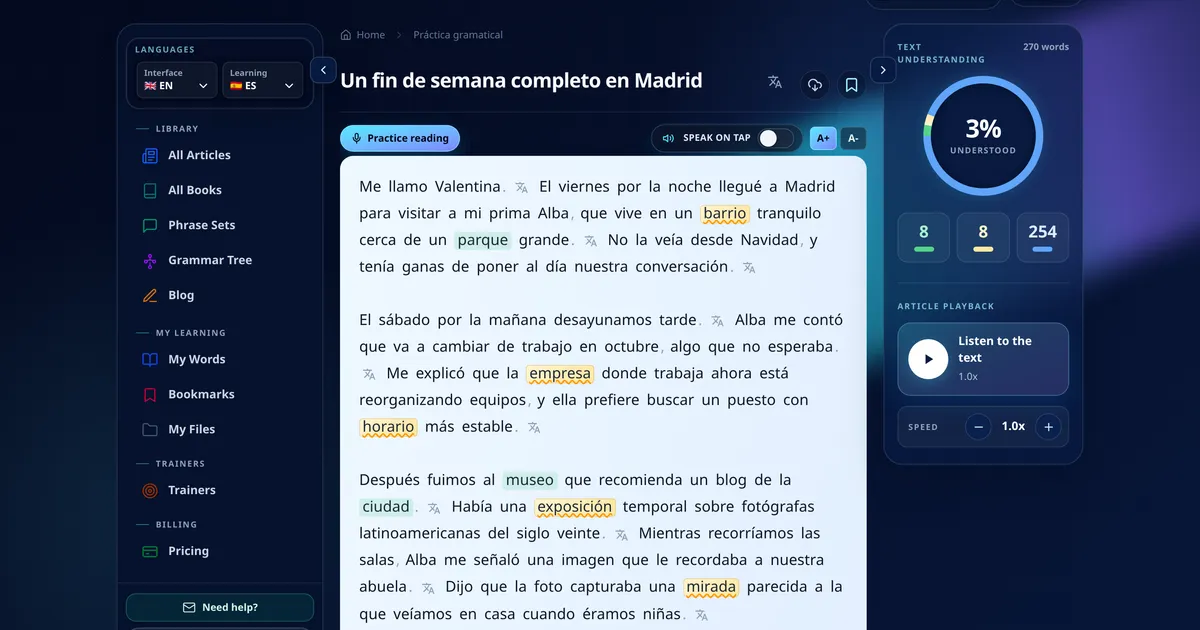
Reading Strategies
Blind Reading: Stop Moving Your Eyes Without Understanding
You finish a page in English and remember nothing. That is blind reading - decoding without a mental movie. Here is how to get meaning back, one short chunk at a time.
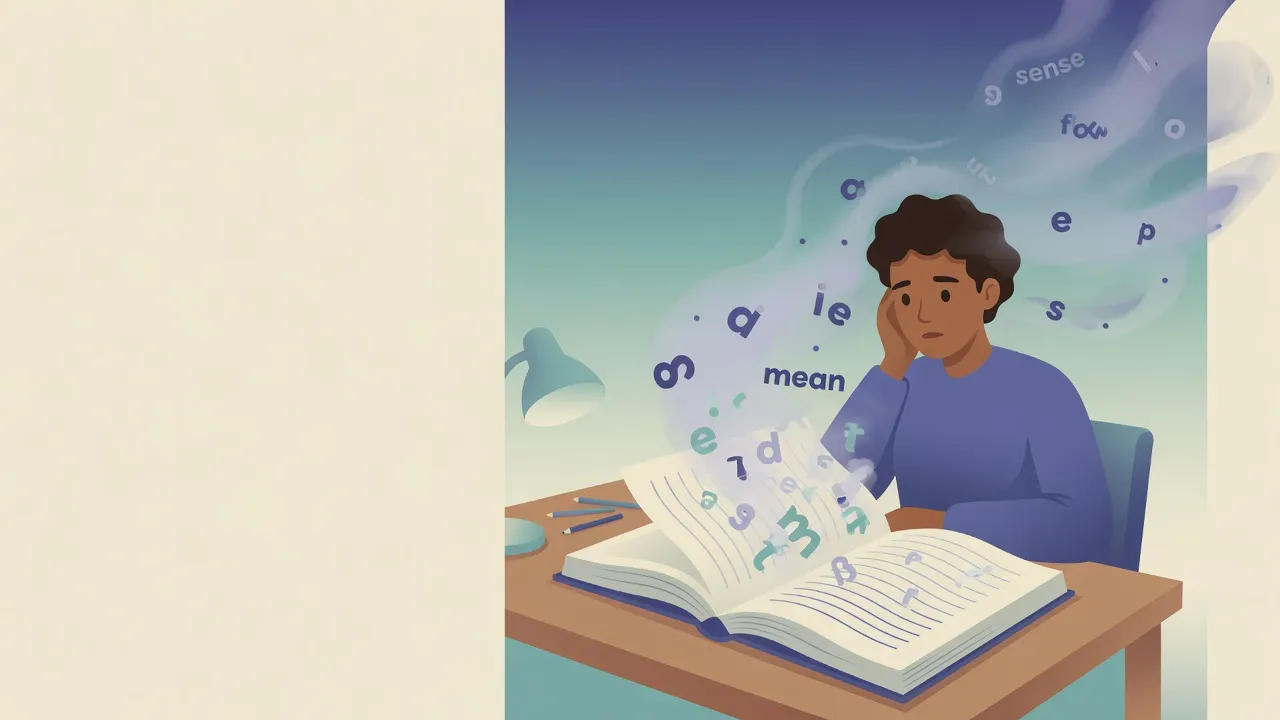
You open a page in English, read every line, turn the page - and then freeze. Who was speaking? What just happened? Your eyes did the work. Your mind has nothing left. That hollow feeling is what learners call blind reading: decoding letters without building meaning.
Short answer
Blind reading is not a sign that you are "bad at languages." It is eyes on page, mind off story. The usual mix is too many new words, constant dictionary stops, text above your level, and long sessions with zero check-ins.
Fix, in order:
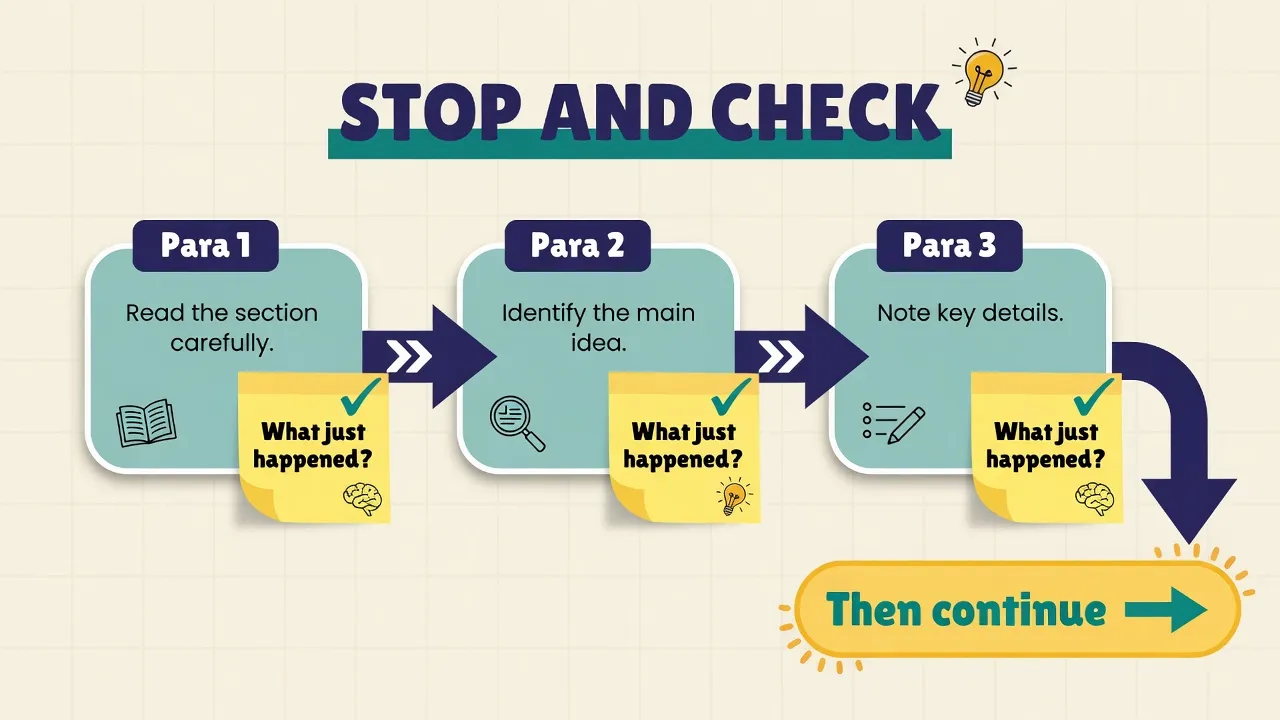
- After each short chunk, answer: "What just happened?"
- Mark events and characters, not every hard word.
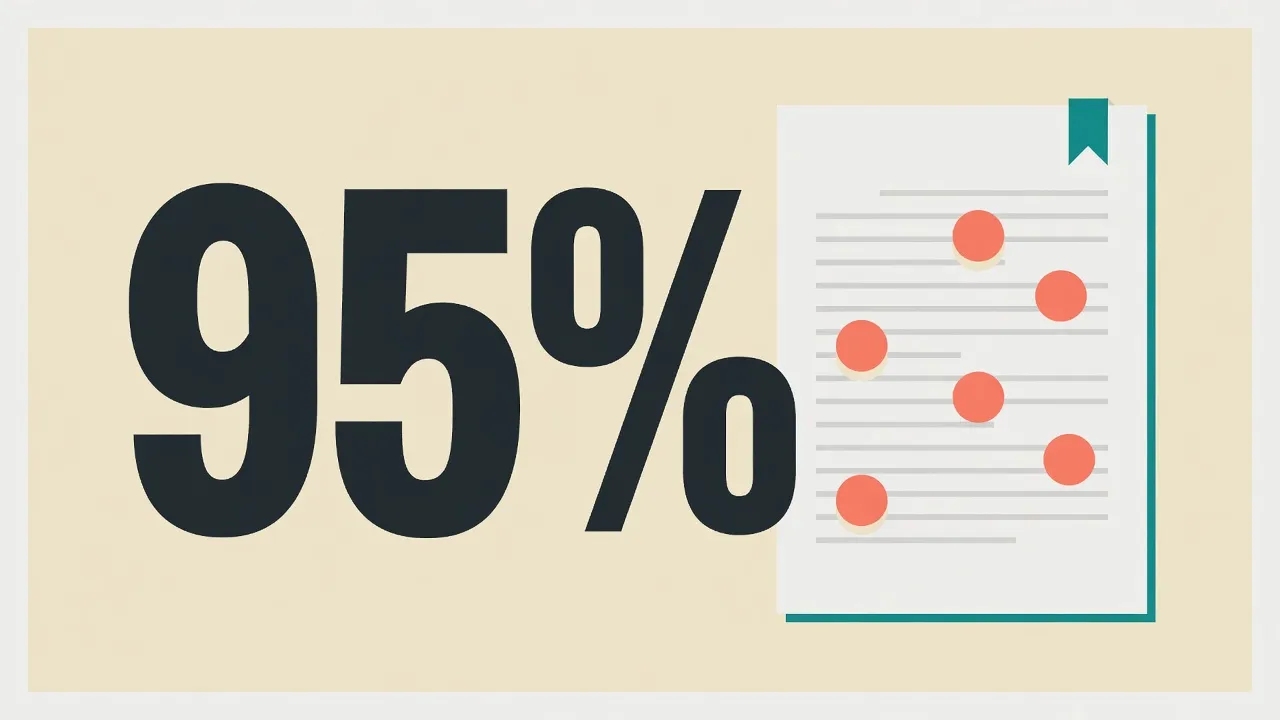
- Prefer text you already understand roughly 90%+ of; climb later.
- Guess from context first; look up only words that block the plot.
- Short sessions plus a tiny retell beat heroic marathons.
Tools can cut friction. They do not replace attention.
What blind reading is (and the three causes)
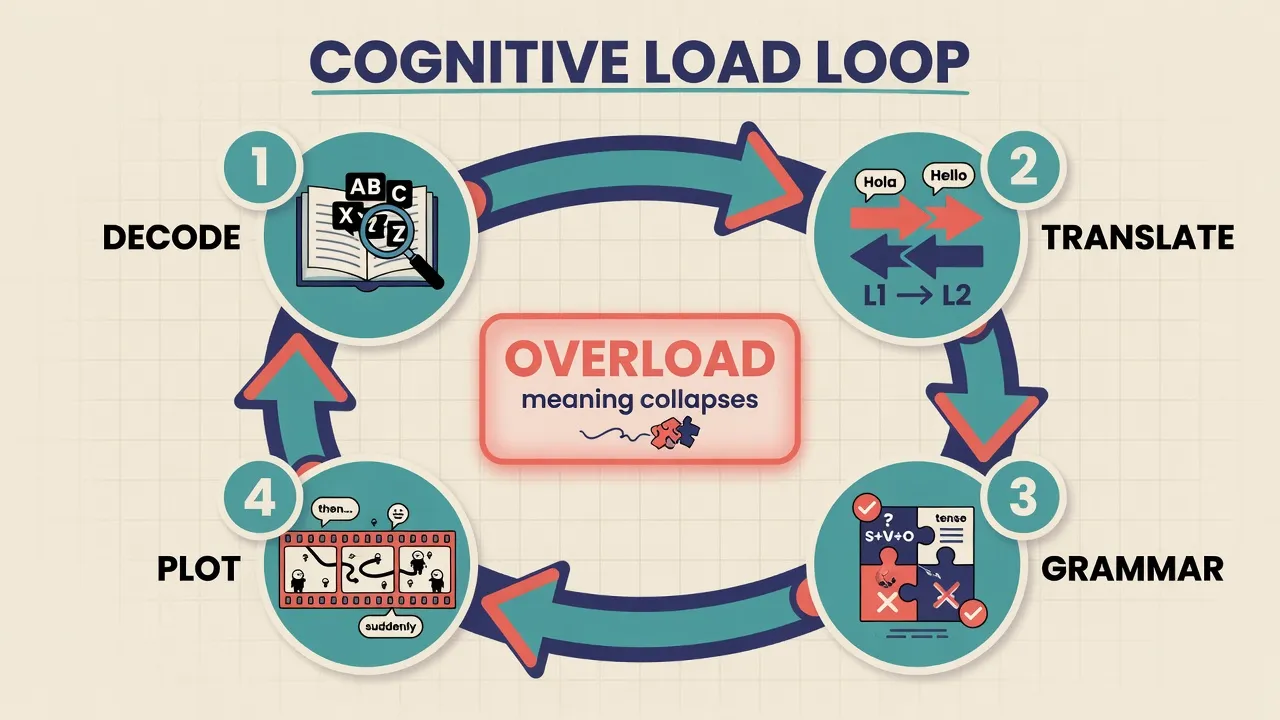
When you read in your first language, meaning appears almost for free. In a second language, your brain is often doing four jobs at once: decode the word, recall a translation, parse the grammar, and hold the plot. When load spikes, the plot is the first thing to drop. You still "read." You just stop understanding.
Here is the simple map:
| Cause | What happens | Simple fix |
|---|---|---|
| Cognitive overload | Decode + translate + grammar + plot at once | Smaller chunks + stop-and-check |
| Dictionary swamp | Every lookup breaks the mental movie | Context first; few targeted lookups |
| Text too hard | Far under ~90% known words | Easier graded text, then climb |
How the load loop feels when too much hits at once:
Picture this sentence:
The ramifications of his decision reverberated through the hallowed halls of the institution, leaving an indelible mark on its legacy.
If ramifications, reverberated, hallowed, and indelible are all new, the line dies mid-way. By the time you finish the last word, the start of the sentence is gone. That is blind reading in one line.
Five warning signs you are reading without understanding
Check yourself honestly:
- You re-read the same page three or four times and still feel foggy.
- You cannot retell the chapter in one sentence when someone asks "what was that about?"
- Your mind wanders to dinner, work, or tomorrow's tasks mid-page.
- You turn pages for "progress" without caring what happened.
- No emotional reaction even in tense or funny scenes - the text feels flat.
If three or more sound familiar, change the method, not just the book cover.
Seven strategies that put meaning back
1. The one-paragraph rule
Stop after each short chunk - a paragraph, or even a few sentences on hard pages - and ask: "What just happened?" If you cannot answer, re-read that chunk. Do not fly forward hoping it will clear up later. It usually does not.
Stop-and-check turns one blurry page into a series of small, clear frames:
2. Mark events, not every hard word
Underline who did what, not every unknown lemma. Keep the plot spine alive.
Example:
Elizabeth reluctantly acquiesced to her mother's persistent entreaties regarding the upcoming ball.
You do not need a perfect gloss of acquiesced and entreaties to keep the story. Keep: Elizabeth, reluctantly agreed, ball. Skip the rare verb if the event is clear.
3. Two-to-three minute preview
Before a chapter, skim first and last sentences of paragraphs for a couple of minutes. Your brain gets a rough map: where the scene starts, where it lands. Full reading then feels less like walking into a dark room.
4. Soft read-aloud (optional)
Silent reading is fine on easy pages. For sticky lines, whisper or mouth the words. Sound can pin attention when the eyes want to skim. You do not need theatrical performance - a quiet whisper is enough.
5. Fifteen-to-twenty minute blocks
Marathons often end in fog. Try 15-20 minutes of focused reading, then a short break with a one-sentence retell. That matches how many people actually stick with daily practice - see also the 15-minute rule for daily vocabulary if you want a related habit frame.
6. Context first, dictionary second
Do not open a dictionary on every unknown word. Try the sentence and the next one. Often the shape of the scene is enough.
The old man ambled slowly through the park, his gnarled hands clutching a worn leather satchel.
Even if ambled, gnarled, and satchel are new, you can still picture a slow walk, old hands, and a worn bag. Exact dictionary entries can wait unless the word blocks who or what.
7. Helpful tools, not a substitute for attention
A graded library and fast click-translation lower the cost of hard words so you stay in the story longer. They do not replace stop-checks or retells. If an app only makes you page faster while still blank on meaning, it is not helping.
Why constant dictionary hopping hurts
Every switch from book to dictionary is a small interrupt. Do it twenty times a page and the mental movie never starts. You spend energy on lookup mechanics instead of "who wants what next."
How dictionary interrupts snap the thread:
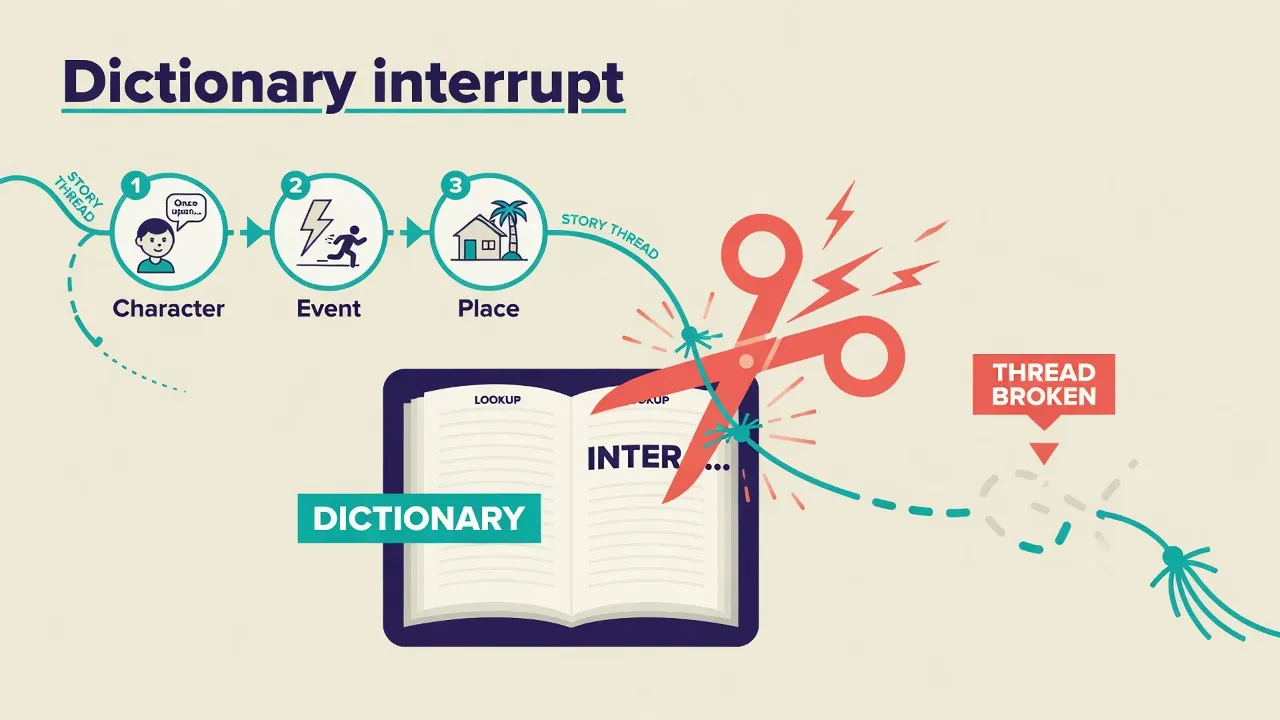
That does not mean never use a dictionary. It means: ban constant lookups. Look up words that still block the plot after a full paragraph. Leave decorative unknowns for later if the scene already makes sense.
If you want bilingual support without jumping apps all day, parallel texts show one way to keep meaning close to the line - still with your own check-ins.
For dense syntax, pair this with tactics from speed-reading complex sentences: chunk the sentence, find the main verb, then hang the rest on it.
The 3-2-1 daily drill
After a chapter or solid section, close the book for two minutes and write:
- 3 key ideas or events
- 2 new words worth saving (not twenty)
- 1 question you still have
That tiny output forces active processing. Passive eye-sliding has nowhere to hide.
A simple card view of the drill:
Two weeks of this after real reading sessions usually feels different from "I sat with English for an hour." You will know what you understood - and what you did not.
Choose text near your level
If unknown words dominate a random page, comprehension collapses. A practical rule of thumb for many learners: aim for material where you already know roughly 90%+ of the words so the story can move. This is not a lab law. It is a field rule: if every line stalls, drop a level.
Use the five-finger rule for book level: open a random page, count unknown words on your fingers. More than a handful and the book may still be early for you.
Harder text does not magically force better focus. It usually adds load and blank pages. Climb after you can retell easier text with confidence. Pride is a poor reading coach.
FAQ
Is blind reading a medical disorder?
Usually no. Here it is a practical label for eyes-on-page, mind-off-meaning when you study a second language. If reading fails in any language even with easy text, talk to a specialist. For L2 study, skills and text level fix most cases.
Should I ban the dictionary completely?
No. Ban constant lookups. Try context first. Look up words that still block who or what after the paragraph.
Must I always read aloud?
No. Whispering can help sticky lines. Silent reading with stop-checks is fine when the page is already clear.
What percentage of words should I know?
High enough that the story still moves - often around 90%+ known as a practical rule of thumb. If every line stalls, choose easier material.
Will a harder book force better focus?
Usually the opposite: more load, more blank pages. Challenge yourself after you can retell easier text.
App or pencil?
Pencil works: sticky notes, margin who/what. An app helps with graded texts and fast lookups so the session stays in flow. The free plan is enough to start.
A next step with MovaReader
If you want practice material that matches this method:
- Free graded article library with click-to-translate on words
- Free plan: 20 word translations per day, plus listening where available
- Reader €1/month, Pro €5/month (trainers more complete on Pro)
- Upload EPUBs or files you already have rights to
- We do not host licensed commercial novels by default
Start with samples if you want a feel for level: ES A2 sample, UK A1 sample. Check pricing when the free plan is not enough. Optional demos: type training and phrase typing.
Software lowers friction. Stop-and-check, right level, and a short retell are still yours. Blind reading does not need a miracle cure - it needs smaller chunks and a text at your real level. Pick one page tonight, use the one-paragraph rule, and write three events. That is enough to begin.
Keep reading with translations inside the text
With a free account, an unknown word translates with one tap, and the words you are learning wait for you in the trainer.
Free account: 7 days of Pro, then 20 word translations a day or a paid plan.