Tips & Methods
Best Series to Learn English by Level (A1-C1)
Pick shows you will finish at a level you can mostly follow. A CEFR ladder, eight to ten named series, a calm study-watch method, and how reading after an episode helps phrases stick.
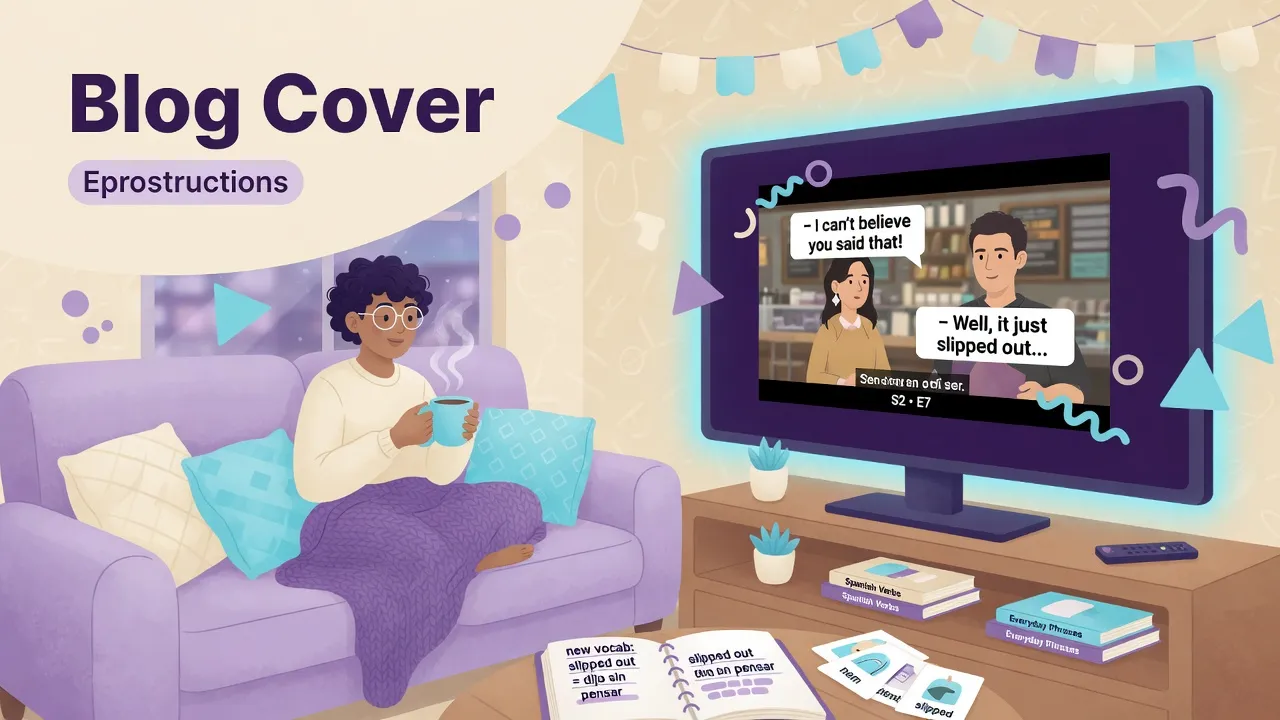
You open a streaming app, type "learn English series," and get a pile of contradictory lists. Friends for everyone. Peppa only for kids. Something too hard by episode two. Then you feel guilty for pausing, or for first-language subtitles, or for not taking notes.
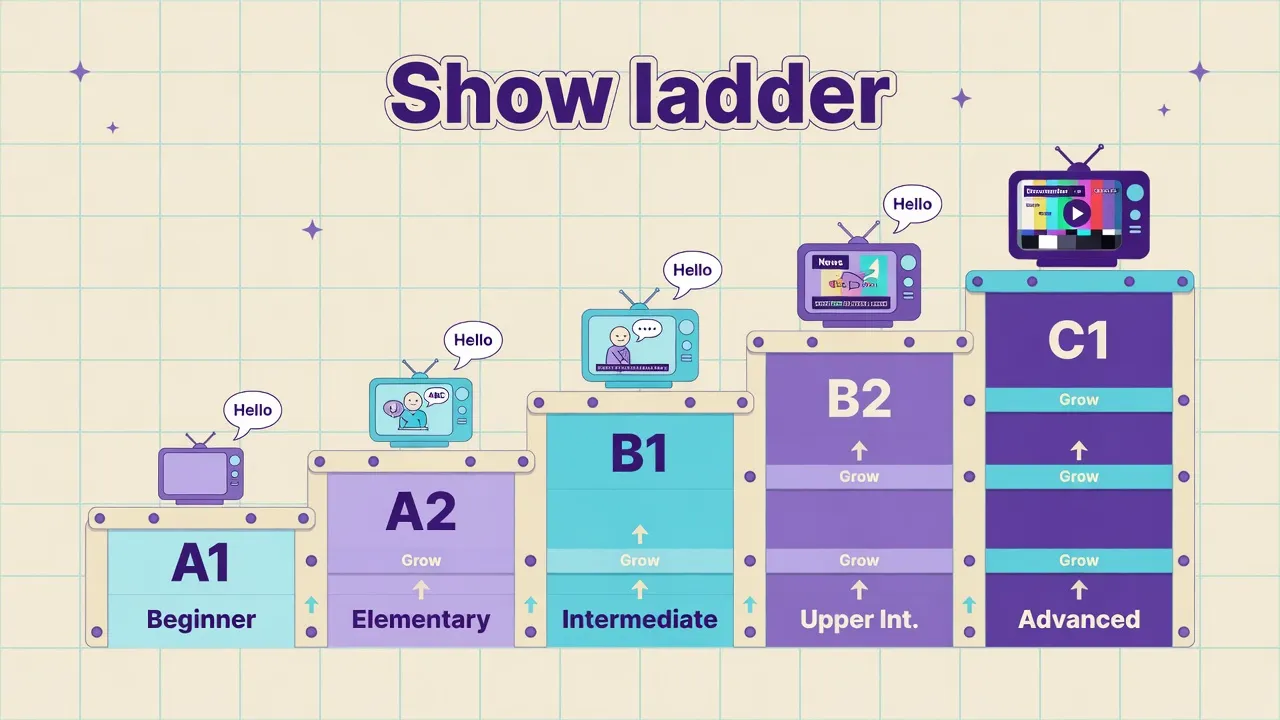
Here is the simple version. The best series for learning English is one you will actually finish at a level you can mostly follow. Match difficulty to CEFR roughly: slow clear speech at A1-A2, everyday sitcoms at A2-B2, denser drama at B2-C1. In study mode, prefer English subtitles once the story is clear enough. Do not pause every word. TV grows listening and feel; reading and short phrase practice help words stick. No show alone makes you fluent.
Below: CEFR ladder, named picks, watch protocol, phrase lock after TV, where MovaReader fits, FAQ.
Quick pick by level (answer first)
Match the band you can follow with light support - not the band on your last certificate, and not the show your friend finished last weekend.
| Band | Good picks | Why it works for learning |
|---|---|---|
| A1-A2 | Extra, Peppa Pig | Slow, clear speech; short episodes; lots of everyday words |
| A2-B1 | Friends, Modern Family | Everyday talk, humor, ~20-minute episodes |
| B1-B2 | The Office (US), Brooklyn Nine-Nine, Stranger Things | Slang, banter, more speed, modern US speech |
| B2-C1 | The Crown, Black Mirror, Sherlock (challenge) | Formal or dense language; varied accents; longer scenes |
These are approximate bands for study, not official CEFR stamps. Interest still wins: a B1 learner who loves sci-fi may get more hours from Stranger Things than from a "perfect" sitcom they hate.
Why series help (when you use them well)
Series are not magic immersion. They are useful input with faces, emotion, and repeated characters.
- Spoken formulas. You hear How's it going?, I don't get it, You're kidding - the stuff textbooks turn into stiff lines.
- Listening stamina. Accents, speed, and noise train your ear for real life, not only classroom audio.
- Context from face and action. Meaning arrives with gesture and plot, so you need fewer dictionary stops.
- Culture and humor. Timing and sarcasm show up on screen in ways word lists rarely capture.
What series do not do: make you fluent overnight, fix speaking with zero output, or replace graded reading when you want phrases to stick. Treat TV as the enjoyable half of a loop - then lock a few lines with reading or light practice.
A1-A2: slow, clear, short
If you are early, the main risk is a cool show that dumps you by episode two. Start where speech is clear and episodes are short enough that quitting does not feel like failure.
1. Extra
A sitcom-style series made for learners. Characters speak slowly and clearly with everyday vocabulary.
- Why watch: Purpose-built for beginners; often followable with English subs.
- Skill focus: Core grammar in context, daily conversation chunks, confidence with English audio.
- Session tip: One short episode; note only 3-5 blockers that keep repeating.
2. Peppa Pig
A British kids show. Clear diction, repeated vocabulary, episodes about five minutes. If it works for your ears, use it - progress beats ego.
- Why watch: Short loops, clean British pronunciation, concrete scenes (home, school, park).
- Skill focus: Everyday nouns and verbs, simple questions, listening without panic.
- Session tip: Two or three episodes; shadow one line you liked out loud.
Kids media is training wheels, not a permanent identity. When Extra and Peppa feel easy, move up.
A2-B1: everyday sitcoms
You can follow more plot. Humor becomes useful. Twenty-minute episodes fit a weeknight.
3. Friends
The classic intermediate pick. Clear articulation, domestic situations, lots of reusable talk.
- Why watch: Everyday American English and idioms in context; easy to rewatch.
- Skill focus: Phrasal verbs and social phrases (hang out, figure it out, no way).
- Level note: Absolute beginners often struggle. High A2 / B1 is more comfortable. True A1: stay with Extra or Peppa first.
4. Modern Family (optional)
Multi-speaker household comedy. Slightly more overlapping talk than Friends, still sitcom-length.
- Why watch: Family and work small talk; different ages and voices in one show.
- Skill focus: Following several speakers, light sarcasm, conversational speed.
- When to skip: If overlapping dialogue kills comprehension, stay on Friends longer.
B1-B2: banter, slang, modern pace
You want more natural speed without jumping straight into dense political drama.
5. The Office (US)
Workplace comedy with deadpan delivery and sarcasm.
- Why watch: Office vocabulary and awkward small talk once you know the cast.
- Skill focus: Irony and tone as much as individual words (B1+).
- Session tip: English subs on. Pause when sarcasm blocks the joke, not every adjective.
6. Brooklyn Nine-Nine
Fast police-precinct comedy. Banter heavy; still episodic and fun to rewatch.
- Why watch: Modern slang and punchy dialogue with recurring catchphrases.
- Skill focus: Speed, joking tone, workplace and friendship talk at B1-B2.
- Note: First episodes can feel fast. Rewatch is a feature, not a failure.
7. Stranger Things
Plot-driven drama with kids and teens. Modern US conversational English more than formal speech.
- Why watch: Strong story pulls you through longer scenes; emotion anchors meaning to action.
- Skill focus: Listening under tension, informal American English, some genre vocabulary.
- Session tip: Prefer 15-25 minute chunks if a full episode drains you. Enjoy pass first if the story is new.
B2-C1: denser drama and variety
Ready for longer turns, formal registers, or shifting accents. Expect more dictionary moments - fine if you still enjoy the story.
8. The Crown
Historical drama about the British royal family. Formal British English, careful delivery.
- Why watch: Prestige dialogue without constant teen slang; useful formal and political register.
- Skill focus: Longer sentences, institutional vocabulary, careful British pronunciation.
- Session tip: English subs; one scene or 15-20 minutes when concentration is high.
9. Black Mirror
Anthology: each episode is a new story, often with different accents and tech vocabulary.
- Why watch: Variety without one long plot; dense themes reward rewatching.
- Skill focus: Switching accents, abstract talk, modern tech and social vocabulary.
- Note: Some episodes are linguistically and emotionally heavy. Pick one at a time.
10. Sherlock (optional challenge)
Fast British dialogue, wordplay, dense plots. Stretch goal, not a beginner ladder step.
- Why watch: High-input British drama if you already handle B2 drama.
- Skill focus: Speed, British idioms, clever monologues with English subs.
- When to wait: If you need subs for almost every line, drop back to The Crown or a sitcom.
You do not need all ten. Two or three shows you rewatch beat a list you never start.
How to watch: a protocol without guilt
Lists fail when the method is only "turn something on and hope." Use a light protocol. Adjust it; do not turn it into homework police.
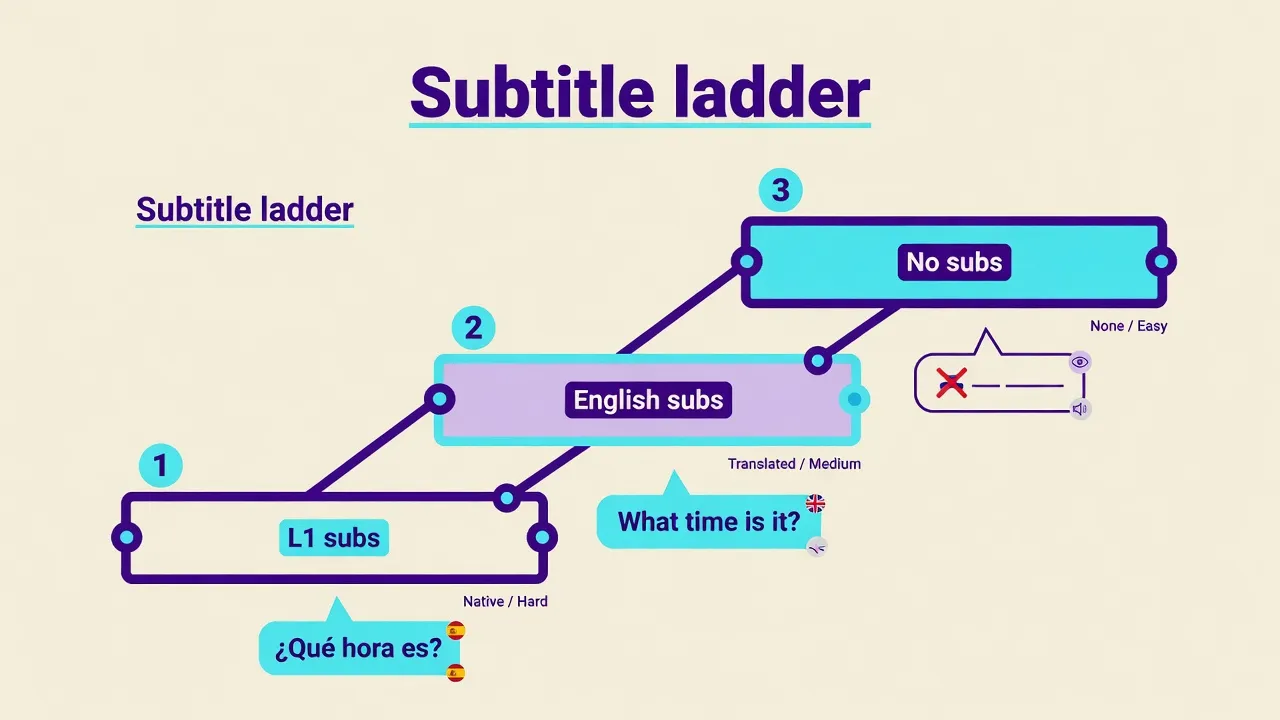
Subtitle ladder
- First-language subs - story only, when the plot is new or too hard.
- English subs - study mode: link sound to spelling.
- No subs - stretch on easy rewatches, not day one of a hard drama.
For learning, move toward English subtitles once you can follow roughly. First-language subs forever train the story more than the English form.
Session loop
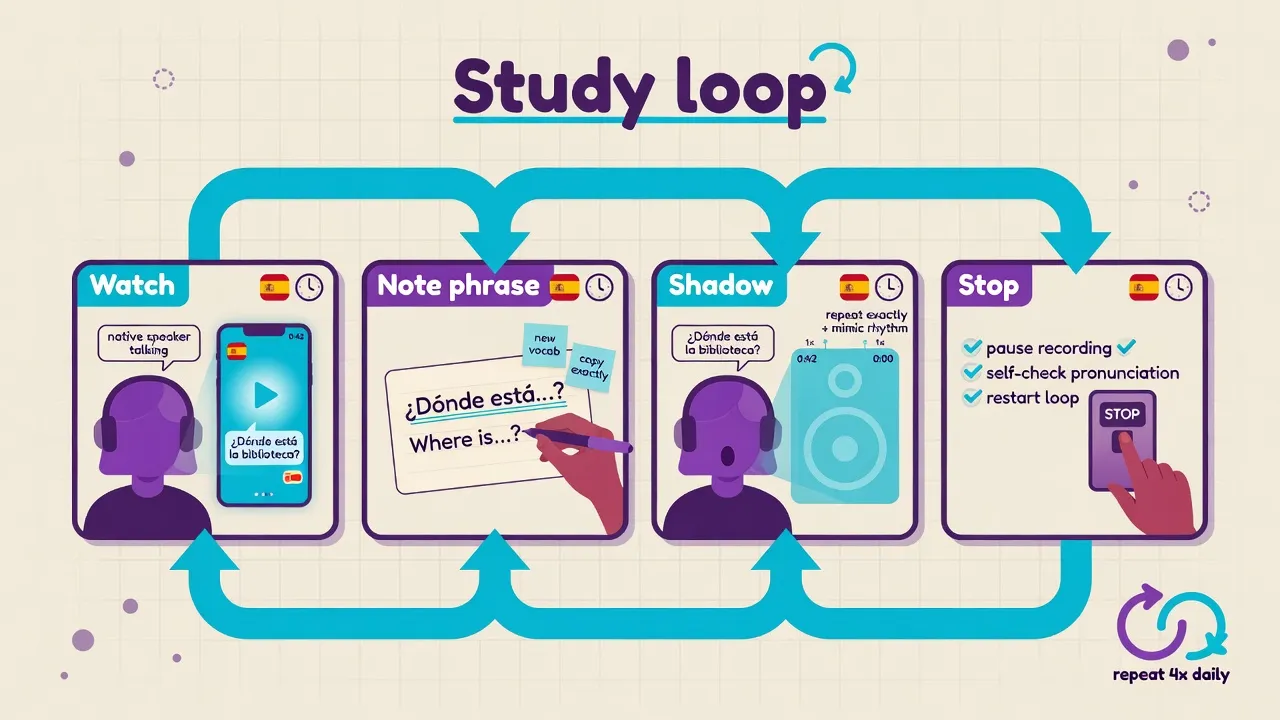
- Enjoy pass first if the story is new - especially for drama.
- Study pass with English subs (same episode later, or the next sitcom you already know).
- Do not translate every word. Pause for blockers that repeat and kill the scene.
- Prefer 15-20 minute chunks over exhausted hours. Consistency beats marathons.
- Shadow 2-3 lines you liked: pause, say them out loud, copy rhythm more than perfection.
- Optional rewatch of the same episode later - cheap gains when language is already half-known.
Five refined rules
- English subs for study when the story is clear enough.
- Blockers only - not a full transcript hunt.
- Short chunks beat heroic all-nighters.
- Shadow a few lines; open your mouth sometimes.
- Expect listening and feel from TV; sticky vocabulary from review and reading, not passive binge alone.
Common mistakes
- Only first-language subs forever.
- A show far above your level, then quit.
- Pause every word and lose the plot.
- Never say anything out loud.
- Expect fluency from streaming alone.
After watching: lock phrases (reading bridge)
TV plants phrases in context. They fade unless you meet them again. The bridge is simple: notice → save a few whole phrases → re-meet them in text or light practice.
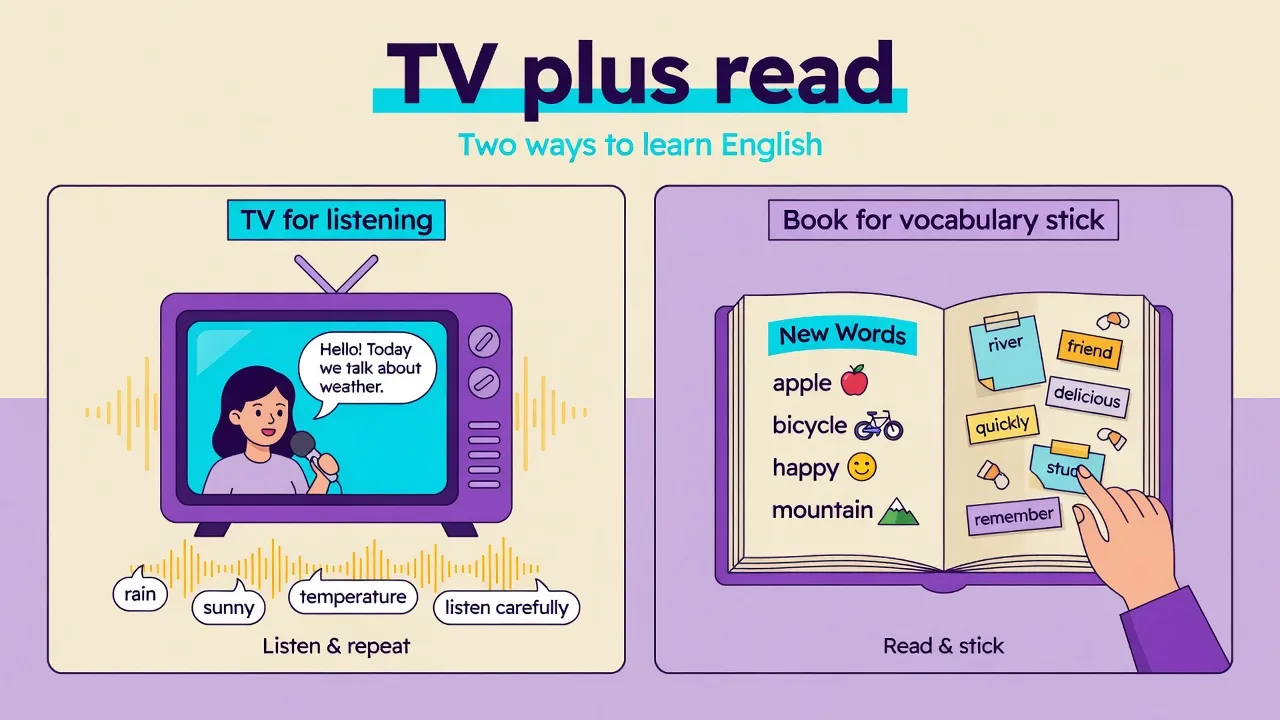
Right after a session (or the next day):
- Write 3 phrases that repeated or felt useful (I don't buy it, Long story short, You nailed it).
- Prefer whole chunks, not single rare words.
- Optional: open a graded text on a related theme (friends, work, tech, history).
- Later: type or re-meet those phrases if you use trainers - soft review, not a guilt stack of 40 cards.
Reading is not "more homework after fun." It is how spoken formulas become yours. Series listening plus near-level reading beats either alone. Related: 15-minute rule, passive to active vocabulary, reading aloud.
Where MovaReader fits
MovaReader is not Netflix. We do not stream TV series. We help after watching: graded articles near your level, click-translate on blockers, listening on the free plan, and phrase practice when you want reuse.
| Need | Realistic plan |
|---|---|
| Try graded reading + light lookup | Free plan (~20 word translations/day; listening often unlimited) |
| More daily pages without mid-text translation caps | Reader €1/mo |
| Full trainers for active phrase reuse | Pro €5/mo |
What you get: a free graded library, about 20 word translations per day on the free plan, unlimited listening for many flows, and your own legal EPUB/files. No free dump of licensed commercial novels as a default catalog. No app and no series makes you fluent by itself. Tools cut friction; time, rewatching, reading, and light output do the work.
After a binge: all articles. Map: language map. Workflow: how to use. Plans (free, Reader €1, Pro €5): pricing. Demos: phrase typing · type training. Phrases: phrases.
FAQ
Is Friends good for absolute beginners?
Often better from high A2 / B1. Absolute beginners usually need Extra or short kids shows like Peppa first. Friends rewards rewatching once everyday speech is somewhat familiar.
Should I use first-language or English subtitles?
For pure enjoyment of a hard plot, first-language subs are fine. For learning, move to English subs once you can follow roughly. Ladder: L1 → English → none on easy rewatches.
How many episodes per day?
One short sitcom episode or 15-25 minutes of denser drama is enough. Consistency beats marathons. If you binge for fun, still lock 3 phrases the next day.
Are kids shows embarrassing for adults?
If Peppa works for your ears, use it. Progress over ego. Training wheels come off when clear short speech feels easy.
Can I get free help in MovaReader after watching series?
Yes for the reading bridge. Free plan: graded articles, about ~20 word translations/day, listening often unlimited. Reader €1/mo for more translations; Pro €5/mo for full trainers. We do not stream series. See pricing.
British or American English first?
Either. Pick what you will rewatch. Friends and The Office (US) lean American; Peppa and The Crown lean British. Hours matter more than a pure accent plan.
Will watching series make me fluent?
No series - and no app - makes you fluent by itself. TV builds listening and feel. Speaking and sticky vocabulary still need output and re-meeting phrases.
What if I only understand with first-language subtitles?
Starting point, not a verdict. Choose an easier show, shorten sessions, rewatch with English subs, or do enjoy pass then study pass. Dropping difficulty is strategy, not failure.
Next steps
Pick one show in your band and one you will actually finish. Study mode means English subs when you can, short chunks, blockers only, and a few lines said out loud. After the screen goes dark, keep three phrases alive with notes or graded reading.
Today is enough:
- Choose one series from the CEFR table (or rewatch one you already like at the right level).
- Watch 15-20 minutes with English subs if possible.
- Write 3 phrases - whole chunks, not a word dump.
- Optional: one short graded text from all articles.
- Stay on the free plan while testing; move to Reader €1 only if translation limits stop real pages.
You do not need a perfect show. You need rewatchable English, a light study protocol, and a bridge so phrases stick after the credits.
Learning English?
The English version of MovaReader teaches Spanish and Ukrainian. To read English with a translation for every word, open the reader in Ukrainian or Spanish:
Книги англійськоюЦя стаття українськоюLibros en inglésEste artículo en español