Reading Strategies
Read Your First English Book Without Quitting
You open page one full of hope and quit by page five in the dictionary app. A step plan, what counts as a first book, a CEFR starter ladder, and tools that protect flow.
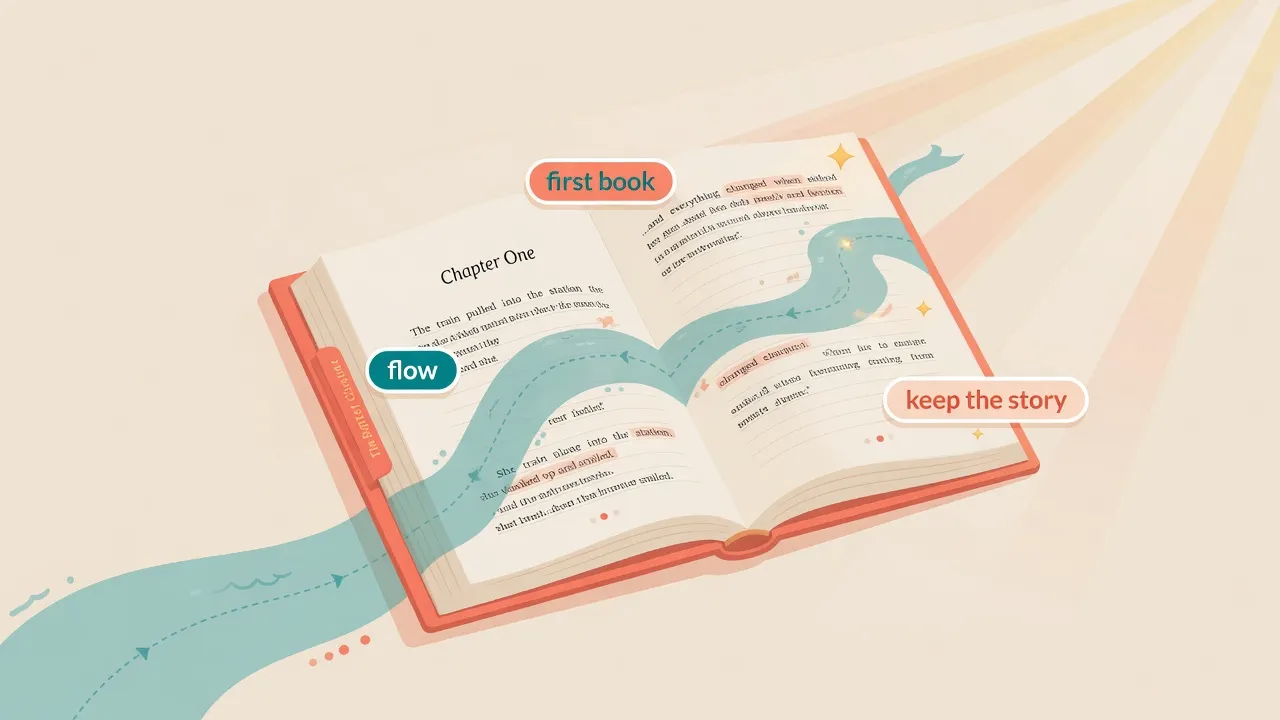
You buy a pretty English book. Cover looks friendly. Page one feels possible. Then the unknowns stack: one word, three, five. You open a translator app. You hop back. You re-read the paragraph. By page five the plot is dead and the book goes back on the shelf "for later."
That quit is almost never a talent problem. It is friction plus the wrong difficulty. Your brain is busy decoding stops instead of following the story.
Here is the plain plan. To finish your first English book without quitting on page 5, pick a text easier than your ego (few hard stops per page), accept words that do not block the plot, get help in place instead of tab-switching, and stop after short daily sessions while you still want more. A graded article or graded reader counts as a real first finish - you do not need Dickens on day one. Interest plus finishable length beats prestige.
Below: why English reading feels hard at first, what counts as a first book, a four-step plan, an A2-B1 / B1-B2 starter ladder, a tool path, and FAQ. Method first. Product later.
Why is reading in English so hard at first?
In your first language, reading is pictures and plot. You do not stop on every adjective. In English as a second language, each unknown word can act like a barrier on the page.
The classic cycle looks like this:
- You hit a hard stop.
- You open a translator or dictionary app.
- You return to the book and re-read the paragraph.
- The story thread is gone. Motivation drops.
Call it the tab-switch tax. Each hop costs attention. After enough hops, the session feels like homework, not a book.
A tiny example: She put the letter on the mantelpiece and left. If mantelpiece blocks you, one lookup or a mark is enough. You do not need a full room-vocabulary study session mid-chapter. Optional color of the sky can wait.
The useful reframe: beginners can read English. The problem is process plus level match, not "you are bad at languages."
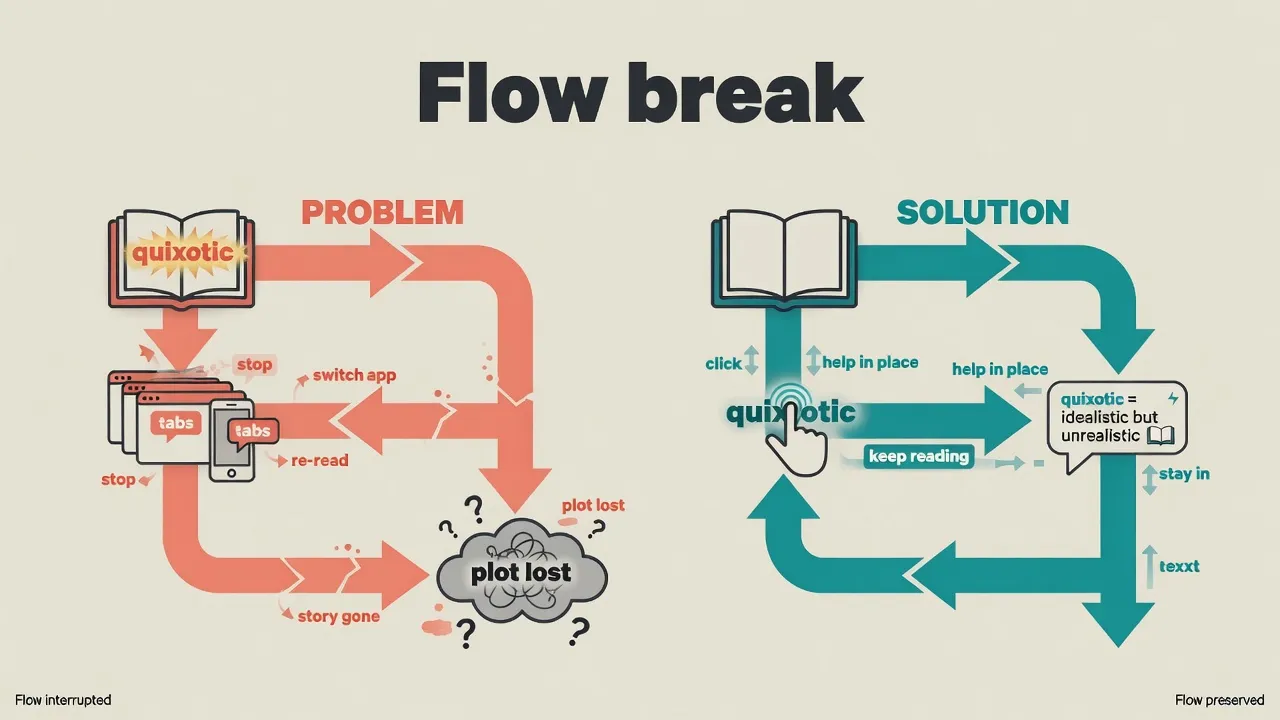
Two paths: stop → switch app → re-read (plot lost), or hard stop → help in place → keep the story.
If you want a longer take on protecting flow in longer English texts, see flow state reading for English longreads.
What counts as your "first book"?
Ego can wait. A first finish is a habit win, not a prestige trophy.
| Stage | What it is | Why it counts |
|---|---|---|
| Graded article / short text | Controlled length; CEFR-ish free samples | First finish habit; low quit risk |
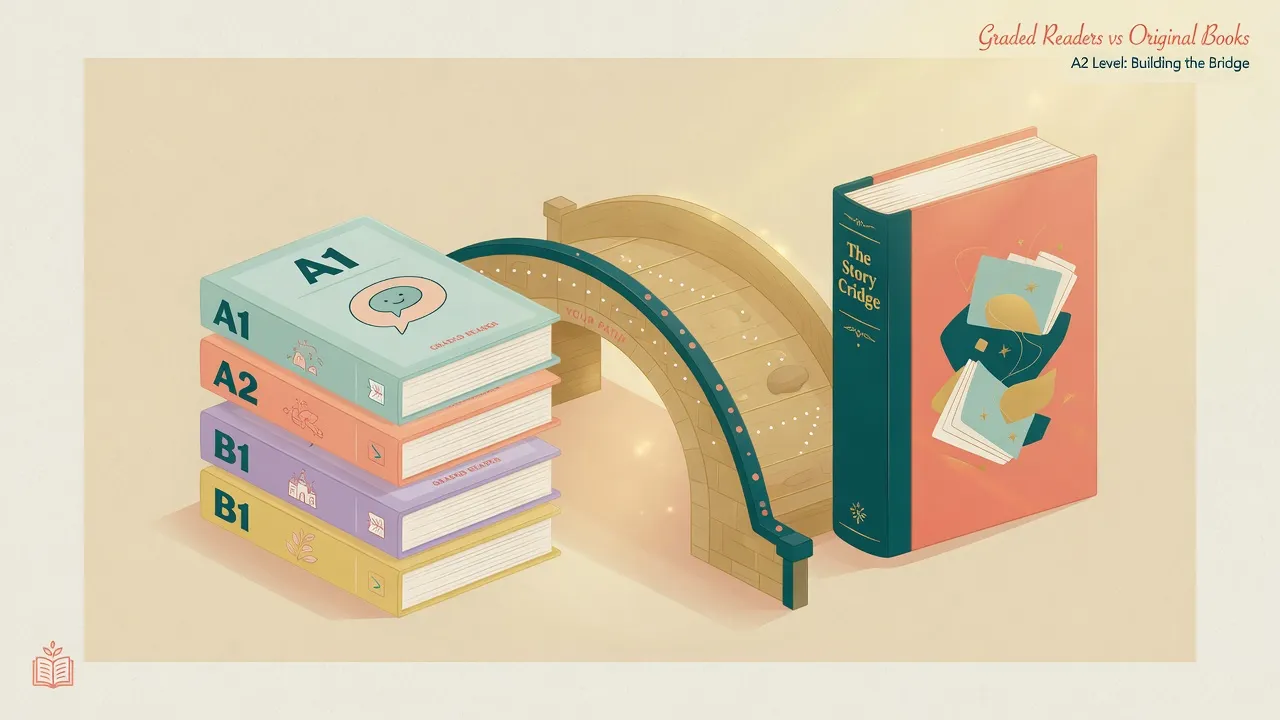
| Graded reader | Controlled vocabulary series (book shape + supports) | Real "book" win without day-one density shock |
| Easy YA / light novella / simple modern prose | Short chapters; everyday language | Bridge to originals you own |
| Harder original | Classics, dense lit, long series | Later stretch - not week-one default |
Finishing a graded reader is a first English book win. Prestige classics and long commercial series can wait until flow is real. A known plot or film book helps motivation - still sample a page before you commit.
If every bookstore page is still too hard, start smaller. Free graded warm-ups live on all articles. For the graded-vs-original trade-off at A2, see adapted vs original books for A2 learners.
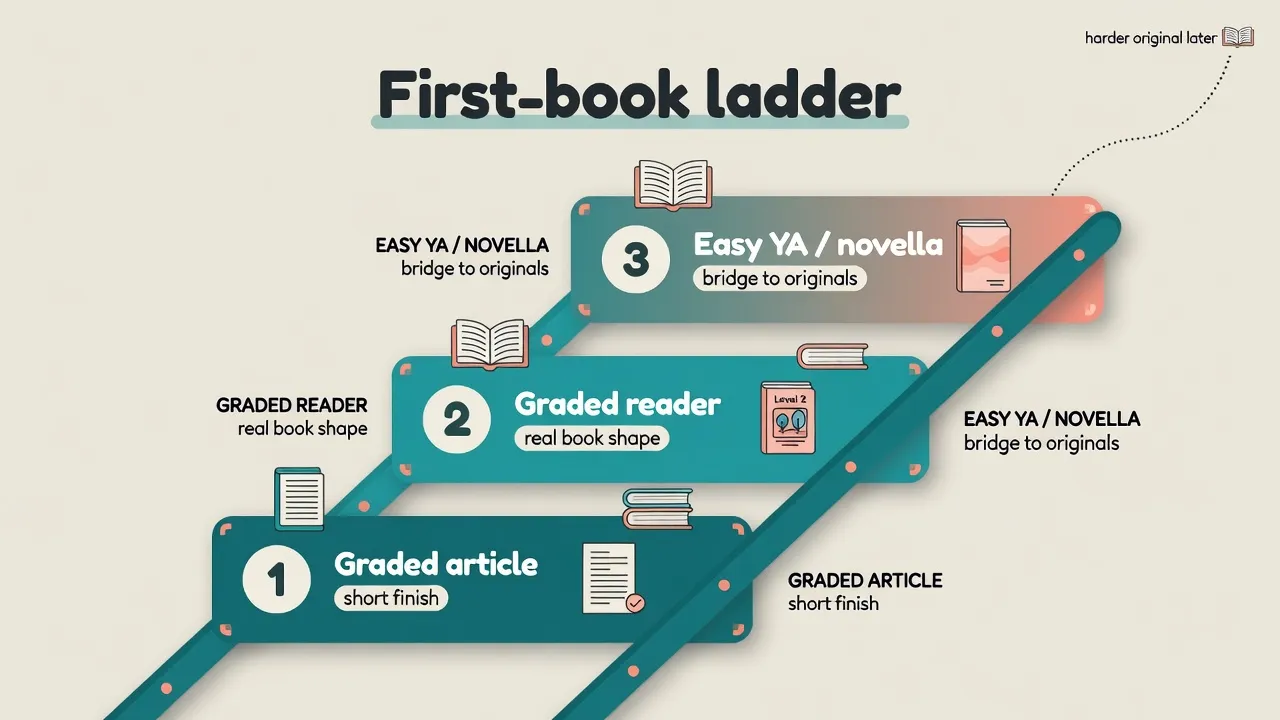
Article → graded reader → easy YA or light novella → harder original later.
Step plan: how to start and actually finish
Four moves that protect flow. Tools come after the method.
1. Choose easier than your ego (five-finger check)
Interest first. Pick a book you might actually finish, not a title that only looks impressive on Instagram.
Then do a fast page check (the five-finger rule in short form):
- Open a real page (middle is fine, not only front matter).
- Read. Raise one finger per hard stop - a word you cannot get enough from context to keep going.
- Match the band.
- If borderline, test two or three pages in different spots.
| Fingers (unknowns that stop you on one page) | Band | For a first-book finish |
|---|---|---|
| 0-1 | Too easy | Fine for fun; weak growth if that is the only goal |
| 1-3 (comfort) | Just right | Best independent finish zone |
| 4 | Challenging | Retest 2-3 pages; shorter sessions or graded warm-up |
| 5+ | Too hard now | Drop a rung: graded text, easier title, save prestige for later |
Rough feel: a few unknowns per page is workable. Five or more hard stops on one page is a quit signal for independent reading right now. Fingers are a proxy, not a lab score.
Full classroom-style detail lives on the sister post: five-finger rule for choosing book level. If a bookstore page is still 5+, try free samples on all articles before you buy a 400-page novel.
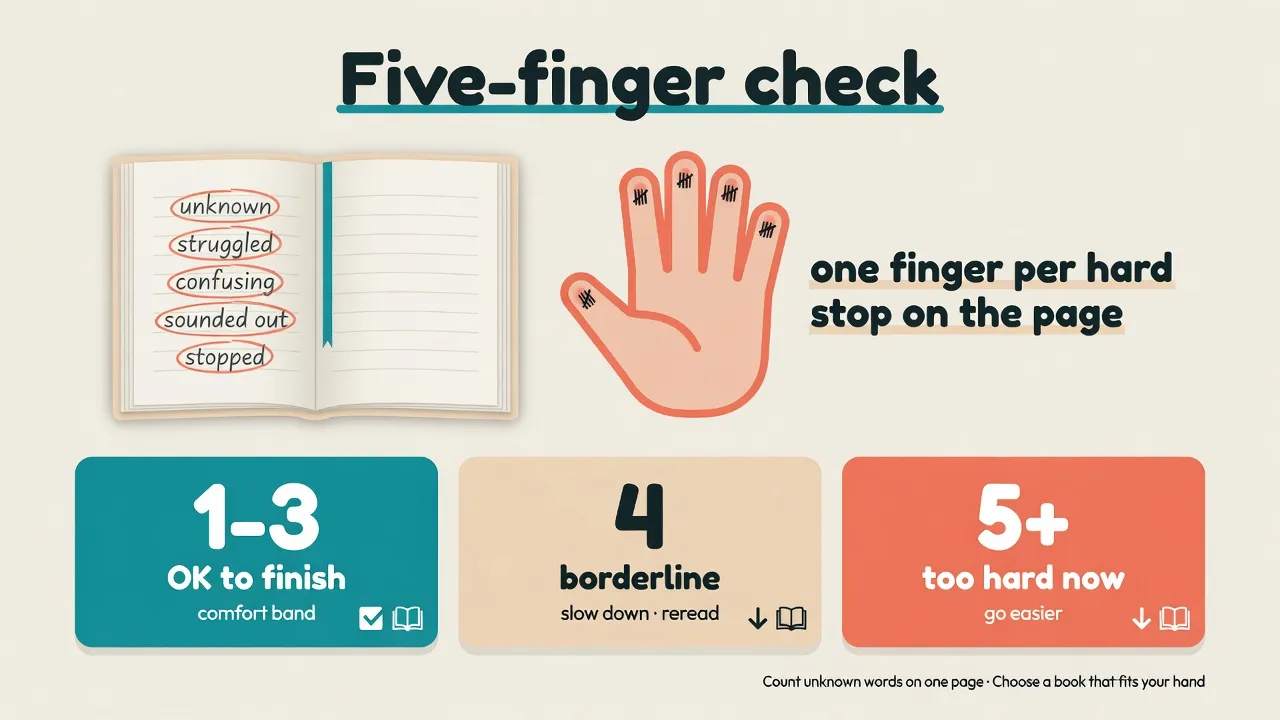
Quick scale: 1-3 unknowns is comfort; 5+ means drop a rung.
2. Accept the unknown
You do not need every adjective of sky color to follow the plot. Look up sentence-breakers and words that keep repeating. Skip optional color and side detail so the story survives.
Context does real work. Perfectionism is a quit engine: if you stop for every unknown, you train yourself to quit. For more on lookup economy, see vocabulary for reading comprehension.
3. On-demand help, not tab-switching
Goal: stay inside the text. One tap, or mark and continue. Offline fallback: underline unknowns, finish the page, look up later if the word still matters.
In a digital reader built for this, the simple loop is: click a word → see translation in sentence context → keep reading. That is help on demand, not a second app open in the background.
Protect the story first. Training can wait until a word sticks.
4. Short daily sessions (~15 minutes)
Set a timer for about 10-15 minutes. Stop while you still want the next page. A marathon of 50 pages on day one often burns the habit.
A simple session snapshot:
| Minute | Action |
|---|---|
| 0-1 | Open the finishable text; set a small finish line (section or a few pages), not "whole novel" |
| 1-12 | Read for story; translate only sentence-breakers; stay on the page |
| 12-15 | Optional: re-read the last half page; light listen-along if available; stop on timer |
Optional micro-tips: re-read one short page for comfort; listen along if audio is available. Neither is required for a first finish.
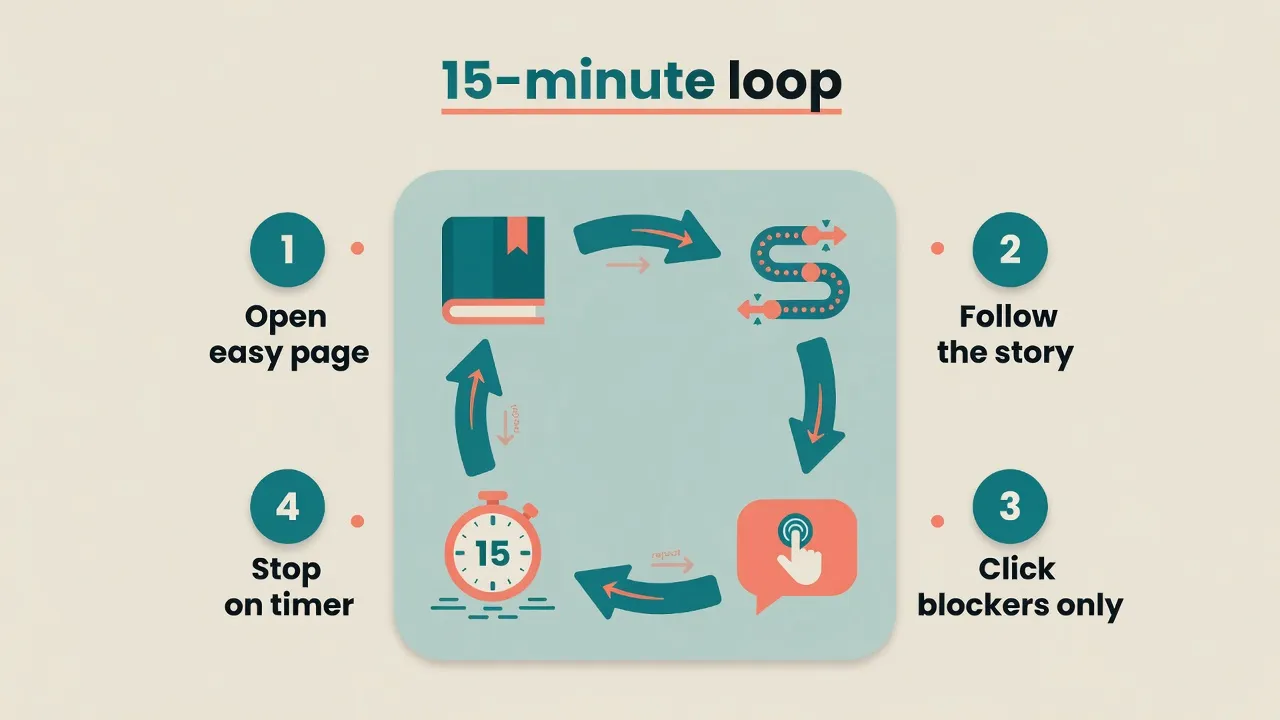
Daily short beats rare marathons. Stop curious.
Starter book ladder: A2-B1 and B1-B2
Named and finishable. Bring a legal copy you own or borrow for commercial titles. We do not host free unlimited bestsellers.
| Band | What works | Example series / titles | Stretch / avoid day one |
|---|---|---|---|
| A2-B1 | Graded readers; short modern prose; easy children's/YA chapter books | Series: Oxford Bookworms, Penguin Readers, Macmillan Readers (match the printed level). Light wins if interest fits: Fantastic Mr Fox (Roald Dahl); Charlotte's Web (E.B. White); Diary of a Wimpy Kid (Jeff Kinney) | Full Harry Potter series as default first book; Tolkien; dense 19c classics |
| B1-B2 | Accessible YA; short modern novels; easy bestsellers with short chapters | Wonder (R.J. Palacio); The Old Man and the Sea (Hemingway); The Alchemist (Paulo Coelho, English); light thriller/romance with short chapters; optional stretch after shorter wins: Holes, Animal Farm | Dune / LOTR as first; pure prestige classics without support; day-one marathon series |
A few notes:
- Known plot and film books help motivation - still five-finger a page. Harry Potter is often a stretch, not week-one A2 for many, because of length, names, and density.
- For graded series, pick the printed CEFR or stage number, not the famous title alone.
- Legal path: free graded library + own, buy, or library EPUB for commercial titles.
Want longer cards and more titles? See top 10 easiest English books for A2-B1. For when graded comfort becomes a trap, return to adapted vs original.
Keep the story, drop the tab tax
After the method, tools matter only as far as they protect flow.
MovaReader is a reader with click translation in sentence context, a free graded library path, and upload of your legal EPUB. The point for a first English book: fewer app hops so the plot can stay alive.
Practical path:
- Warm up on free graded texts: all articles.
- Practice the step plan (easier text, accept unknown, short timer).
- When ready, upload a legal copy of a book you own (how to use).
- Tap blockers only; protect the story.
- Optional marks or trainers when a word sticks: phrases, trainers, or the language map if you like a progress view.
- Plans on pricing.
| Need | Realistic plan |
|---|---|
| Try the loop / free graded start | Free plan (~20 word translations/day; listening often unlimited) |
| Real first-book volume with translations | Reader €1/mo |
| Trainers beyond reading | Pro €5/mo |
| Commercial novel or series you care about | Your legal EPUB/file - not an unlimited hosted bestseller warehouse |
What it does not do:
- Free unlimited commercial bestsellers (no free full Harry Potter library)
Core wording again: click a word → translation in sentence context → keep reading. If the free plan's ~20 word translations/day cut every session in half, that is a volume signal for Reader €1 - not a moral failure. Full details: pricing.
FAQ
What is the best level for a first English book?
Easier than your ego: roughly A2-B1 graded readers or light YA you can actually finish. Use a five-finger page check; if you hit 5+ hard stops, go easier (or start with a short graded text). Prestige classics can wait until flow is stable. Full rule: five-finger guide.
Should I look up every unknown word?
No. Look up words that break the sentence or keep repeating. Skip optional color and side detail so the plot survives. Perfectionism is a quit engine, not a reading strategy.
Does a graded reader count as a "real" first book?
Yes. Finishing controlled text builds the finish habit and keeps the story alive. Prestige originals are a later stretch, not a purity test for week one. More on the bridge: adapted vs original for A2.
Is Harry Potter a good first English book?
High motivation and a known plot help, but length and density make it a stretch for many A2 readers. Prefer a shorter finishable book first; use HP later if you love it - and bring a legal copy you own. We do not host free commercial bestsellers. Easier starters: top 10 A2-B1 English books.
How many minutes a day should I read?
About 10-15 minutes daily beats rare marathons. Set a timer and stop while you still want the next page. Fifty pages on day one often kills the habit.
What free limits apply if I try MovaReader?
Free path: graded library on all articles plus about 20 word translations/day. Listening is often unlimited on the free plan. Reader ~€1/mo for full translation volume; Pro ~€5/mo for trainers. Commercial bestsellers are not an unlimited free library - upload legal EPUBs you own. Click a word for context translation and keep reading. Plans: pricing.
This week: one finishable text
Quit risk was friction plus the wrong book, not "you are bad at languages."
This week:
- Pick a finishable text (graded article, graded reader, or light YA from the ladder).
- Five-finger one page; if 5+, drop a rung or open all articles.
- Run a 10-15 minute timer; look up only sentence-breakers.
- When you own a commercial title, upload a legal file (how to use).
- Stay on the free plan while testing; move to Reader €1 on pricing only when the daily translation cap stops real pages.
A graded finish counts. Prestige can wait. The tool cuts the tab tax; free plan limits are real; commercial pages still come from books you legally own.
Useful next reads: five-finger rule · easiest A2-B1 English books · adapted vs original · optional UA-angle sister: how to start reading English (for Ukrainian readers).
Learning English?
The English version of MovaReader teaches Spanish and Ukrainian. To read English with a translation for every word, open the reader in Ukrainian or Spanish:
Книги англійськоюЦя стаття українськоюLibros en inglésEste artículo en español