Tips & Methods
English With Kids: Where Parents Should Start
Unsure where to start English with your child? Short daily play, a few routine phrases, and kind models beat school-at-home. A soft plan by age, a sample week and the silent period.
You know English matters. You have opened three parent blogs, saved two song playlists, and still feel stuck on the first real step. Should you buy a course? Switch every cartoon to English tonight? Drill the alphabet at the kitchen table? Or wait until school "handles it"?
Here is the calm version. Start English with kids through short daily play, not homework. Build a light sound bath with songs and simple cartoons, add a few routine phrases you can repeat without stress, and keep sessions around 10-15 minutes while interest lasts. Preschoolers need movement and games. School-age kids can add picture books and short shared reading. A silent period - understanding before speaking - is normal. You do not need perfect English. You need patience, praise, and regular friendly models.
Below: soft reasons early exposure can help, the play-first rule, age bands, a step plan, a sample week, common parent mistakes, where MovaReader fits for parents and older readers, and FAQ.
Soft benefits of starting early
Young brains often take in new sounds and patterns with less self-consciousness than adults. Many families notice that light, happy contact with English over years feels easier than a hard "catch-up" later. That is a real advantage of exposure, not a deadline.
What early contact can support, in plain words:
- Ears that meet new sounds often. Children may copy rhythms and tunes more freely when English is part of fun, not a test.
- Grammar as patterns, not worksheets. They hear "Where are your socks?" a hundred times in real life and start to feel the shape of the language.
- Less fear of mistakes. Play leaves room to try a word, get it wrong, and keep going.
What early start is not:
- a rule that says "start at two or fail"
- a promise of accent-free speech "before seven"
- a reason to push if the first language still needs calm attention
- proof that late starters cannot do well later
First-language security and a kind home matter more than racing the neighbors. If you start at six or nine with songs, books, and short routines, you are not "too late." You are choosing a sustainable path.
Golden rule: play, not desk
The fastest way to kill interest is to turn the living room into a mini school. Kids' attention windows are short. Positive emotion beats drill. If English feels like scolding and worksheets, they will learn to avoid it - even if the materials were "correct."
Aim for:
- sessions that end before they are bored
- movement, song, toys, and faces - not only paper
- your calm voice more than your perfect grammar
- "we play with English" more than "we study English"
Useful games that still teach:
- Simon Says with simple body words (touch your nose, jump, sit down)
- hide-and-seek with labeled objects (Where is the red car?)
- songs with actions (Head, Shoulders, Knees and Toes)
- toy shop or cooking play with a few fixed lines (Can I have an apple? Here you go)
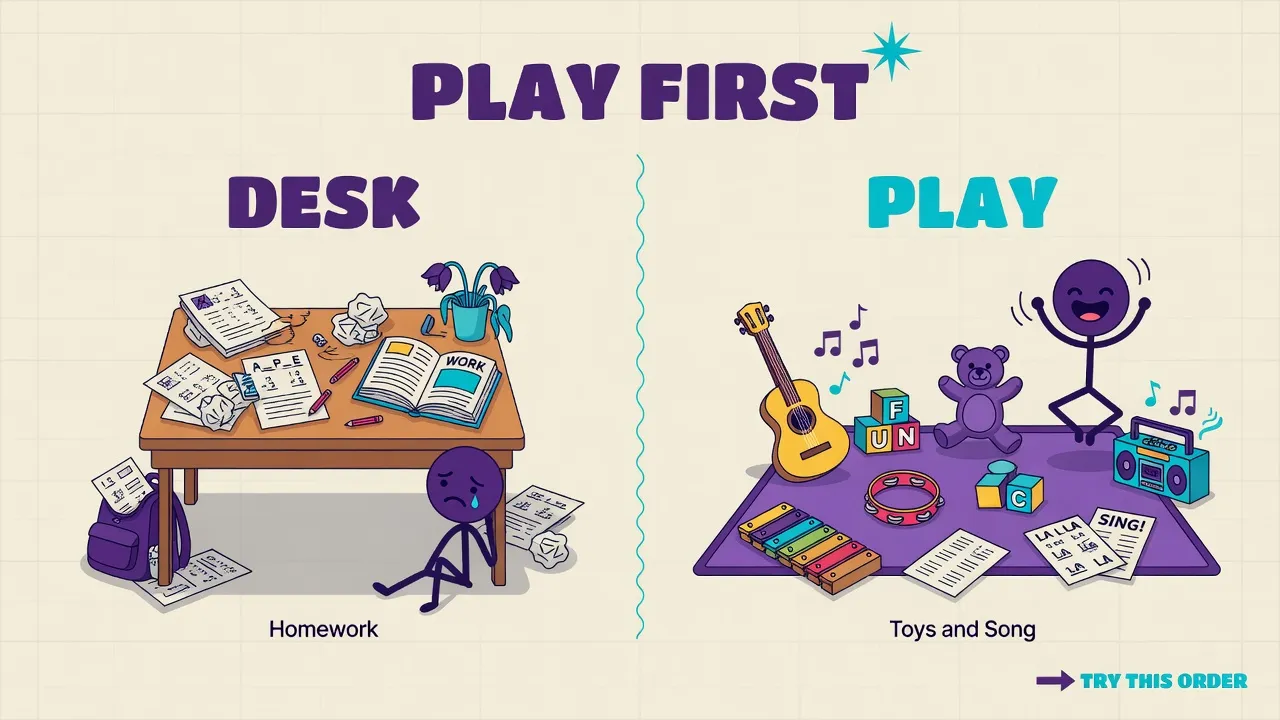
If they walk away, the session is over. That is not failure. That is respect for attention. You can return tomorrow with one song and one phrase.
Age bands: what to prioritize
One plan does not fit every age. Use this as a feel guide, not a strict test.
| Age feel | Focus | Keep light |
|---|---|---|
| ~3-5 preschool | Songs, simple cartoons, daily routines, play, a handful of words | No grammar lessons, no long "sit still and study" blocks |
| ~6-10 primary | Same base + picture books, short shared reading, more games and cards | Short sessions still; interest first |
| Older kids / preteens | Graded short stories, phrase practice with a parent, optional trainers | Not a toddler game app - real reading and listening |
Preschool is mostly ear + body + routine. Primary is ear + shared books. Older readers can start a gentle reading habit with you, click unknown words, and listen along when a tool supports audio. That is a different product need than a cartoon button for toddlers - more on that later.
Step plan: where to start this week
You do not need all five steps on day one. Stack them as they stick.
1. Sound bath (songs and simple cartoons)
First job: make English normal to the ear. Background is fine during play or car rides - not every waking minute with a screen.
- Songs: Super Simple Songs and similar clear kids music work well. Sing and move. Repetition is the point.
- Cartoons: Short, visual shows with clear speech (for example Peppa Pig for young listeners) help meaning arrive with pictures. Prefer a short planned clip over endless autoplay.
Screens are a tool, not a babysitter labeled "education." Balance with offline play. For ideas on series by level later (for you or older kids), see best series to learn English.
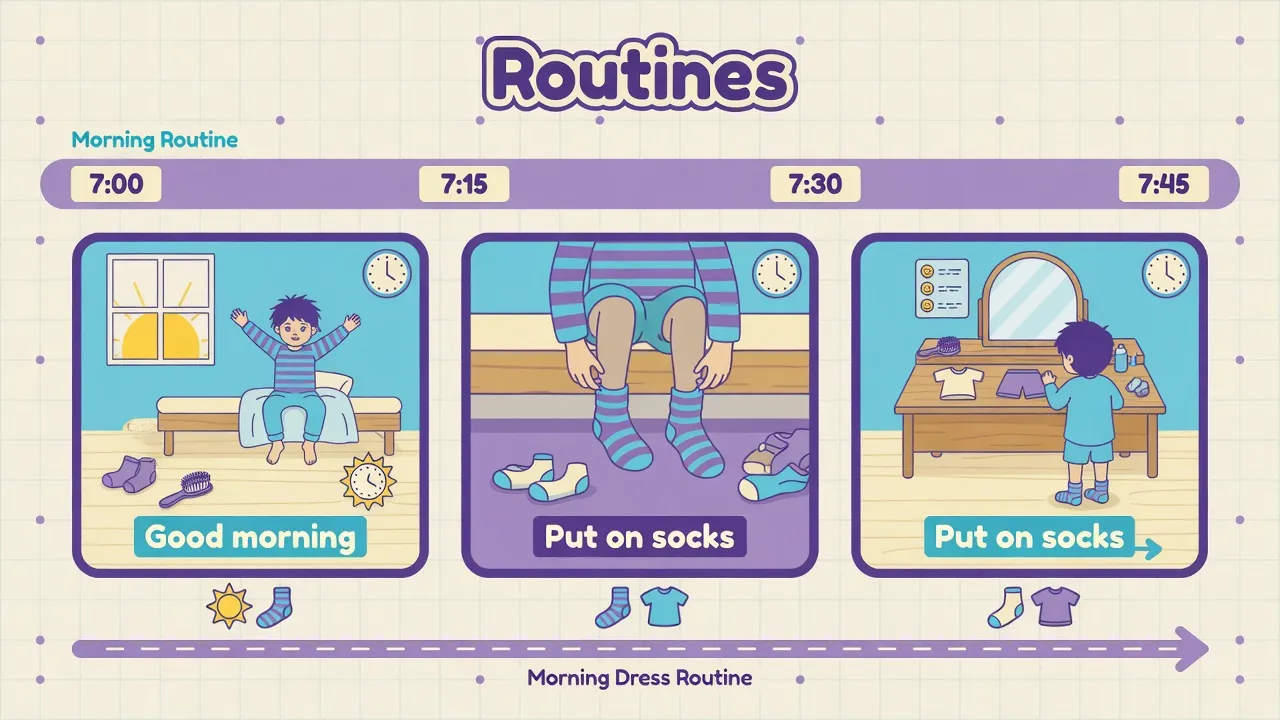
2. Daily routine phrases
Do not switch the whole house to English if that is not your home language. Build islands: a few lines that always appear in the same moment.
Examples:
- Morning: Good morning! Time to wake up.
- Dressing: Put on your T-shirt. Where are your socks?
- Table: Yummy apple! Do you want some juice?
- Goodbye: See you later. Have a good day.
Say them the same way often. Gesture. Smile. If they answer in the first language, that is fine - they still heard English in context.
3. Play + simple visuals (cards as games, not tests)
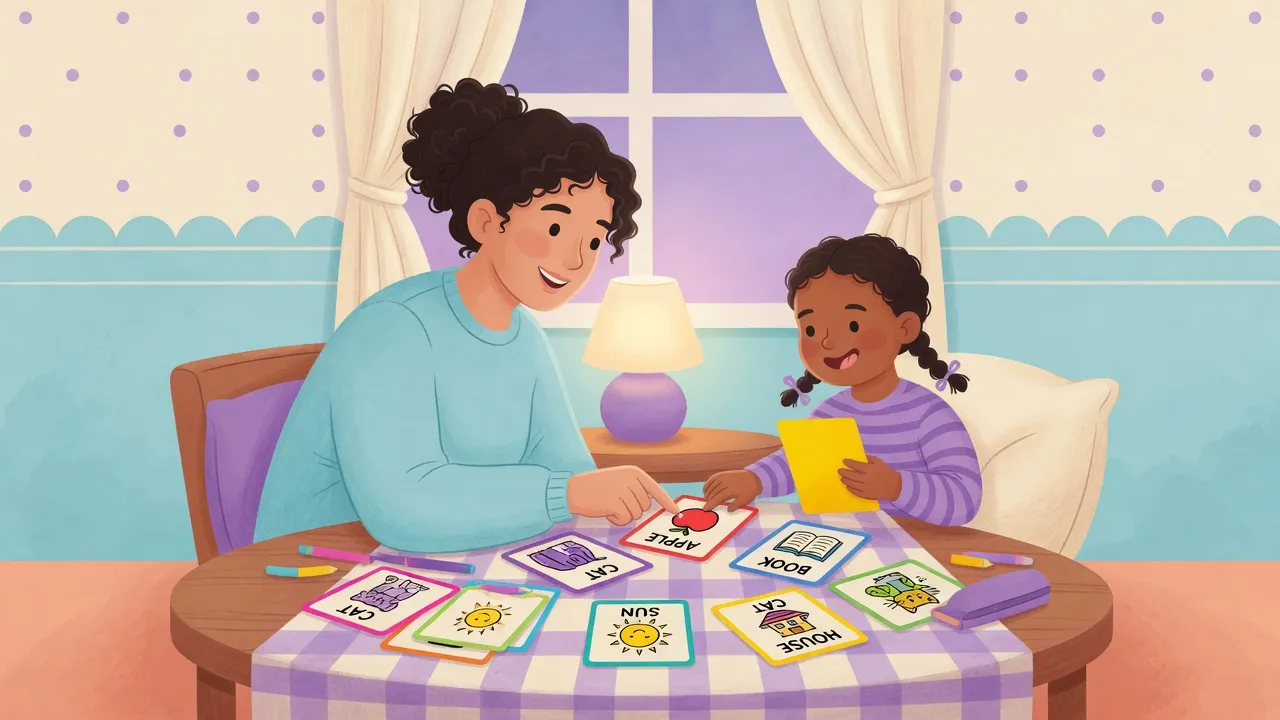
Flashcards for colors, animals, food, and toys work when they feel like play. Show the card, say the word clearly, act it out. Skip the quiz voice ("What is this? Wrong."). Prefer hide the card, race to find "the blue fish," or make animal sounds together.
4. Stories and shared reading
Picture books with big images and few words are gold. Point, act voices, pause so they can point too. For school-age kids, short shared reading of simple graded text builds the habit of looking at English on a page, not only hearing it.
Reading aloud as a parent is powerful modeling - for you and for them. If you want the adult angle on voice + page, reading aloud vs silent reading is a useful read for you, not a toddler worksheet.
5. Parent prep if your English feels weak
You can still help. Use audio models (songs, cartoons), learn ten phrases you will actually use this week, and praise effort. Perfect parent English is not required. Clear, kind, regular is enough. If you want a low-friction place to rehearse phrases for yourself, that is where a reading/phrase tool can sit - after the play foundation, not instead of it.
Sample week: a micro-plan that fits real life
Perfection is not the goal. Contact that actually happens is.
| When | What | About how long |
|---|---|---|
| Most days | One song + 1-2 routine lines | 5-10 min total, split through the day |
| 3 times | One English play game (Simon Says, toy shop, hide-and-seek labels) | ~10 min |
| 2 times | Short cartoon or picture book together | 10-15 min max |
| Once | Parent notes 5-10 phrases for next week | 10 min for you alone |
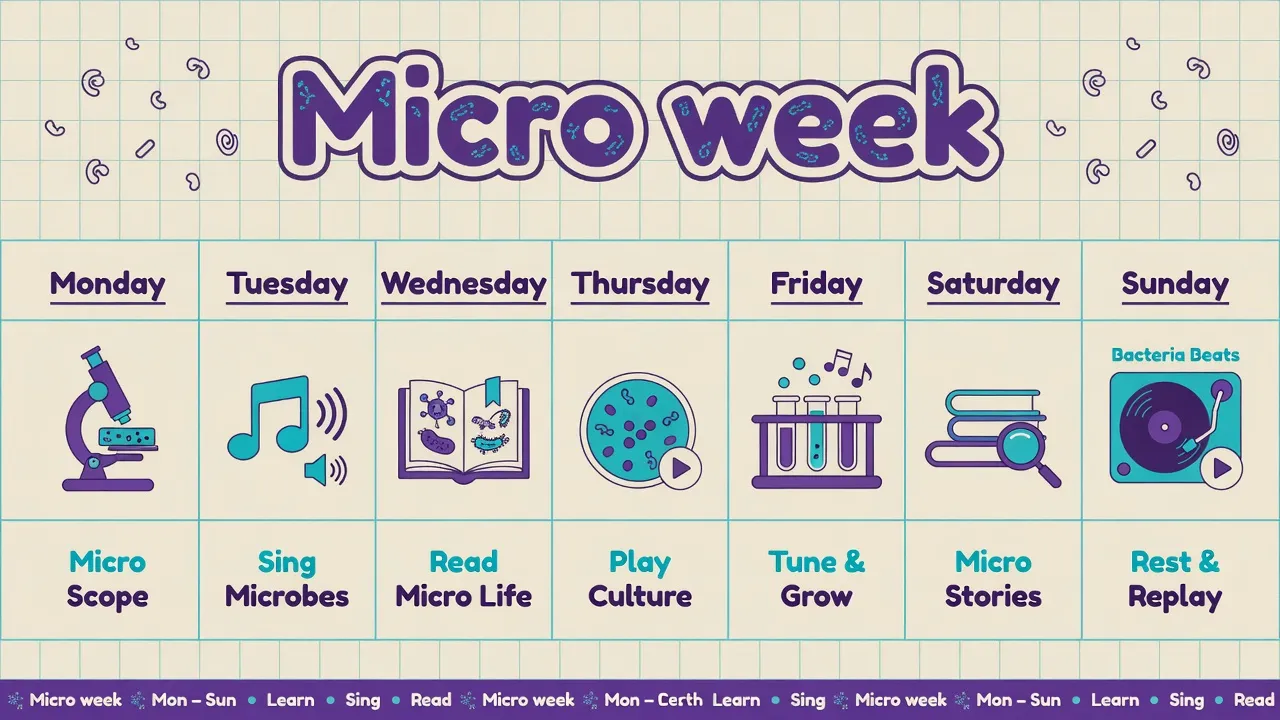
Busy week? Keep only the daily song and two routine lines. That still counts. The 15-minute rule for daily vocabulary is written for adults, but the same spirit helps parents: short and regular beats a heroic Sunday that never happens.
Parent mistakes (and the silent period)
Most "failures" are pressure, not lack of apps.
Common traps:
- Force when they are tired or hungry. English after a meltdown teaches avoidance.
- Translate every single word. Gestures, pictures, and context do a lot of the work. Constant translation can turn listening into a dictionary test.
- Shame mistakes or mock accent. Model the correct line in your reply; do not scold.
- Expect full sentences in a month. Understanding usually leads; production follows on its own clock.
- Only screens. Ears need faces, rooms, and play too.
- Turn home into an exam. Stickers and praise for trying beat scoreboards for toddlers.
Silent period: they understand more than they say
Many children listen for weeks or months before they risk English words. That stretch is often called a silent period. It is not laziness. It is normal input stacking. Keep the input kind and regular. Celebrate the first whisper of juice or bye without turning it into a performance for relatives.
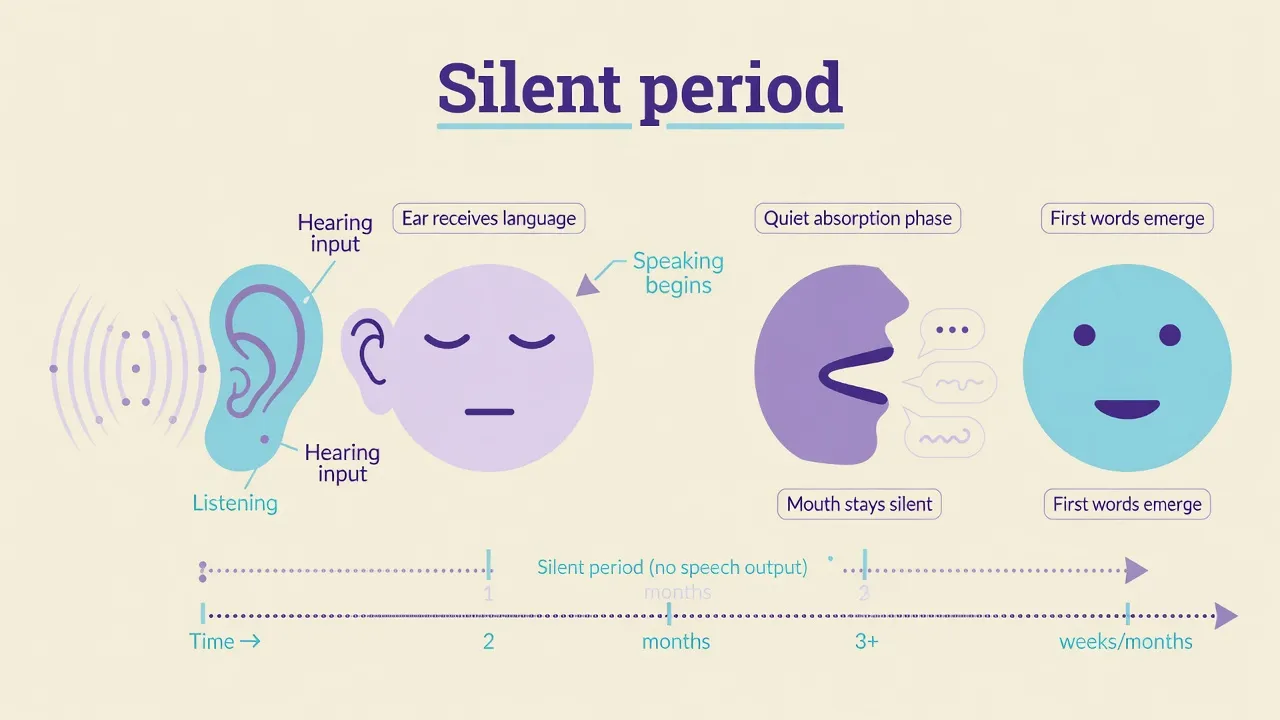
Pressure to "say it in English" too early can delay comfort. If you want the adult version of "I understand but freeze," the idea of passive vs active knowledge is related - see passive to active vocabulary. Kids just need more play and less analysis.
How MovaReader fits (optional)
MovaReader is a reading and phrase tool, not a preschool game platform and not a Netflix for toddlers. Fit it where it actually helps.
| Who | How it helps |
|---|---|
| Parents | Prep routine phrases, listen + limited word translate on the free plan, phrase trainers when you want structured practice (full trainers on Pro) |
| Older children with a parent | Short graded articles, click-translate unknown words, listen along on texts with audio |
| Not the right fit | Toddler-first games, replacing classes |
Free plan: free graded library, about 20 word translations per day, unlimited listening where audio is available on texts. Reader €1/month when you need more translation volume for real reading. Pro €5/month for full trainers. You can work with your own legal EPUB/files. Details: pricing. How the product works: how to use.
Suggested soft path:
- Build the home play + routines foundation first (this article).
- Parents: open all articles or phrases when you want to rehearse language for yourself.
- Older kids: try a simple graded piece together - samples such as EN A2 article 456 if it fits your level feel.
- Optional demos: type training, phrase typing.
- Stay on the free plan while you test. Move to Reader when the daily translate cap breaks real pages.
No tool replaces your face, your voice, or their play. Reading tools support parents and older readers; they do not "install" English in a three-year-old by themselves.
FAQ
What age should we start English with kids?
Whenever the child has enough first-language security and you can keep it fun. Many families start light preschool exposure; others wait for school age. Both can work. Fun and regularity beat "perfect age."
Must we speak only English at home?
No. Short, repeated English islands in the day are enough for most families. Full immersion is a lifestyle choice, not a requirement for progress.
My English is weak - can I still help?
Yes. Lean on songs and cartoons for sound models, learn a small set of phrases yourself, and praise effort. Perfect parent English is not required. Clear and kind is enough.
How much screen time for English?
Prefer short educational clips you chose on purpose over endless autoplay. Balance with offline play, outdoor time, and books. Screen is one channel, not the whole plan.
When will they speak full sentences?
Often after a silent period of understanding. Weeks to months of mostly listening is common. Pressure and testing tend to delay comfort, not speed it up. Celebrate small tries.
Does MovaReader replace kids' English classes?
No. It is a reading tool: free graded library, click-translate, a free plan with daily limits, unlimited listening for audio on texts, trainers for older kids and parents. It is not a toddler game app and not a substitute for play, school, or human conversation practice.
What free tools can we use without buying anything?
Songs on reputable kids channels, library picture books, homemade flashcards, and your own routine phrases cost little or nothing. The free plan on MovaReader can support parent prep and older shared reading within daily limits - optional, not required.
Close: your next three steps
- Pick two routine phrases you will say every day this week (morning + table is enough).
- Choose one song and play it most days with actions - stop while it is still fun.
- Protect one 10-minute play block three times this week (Simon Says or toy shop counts).
If energy remains, add a short picture book or cartoon twice. If your English feels shaky, rehearse next week's phrases for yourself - paper, notes app, or MovaReader when reading and phrases help you.
Start small. Stay warm. English with kids works best when it feels like shared life, not a performance. You already have the main ingredients: time crumbs, a friendly voice, and the willingness to try again tomorrow.
Learning English?
The English version of MovaReader teaches Spanish and Ukrainian. To read English with a translation for every word, open the reader in Ukrainian or Spanish:
Книги англійськоюЦя стаття українськоюLibros en inglésEste artículo en español