Reading Strategies
Learn Spanish Through Reading: A1-C1 Roadmap
A reading roadmap from A1 to C1: one next book type per level, the 80-90% page test for changing exits, and free graded samples to start today.
You open a "learn Spanish through reading" guide and get an 18-month fluency clock. Or a pile of titles from Pobre Ana to Cien años de soledad. You still do not know which page to open tomorrow.
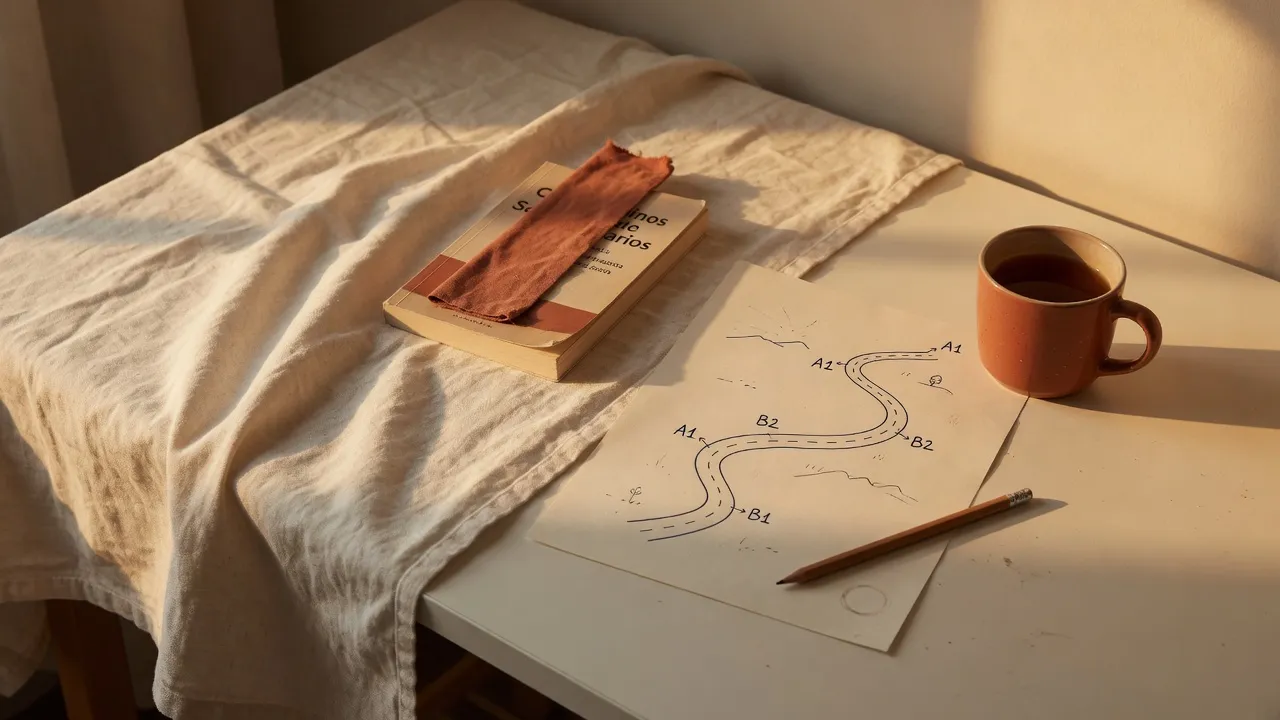
You do not need the whole highway tonight. You need the next exit.
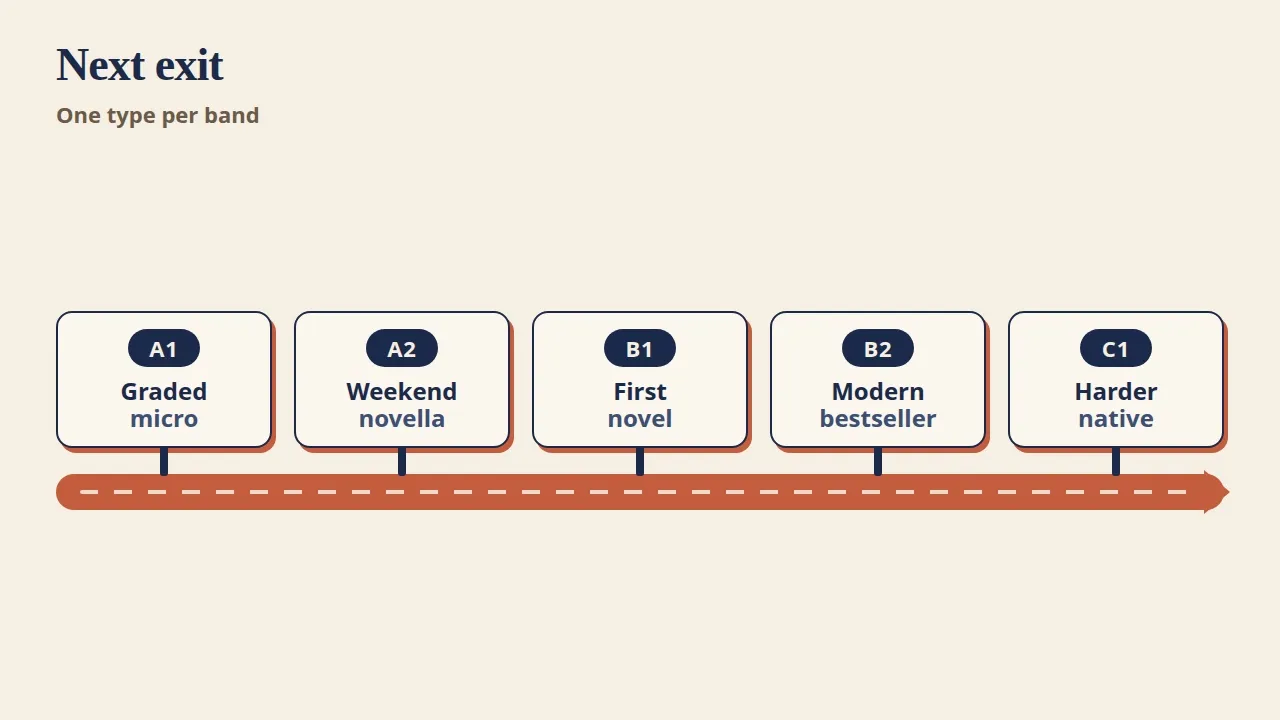
A Spanish reading roadmap is one next read per CEFR band, not a fluency clock. Stay when you get about 80-90% of a random middle page. Around 70% is a weekend stretch. Constant decode is the wrong exit. Pick tonight's type for your band: an A1 sample, a weekend novella, a first novel, a modern bestseller, or a harder native book. Reading builds vocab and patterns. It does not stamp a C1 date on the calendar.
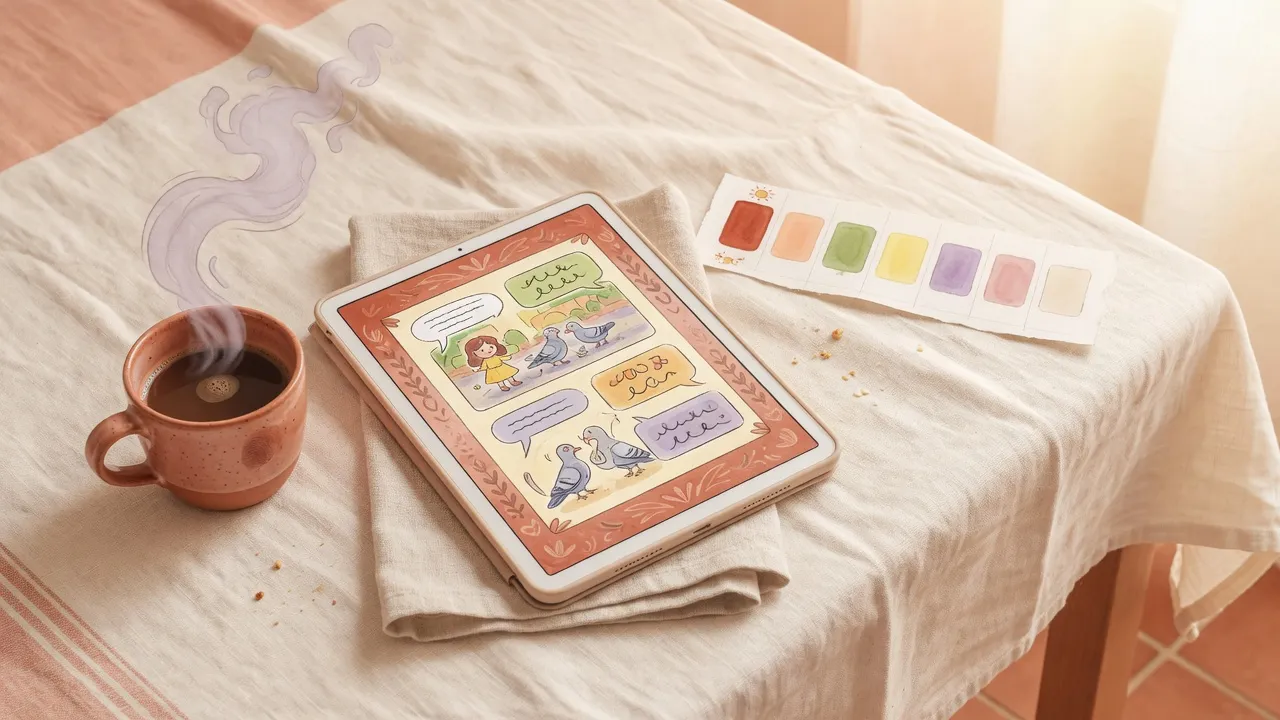
You can try a free graded sample today: A1 Mi día en el parque.
Below: a picker for each band, then the five exits and the move-up test.
What to read in Spanish at each level (A1-C1)
Match the band you can finish, not the band on your old exam paper. These labels are reading comfort, not certificates.
One named type per band. When you want a shelf of options, the sister lists take over. Do not start with Cien años or Don Quijote as an A2-B1 exit. Those are later trophies, if you even want them.
| Band | What reading feels like | One named next-read | Move-up when | Sister |
|---|---|---|---|---|
| A1 | Short graded, present, high repeat | Graded micro-text. Free A1 Mi día en el parque | 80-90% of a middle page and you finish without quitting | Easy A1 books, free graded readers |
| A2 | Longer graded / weekend novella | Weekend-novella / Lola Lago type. Calibrate first on free A2 Aprendiendo a reciclar en casa, then buy or borrow one | Same 80-90%; speed, not heroics | Easiest A2-B1 books, weekend novellas |
| B1 | First real novel after graded | Short YA or known-story bridge. A file you own or borrow. Not Cien años. Not La sombra del viento as first exit | 80-90% on a middle page of that real book; lookups = blockers only | First real novels after graded readers |
| B2 | Modern native, not boring classics | Short-chapter contemporary thriller. Style only: Mentira / La chica de nieve | Same page test; recovery graded day if speed dies | Modern bestsellers for B2 |
| C1 | Style, implication, long native | Harder short stories + a native book you already own | You read for the book, not the course | Short stories by CEFR |
Five exits on one road. Pick the one you can finish.
What this roadmap is
This page answers one question: which exit now? It names one type per band and tells you when to change. Then it points you to longer lists when you want more options.
Can you learn Spanish just by reading? Reading is a strong input engine for vocabulary and patterns. Speaking and pronunciation still need their own practice. Use this page to pick the book. For the daily routine, see how to learn Spanish by reading.
Now the five exits, one at a time.
Your next exit at each band (A1 to C1)
Same shape every time: how it feels, one next-read, when to move, then the sister if you want options.
A1 - short pages you can finish
At A1, a good page is one scene. Present tense. High repeat. You know who is in the park, what they buy, where they go next. Prestige novels can wait. El Principito is a short book, not a short level.
Your next-read is a graded micro-text. Start with the free A1 sample Mi día en el parque. If that page already feels automatic, peek at the A2 sample instead of leaping into a novel.
Move up when you get 80-90% of a middle page and you finish without quitting. Finishing is the tell. A heroic first page that you abandon is still the wrong exit.
Want more than one A1 text? See easy Spanish books for A1, free graded Spanish readers, and the free graded library.
A2 - longer graded and weekend novellas
Past tenses start to show up. You want a story that lasts a sitting or a weekend, not a week inside a dictionary. The plot can carry you. The page should not fight you.
Calibrate first on the free A2 sample Aprendiendo a reciclar en casa, or browse more graded texts in all articles. Then pick a weekend-novella / Lola Lago type you buy or borrow: short chapters, everyday Spanish, a mystery or a small-town story you can close by Sunday. The type matters more than any one title.
Move up on the same 80-90% test. Speed is the tell, not heroic struggle. If you only survive the page, stay. If you want the next chapter, you are ready to try the next exit.
For a month-long habit list, use the easiest A2-B1 Spanish books. For a Sat-Sun window, use short Spanish novels for a weekend.
B1 - first real novel after graded readers
Graded pages feel easy now. A "real" novel can still wall you by chapter 3. That gap is normal. The first native book is a bridge, not a trophy.
Pick one first-novel type: short YA, a story you already know, or a short native novella. Use a file you own or borrow. Do not open Cien años de soledad. Do not make La sombra del viento the first exit. Those books will still be there when the middle page is friendly.
Move up when you get 80-90% on a middle page of that real book. Look up blockers only: the word that kills who-did-what. If you are still decoding every line, drop back to a longer graded text for a week.
Readiness notes and the bridge ladder live in first real novels after graded readers.
B2 - modern native, not boring classics
You want plot pull in contemporary Spanish. Not a 19th-century syllabus. Not a "serious classic" you will respect and abandon. At this exit, the job is to keep turning pages because the story is doing the work.
Your next-read is one modern bestseller type: short chapters, clear prose, a thriller or page-turner. Think the style of Mentira or La chica de nieve, not a catalog. Buy or borrow one book. Finish it. If the first chapter is fog, pick another book of the same type, not a harder classic.
The page test stays the same. If speed dies halfway, a recovery graded day is allowed. That is not a failure. It is how you keep the habit while the native book is still a stretch.
When you want a longer modern shelf, go to modern Spanish bestsellers for B2.
C1 - you read for the book
Style, implication, long native. The course is no longer the point. You pick a book because you want that book, not because a syllabus said C1. Irony, delayed payoff, and voices that do not explain themselves are normal here.
Your next-read is harder short stories plus a native book you already own. You do not need a new shopping list. You need pages you will actually open tomorrow. A story collection is a kind exit: you can finish one piece and still come back.
There is no "C1 diploma page." If you follow the book and come back the next day, you are doing the job. Full short-fiction options by band live in Spanish short stories by CEFR.
How do I know I can move up?
The picker only gives you a one-liner. Here is the full test.
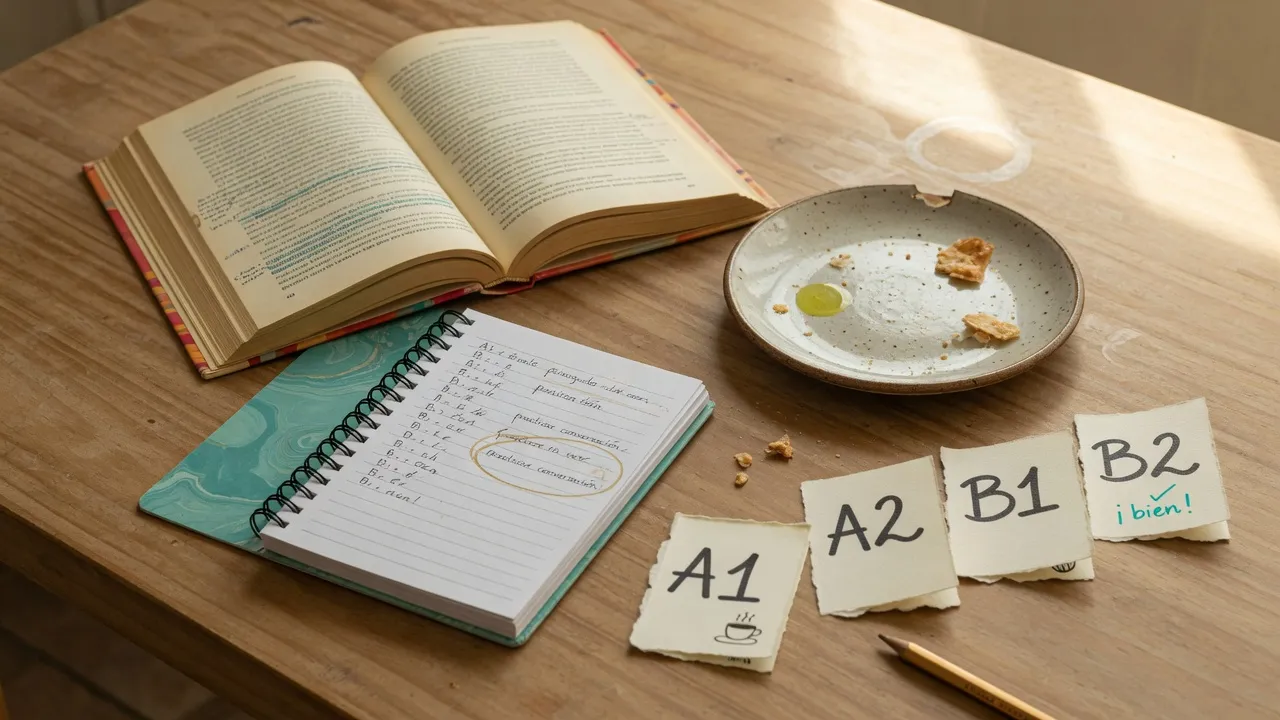
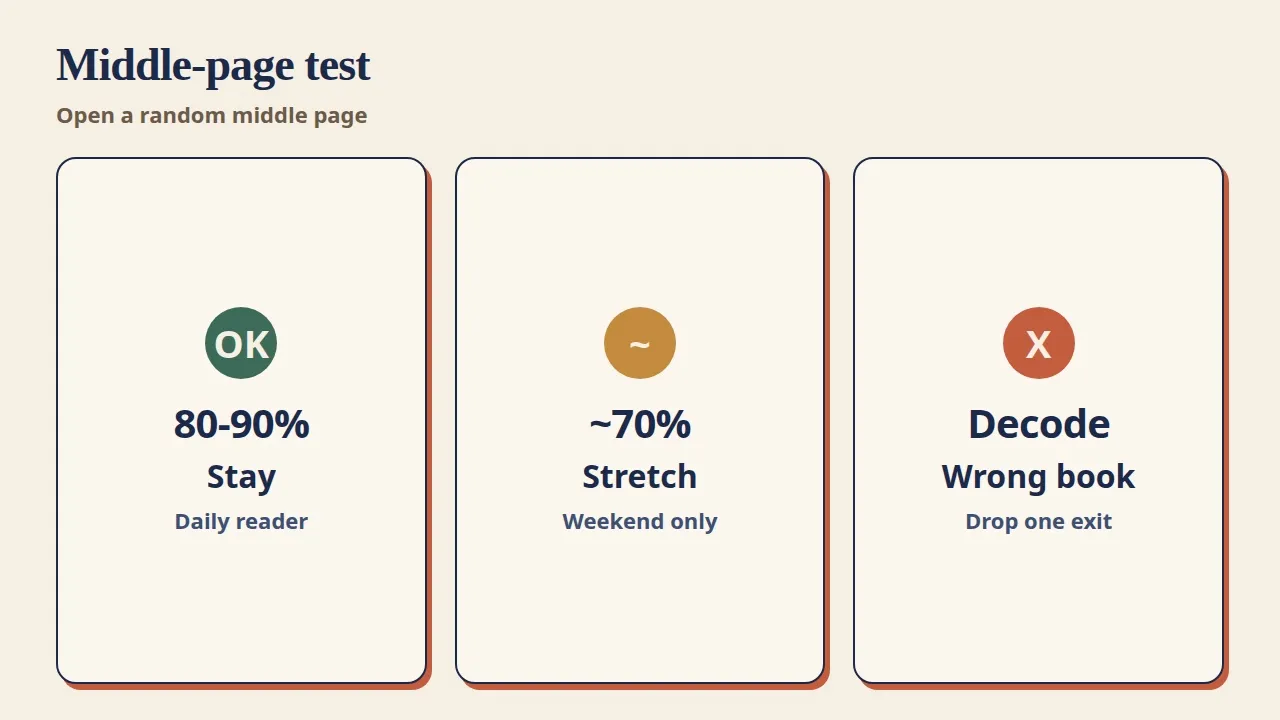
Open a random middle page, not the easy first page. Read two or three minutes without a dictionary. Then ask: gist of most sentences? Who did what? What happens next?
| Result | Call | Next |
|---|---|---|
| ~80-90% gist | Stay / ready to try the next exit | Daily reader |
| Around 70% | Stretch / weekend only | Not the main book |
| Constant decode | Wrong book | Drop one exit |
Some guides send you to 60% of the page: too hard for a daily habit. Others want 95-98%: that is research coverage, not your daily traffic light.
This page answers which exit. For how to spend 15-25 minutes on that page, use how to learn Spanish by reading. If you are curious how many words sit behind these bands, that is a different article: how many words for CEFR. Do not treat any exact count as a rule.
A light weekly reading loop
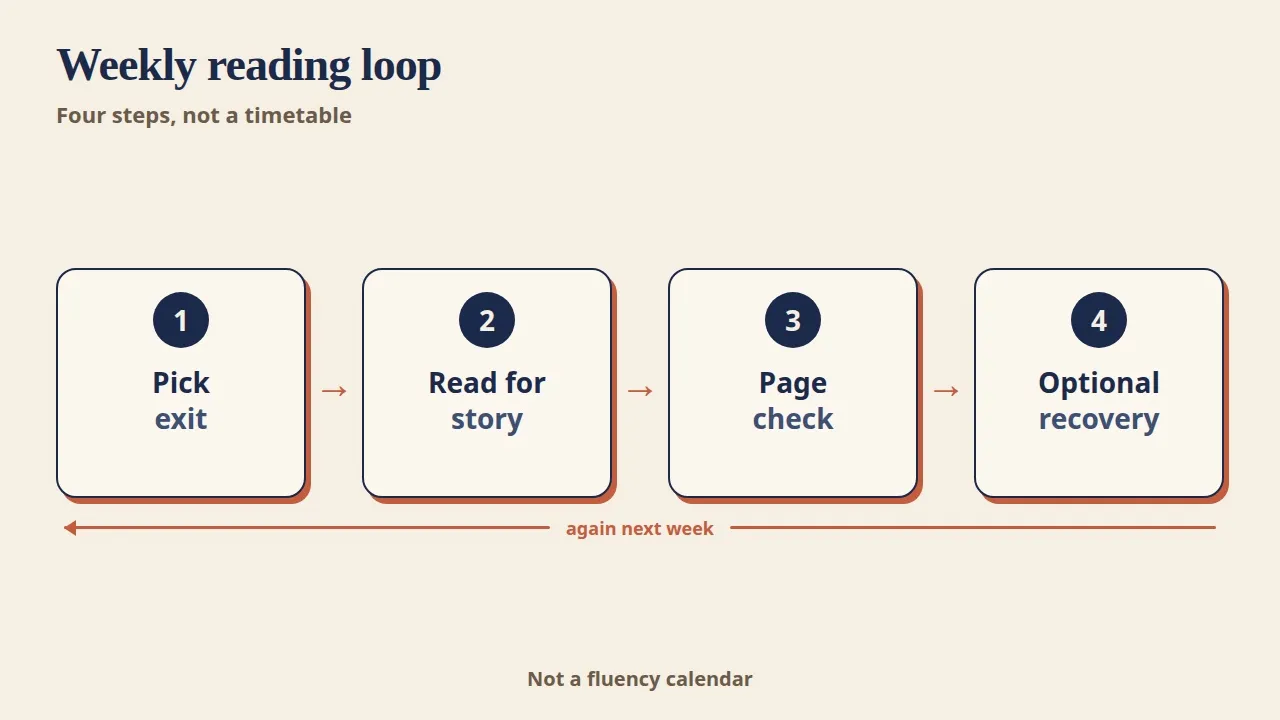
Keep this light. Four steps, not a timetable.
- Pick one next-read for your current exit (from the picker).
- Most days: read for the story. Look up blockers only.
- Once this week: middle-page 80-90% check. Stay or change exit.
- Optional recovery: one easier graded day if a native book flattened you.
That is the loop. No minute tables by band. No 14-day starter hiding in this section.
Want the 15-25 min session script, lookup rules, and a 14-day start? That lives in how to learn Spanish by reading.
Use the language map as a compass
The language map is a compass for your vocabulary. It can show rough research ranges and, after you sign in and mark words, where your personal fill is thin.
Open the band you are reading in:
The map helps you see holes. The next-read table tells you which exit to take. For what the two layers are, read what the language map is.
How MovaReader fits
Warm up on the free graded library. Try the A1 sample Mi día en el parque or the A2 sample Aprendiendo a reciclar en casa, then more in all articles.
Longer commercial books are files you own or borrow. We do not host El Principito, Zafón, or Cien años by default.
Freemium is about 20 word translations a day. Unlimited reading translations are Reader (€1). Full trainers are Pro (€5). See how to use and pricing.
The map in the section above shows vocab holes. The picker tells you which exit to take. Tools reduce friction.
FAQ
How do I know I can move up a Spanish reading level?
Open a random middle page, not the easy first page. Read two or three minutes without a dictionary. If you get the gist of about 80-90% of the sentences (who did what, what happens next), stay or try the next exit. Around 70% is a weekend stretch, not your daily book. If you are decoding every line, drop one exit. These bands are reading comfort, not certificates.
When should I stop graded readers and try a first real novel?
When graded pages feel easy and you can get 80-90% of a middle page of a real book: that is the B1 exit. Look up blockers only. Pick one first-novel type (short YA, a known story, a short native novella) you own or borrow. Not Cien años. Not La sombra del viento as the first exit. Readiness notes and the bridge ladder live in first real novels after graded readers.
Can you learn Spanish just by reading?
Reading is a strong input engine for vocabulary and patterns. It does not automatically give you speaking or pronunciation; those still need their own practice. For how to spend 15-25 minutes on a page, use how to learn Spanish by reading. This page answers which exit, not how to run the session.
What should I read in Spanish at A1, A2, B1, B2, and C1?
One type per band, not a catalog. A1: a free graded micro-text like Mi día en el parque. A2: longer graded, then a weekend-novella type. B1: a first real novel you own or borrow. B2: a short-chapter modern bestseller. C1: harder short stories plus a native book you already own. Match the band you can finish. Full lists live in the sister posts above the FAQ.
Is the language map a free CEFR exam?
No. The map is a compass for your vocabulary. It can show rough research ranges and, after you sign in and mark words, where your personal fill is thin. Open the language map and what the map is if you want the two-layer story.
How long until C1 if I only read?
There is no reliable C1 date. Ignore 6-month and 24-month clocks. Pick tonight's exit, run the middle-page test this week, and change exits when 80-90% feels easy. Reading builds the language. It does not stamp a diploma on the calendar.
Your next exit
Pick tonight's exit. Run the page test this week. Ignore the fluency clock.
If you are at the start, open Mi día en el parque. When you want a longer A1 shelf, use easy Spanish books for A1. If the A1 page already feels easy, calibrate on Aprendiendo a reciclar en casa and stay on that exit until the middle page is friendly.
You do not need the whole highway tonight. You need the next exit.
Keep reading with translations inside the text
With a free account, an unknown word translates with one tap, and the words you are learning wait for you in the trainer.
Free account: 7 days of Pro, then 20 word translations a day or a paid plan.